
Key Takeaways
- Grocers are pricing Thanksgiving meal bundles at a loss to win shoppers’ broader holiday spending.
- Walmart, Aldi, Lidl, and Hy-Vee each offer dinners for 10 at $39 or less.
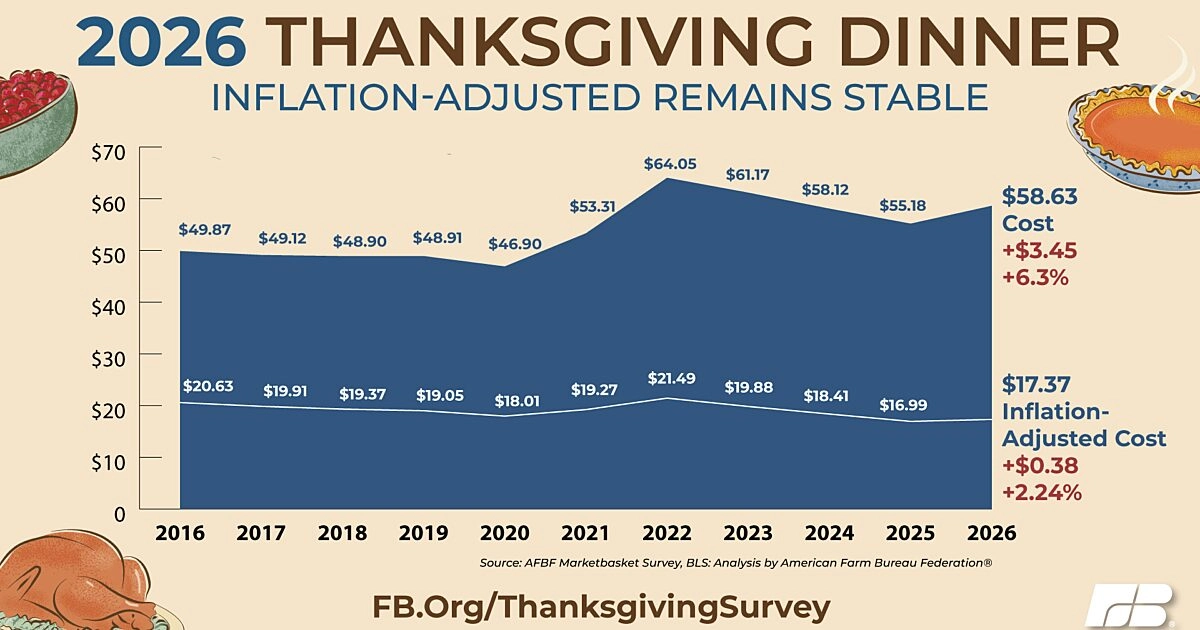
- The Farm Bureau’s classic dinner for 10 costs $58.63, up 6% and the first rise since 2022.
- Adjusted for inflation, the meal costs just $17.37, close to last year’s level.
- About one-third of the menu items got cheaper, including pie crusts and whipping cream.
Thanksgiving meal deals are helping families absorb the first rise in holiday dinner costs since 2022. From Walmart and Target to Aldi and Hy-Vee, grocers are rolling out heavily discounted holiday bundles.
Many of those bundles sell below cost, according to a recent New York Times report. Grocers are betting shoppers will fill their carts with more than just turkey.
In other words, supermarkets trade feast profits for a bigger share of the grocery bill.
Grocers Trade Margin For Loyalty
The strategy targets the year’s most important cooking holiday. Aldi sees the holiday as a showcase for its stores, the Times reported.
Thanksgiving is “our chance to show millions of shoppers what we have.”
— Scott Patton, Aldi chief commercial officer, to The New York Times
Meanwhile, competitors keep sharpening prices. Walmart’s 26-item meal for 10 costs $35, or $5 less than last year’s kit, Reuters reported.
How Thanksgiving Meal Deals Stack Up
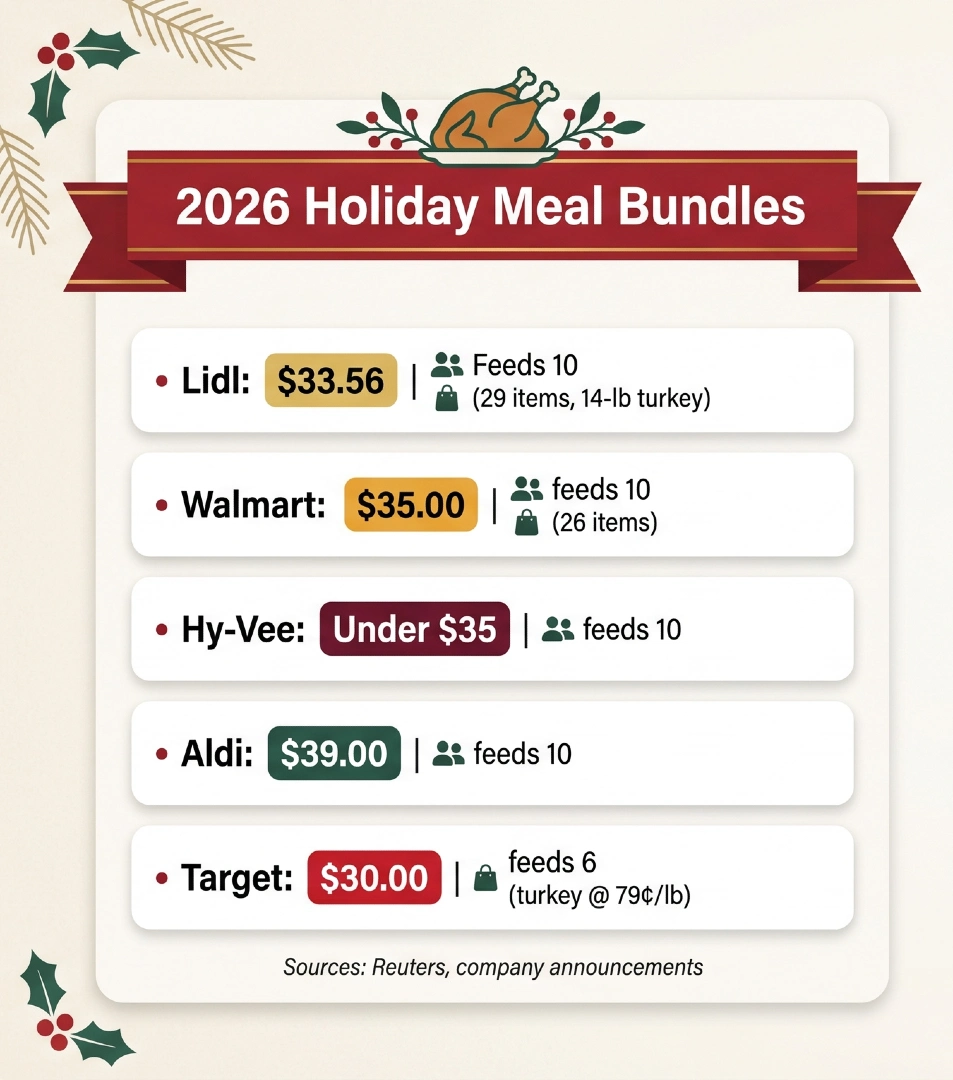
Regional chains are joining the Thanksgiving meal deals race, too. Hy-Vee first launched its bundle at $39. Later, the Midwest grocer cut it below $35 to match or beat national discounters.
Aldi built its meal around the Farm Bureau’s benchmark menu. As a result, shoppers can compare its price directly with the national survey.
Winn-Dixie is also offering two Thanksgiving meals for under $40 each, including a $38.90 cook-at-home meal that serves six and a $39.99 heat-and-serve deli meal.
Dinner For 10 Averages $58.63
Thanksgiving meal deals arrive as the classic holiday menu costs a bit more. The American Farm Bureau Federation’s 41st annual survey puts a dinner for 10 at $58.63.
That works out to about $5.86 per person, up 6% from 2025. Still, the total sits more than 8% below the 2022 record of $64.05.
More good news emerges once you factor in inflation. In inflation-adjusted terms, the meal costs $17.37, just 38 cents more than last year.
Four Decades of Price Checks
Each November, hundreds of volunteer shoppers in all 50 states and Puerto Rico report local grocery prices. The Farm Bureau has run the survey every year since 1986.
The classic menu covers turkey, stuffing, rolls, sweet potatoes, peas, cranberries, veggies, milk, and pie fixings. In 2018, the group added ham, green beans, and russet potatoes to an expanded menu.
Pie Lovers Catch a Break
Several holiday favorites actually got cheaper this year. In fact, about one-third of the surveyed items declined in price.
A veggie tray of carrots and celery posted the largest percentage drop, falling 3.7%. Frozen pie crusts saw the biggest dollar decline, at 9 cents.
Dessert fans also come out ahead. Pumpkin pie mix rose slightly, but cheaper crusts and cream lower the pie’s total cost.
Related Article: Who Feeds Thanksgiving? Hispanics in the Food Industry
Turkey And Staples Lead the Gains
On the other side of the ledger, the 16-pound frozen turkey averages $23.68. That’s up from $21.50 last year, a gain of about 10%.
Strong demand and tight inventories drove the turkey increase, the Farm Bureau said. Milk, rolls, sweet potatoes, cranberries and stuffing also cost more.
Higher fuel costs for processing and transportation explain much of that rise. Farmers also face record diesel costs, higher fertilizer prices, and higher labor bills.
Even so, sharp-eyed shoppers found turkey for as little as 69 cents per pound. That’s nearly half the national average price.
Northeast Pays Most, South Least
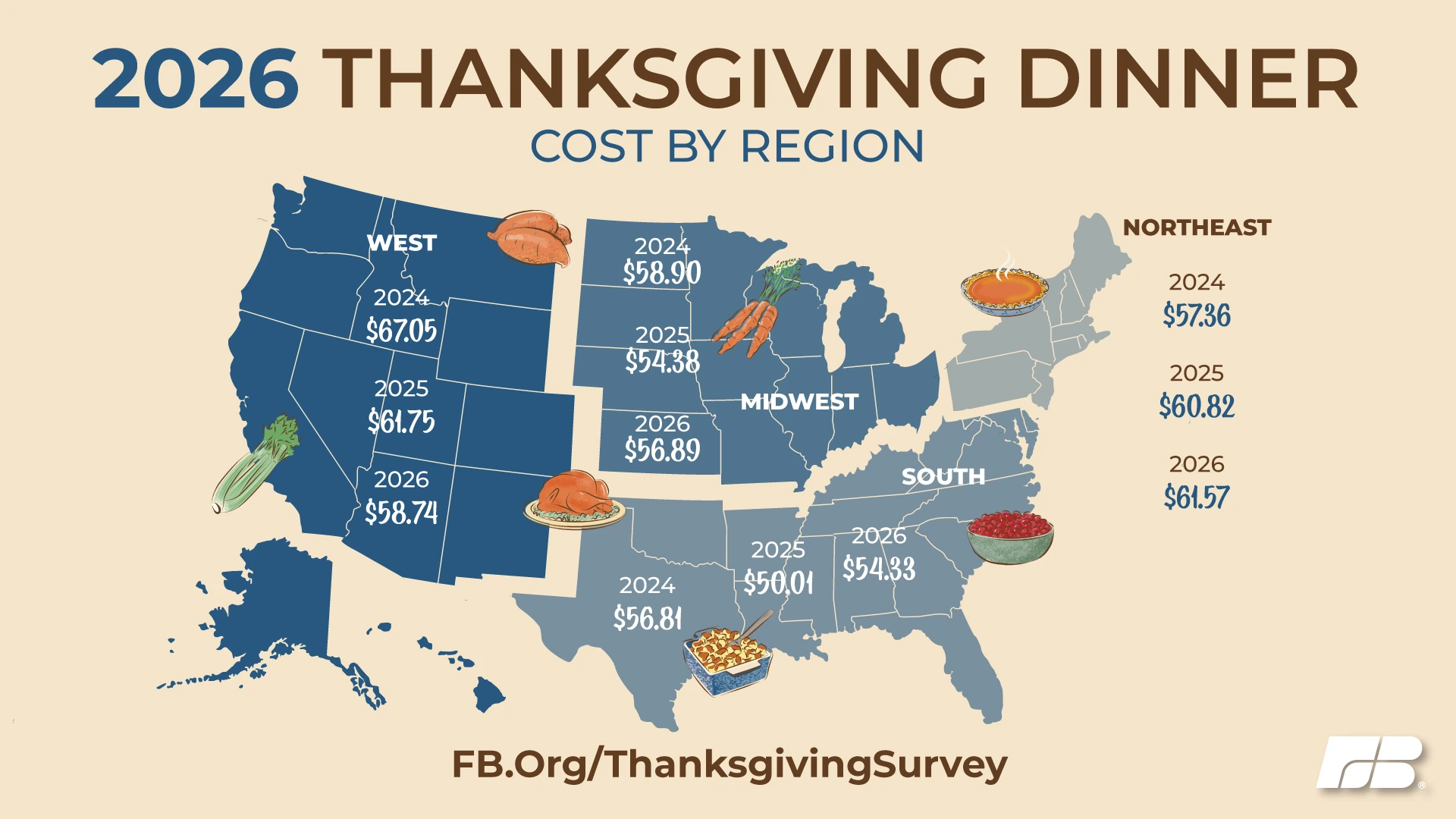
Costs also vary by region. The Northeast posts the highest average, at $61.57 for a dinner for 10.
That’s about 5% above the national figure. Meanwhile, the West averages $58.74, and the Midwest averages $56.89.
Once again, the South offers the most affordable feast, at $54.33. Notably, the West’s cost fell from $61.75 last year.
Farms Keep Holiday Supply Strong
Behind every bargain stands a productive farm sector. U.S. producers raised 193.5 million turkeys in 2025, according to USDA’s Economic Research Service.
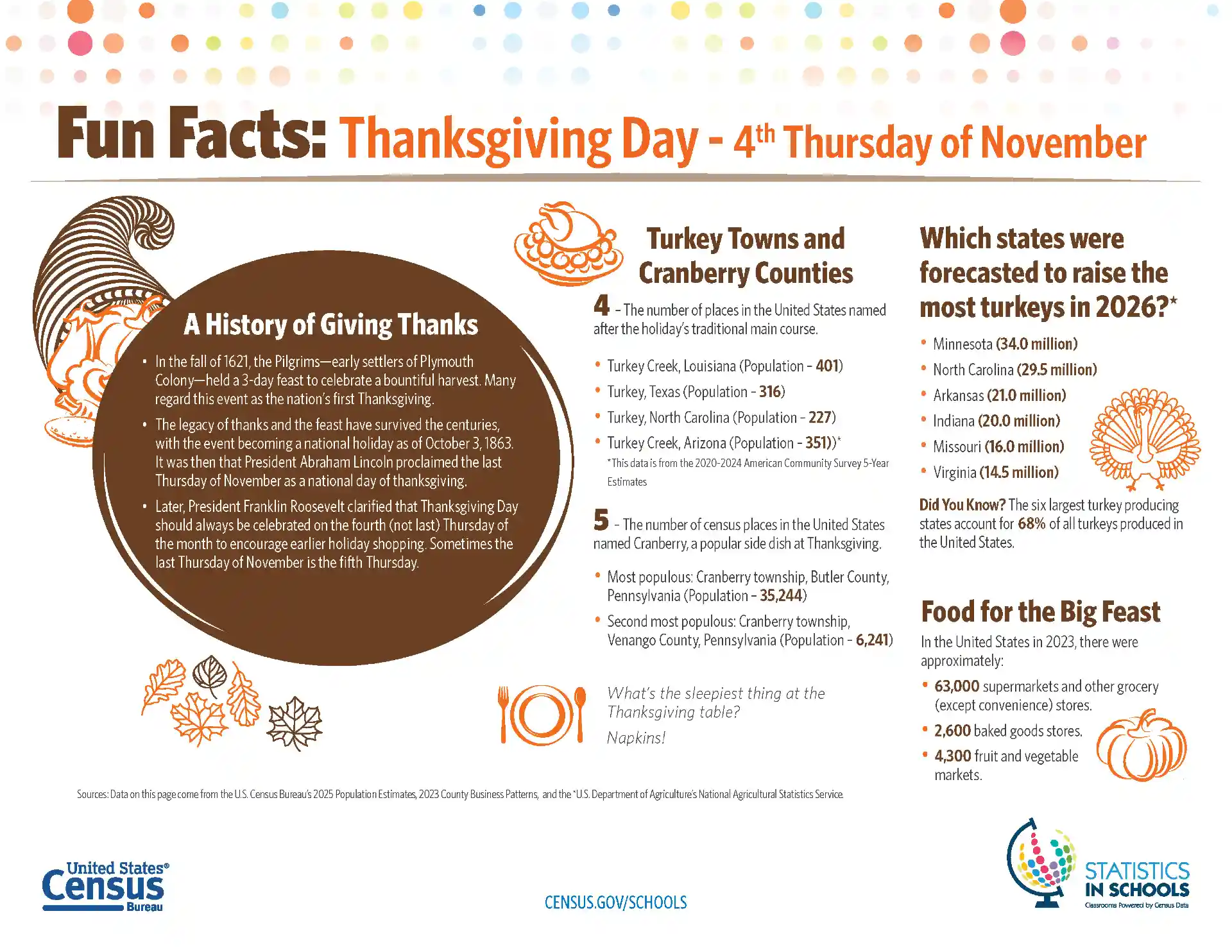
Minnesota led the nation with 33.5 million birds. North Carolina, Arkansas, and Indiana followed.
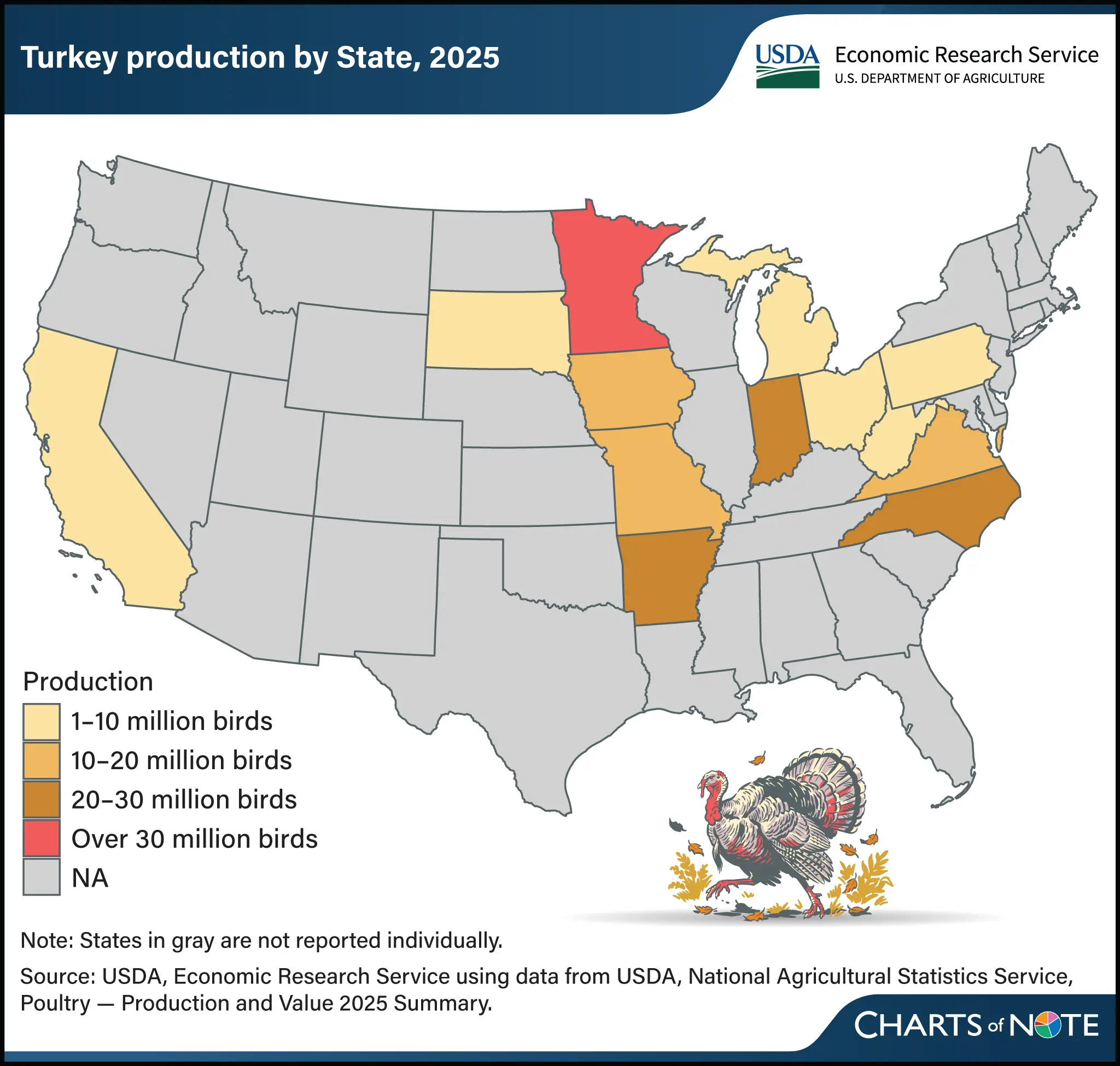
Looking ahead, USDA projects turkey output will grow to 5.18 billion pounds in 2026. That’s up from 4.84 billion pounds last year.
Cranberries Ride a Long Winning Streak
Cranberry growers deliver another bright spot. The U.S. grows about two-thirds of the world’s cranberries.
Yields per acre have climbed 90% since the early 1980s. Moreover, USDA expects 2026 production to rise 5% to about 7.87 million barrels.
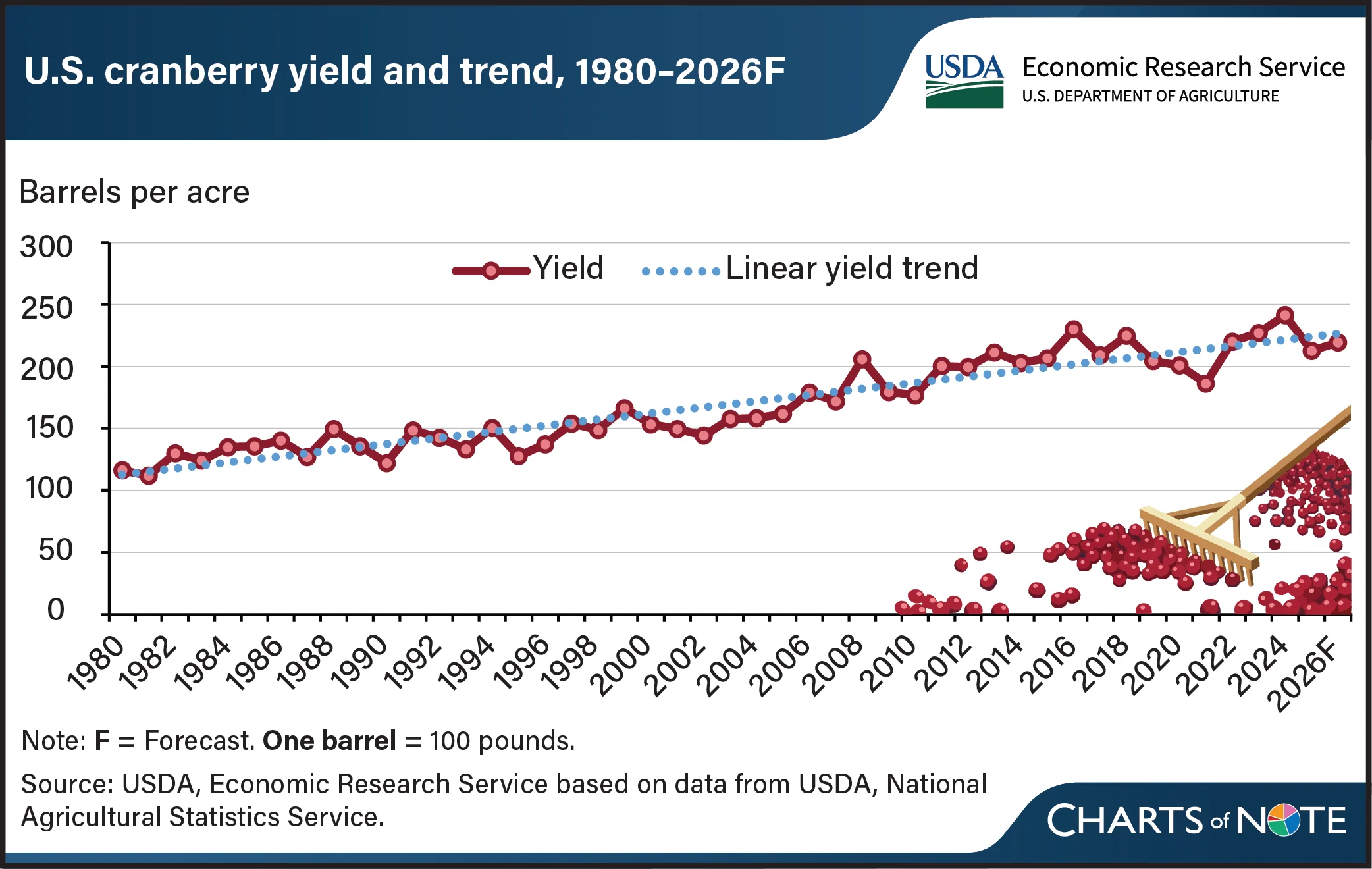
Wisconsin, New Jersey and Oregon should all harvest bigger crops this season.
A Big Week for Grocers
For supermarkets, Thanksgiving remains a powerful traffic driver. The U.S. Census Bureau counted about 63,000 supermarkets and other grocery stores in 2023.
Americans also spend more time at the table that day. From 2003 to 2025, they averaged 97 minutes eating and drinking on Thanksgiving, USDA data show.
On top of that, meal preparation and cleanup took 115 minutes. On a typical weekend day, that figure drops to 37 minutes.
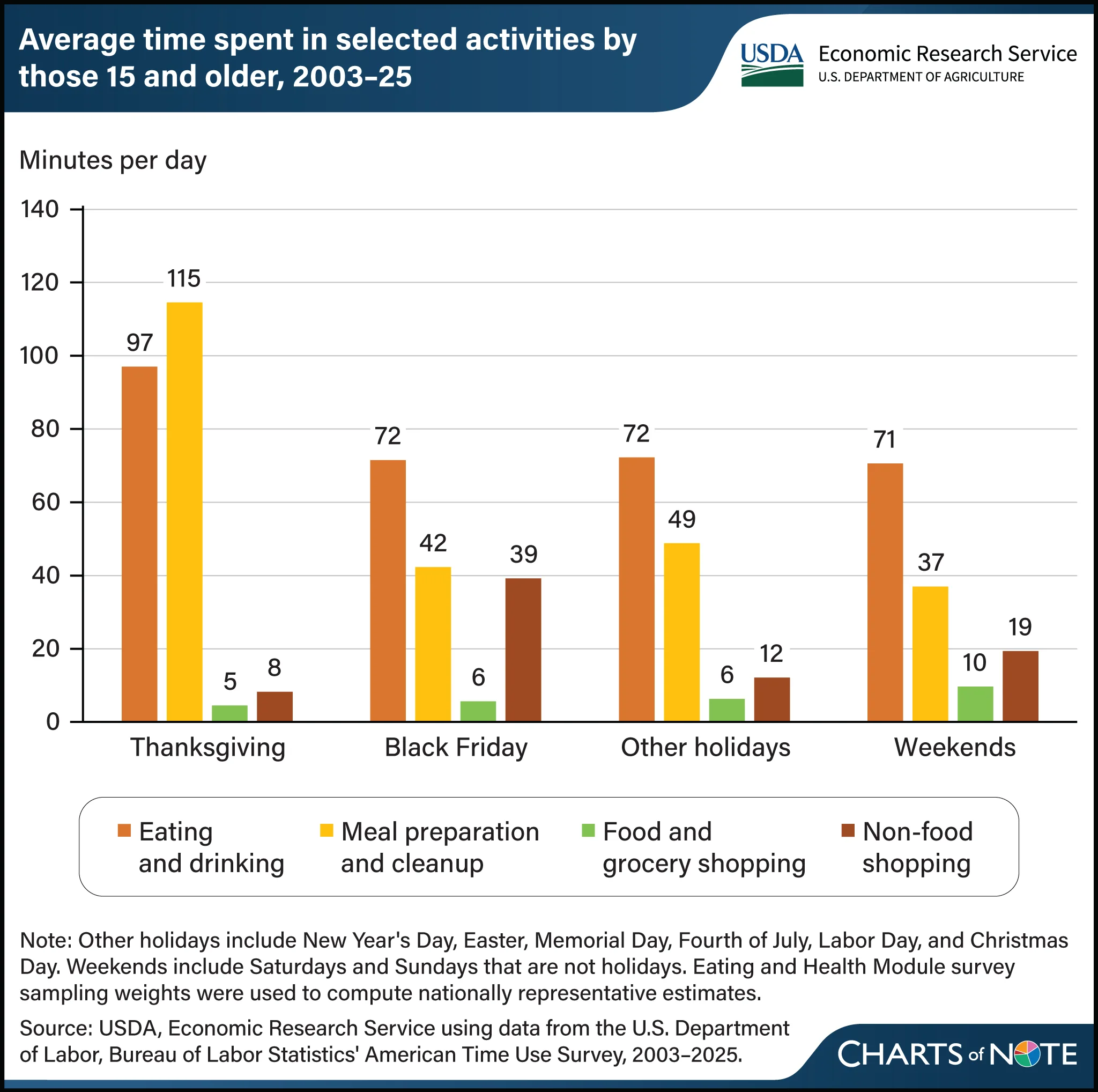
The shopping doesn’t stop there. On Black Friday, non-food shopping averaged 39 minutes, more than triple other major holidays.
For grocers, that’s the payoff behind Thanksgiving meal deals. They’re betting a bargain turkey today builds loyalty well beyond the holidays.