
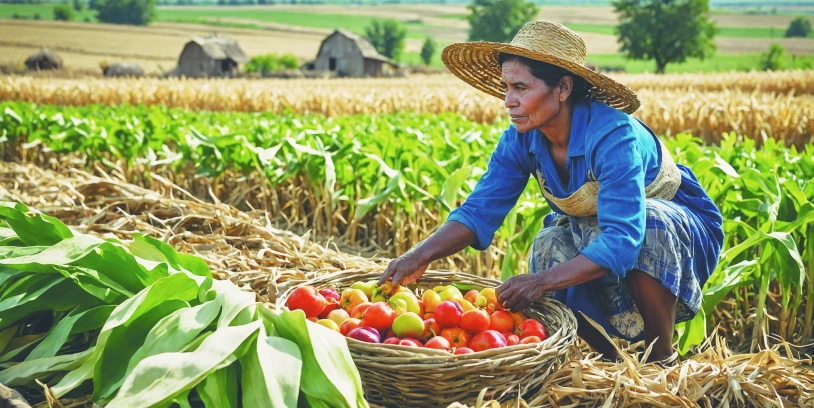
Each March since 1987 has been designated as National Women’s History Month—a time to honor women’s contributions to U.S. history. Underscoring this important month of education and celebration, the UN has designated 2026 as the International Year of the Woman Farmer (IYWF 2026).
This year’s Women’s History Month theme, “Leading the Change: Women Shaping a Sustainable Future,” recognizes the powerful leadership of women in creating a future that is rooted in equity, justice, and opportunity for all. With the light shining bright into the corners of agriculture where women contribute, the conversation is on the agenda for all to engage.
Given the public acknowledgement of women in agriculture globally, there is a sense of urgency to capitalize on the visibility of women’s contributions. I see it more as a drumbeat that bears repeating, not limited to a designated month or year. The role of women in the global ag industry is critical to providing perspectives and insights that are lacking when women are not present.
Over the past decade, I have witnessed and participated in the concerted effort to elevate women to executive standing, bringing dynamic new solutions to business challenges from the top down to advance our industry in new ways.
From Lean In Circles to formal mentorship programs, I’ve been on both sides of the discussion. It’s evident to me that women who elevate women have been more vocal about their intentions to do so, as have the men who champion the value that all genders bring to solving challenges and providing solutions.
Here are some ways to celebrate the International Year of the Woman Farmer and lift the women this month and all year, who are shaping a sustainable future and leading the change in our businesses, communities, and the global produce industry
Through Discussion
Women’s positions in the fresh produce industry are varied and span every level of organizations. The idea of “traditional male roles” is starting to wane as modern roles are not gender specific.
Diversity is not a dirty word. The days of DEI programs may be behind us, but the practice of engaging a diversity of opinions, perspectives, and life experiences remains a proven method to achieving stronger results.
The discussion begins with the question of who is involved in decision-making, and it ripples from there. When you take the person out of the equation and look at this scenario through an objective lens, it’s easier to identify where variety may be needed to achieve a stronger result.
Dedicate time this month to this discussion and see where it takes you.
Related Article: Heritage on a Plate: Hispanic Produce
Celebrate the International Year of the Woman Farmer Through Mentorship
Successful mentoring of women has been shown to help reduce feelings of isolation and increase self-confidence and work engagement. The opportunities to pair mentors with mentees are varied throughout the produce industry, both formally and informally.
I volunteered as a mentor in one of these formal programs to broaden my industry awareness and acumen.
As a mentor, I expected to be paired with a younger, less-experienced woman in the industry whom I could influence and support. I was surprised to be paired with two different women, both of whom I felt had volumes more knowledge about this industry than I did. I entered these partnerships feeling inadequate as a mentor, but quickly realized that my biases were just that. Both women are continuous learners and sought a new perspective to broaden the lens through which they made decisions.
The power of mentorship is not always about years of experience, imparting wisdom, or influencing the next generation. It can, and should, be a mutually beneficial exchange of ideas and dialogue from all angles.
Reconsider how you’ve approached mentorship in the past and take time this month to identify where you might benefit from someone else’s perspectives through mentorship.
Through Leadership
I liken leadership to athleticism. Both take a measure of DNA and training to be at the top of your game. Yes, leaders can be born, but leaders also need to continue to harness, focus, and practice the discipline of leadership to maintain the authority and respect of the position, just as athletes may have a natural skill. Still, training is needed to maintain the ability to compete at the highest level.
Being a female leader in produce is exciting, but it takes practice to grow and polish my rough edges continually. A strong leader influences through action, and good leaders know how each step they take is being observed.
There are centuries of examples of women’s powerful leadership in creating a future rooted in equity, justice, and opportunity for all.
Study these stories and keep them alive through your own leadership style.
This year, during the International Year of the Woman Farmer and Women’s History Month, seek to learn the stories of the women leaders who are creating the future of fresh produce as a thriving global industry, setting the path for a sustainable future. She might be sitting right next to you.