
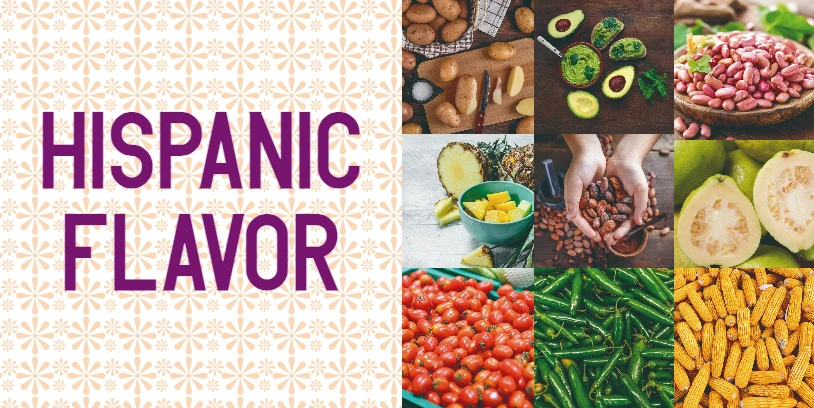
The vibrant Hispanic culture is woven into the fabric of the United States, and nowhere is this more deliciously evident than on our dinner table. While impressive economic numbers tell part of the story, a rich culinary heritage has truly transformed how Americans eat. The legacy of Hispanic produce does more than just enrich our palate; it tells a story of a deep and delightful cultural exchange.
Here are some ancestral ingredients that have become essential in the American diet.
Hispanic produce (Fruits) in U.S. Cuisine
Cacao: Chocolate, a key ingredient for major holidays like Valentine’s Day, Easter, Halloween, and Christmas, comes from cacao, a fruit native to Mexico. According to Statista, each American consumed 9 kilograms (almost 20 pounds) of chocolate in 2022.
Guava: Native to South America, the Portuguese introduced guava to India in the 17th century. Mexico, Brazil, and Thailand also grow it.The United States imported $25.8 million worth of guava products in 2023.
Pineapple: Proudly South American, pineapple originated between Brazil and Paraguay. The piña colada and sweet and sour chicken owe their flavor to this delicious fruit. In 2022, the United States sold over 1.062 million tons of pineapple. Costa Rica contributes more than 86% of the total volume, according to figures from AG Tools.
Vanilla: Mexico is the center of origin for vanilla and, for nearly three centuries, was the sole producer. However, Indonesia and Madagascar are now the world’s leading producing countries. In May 2025, the U.S. imported $9.15 millions of vanilla, according to the Observatory of Economic Complexity (OEC).
Related Article: IFPA: Healthy America Needs Fruits & Veggies
A Flavorful Invasion with Hispanic vegetables
Avocado: When we watch a sports event, especially American football, guacamole and avocados are often a part of the experience. Over the last decade, U.S. avocado consumption has more than doubled, increasing from 597,000 metric tons (1.32 billion pounds) in 2010 to 1.47 million (3.24 billion pounds) in 2023.
Beans: Dishes like baked beans and chili beans owe their origin to beans, a food native to Mexico and South America. Per capita consumption of dry beans in the U.S. is 3.3 kg (7.3 pounds) per year, which is equivalent to a current per capita consumption of 15.75 cups of cooked beans per year, according to the U.S. Dry Bean Council, with data from 2021.
Corn: Delicious roasted corn on the cob, cornbread, and irresistible esquites all pay homage to corn, native to southern Mexico. Native Americans brought this plant across the Mississippi River. Living History Farms shares that corn grows on every continent except Antarctica, is found in more than 4,000 supermarket products, and an 8-gallon bushel can sweeten about 400 cans of soda.
Chile Pepper: The chile pepper is another produce with Hispanic heritage. Mexico produces more than 3 million tons (6.81 billion pounds) of green chile peppers, making it the second-largest producer worldwide, according to data from Mexico’s Secretariat of Agriculture from 2022. According to Statista, 125.34 million Americans consumed chile (canned/ready-to-eat) in 2020.
Tomato: Native to South America, tomatoes were first cultivated by the Aztecs in Mexico. When they were introduced to Europe in the 16th century, Europeans mainly used them as ornamental plants. Americans consume 31.4 pounds of tomatoes annually. Although fresh tomatoes rank fourth among fresh vegetables, processed tomatoes account for three-quarters of total consumption, primarily in pizza, ketchup, and pasta dishes.
Potato: South America, specifically Peru, is the birthplace of the potato. The first potato harvest in North America was in 1719, in New Hampshire. Data from PotatoPro reveal that each American eats 115.4 pounds per year.
Yuca: Also known as cassava or manioc, it is a starchy root vegetable like a potato. People can prepare yuca in various ways, including boiled, fried, or mashed.