
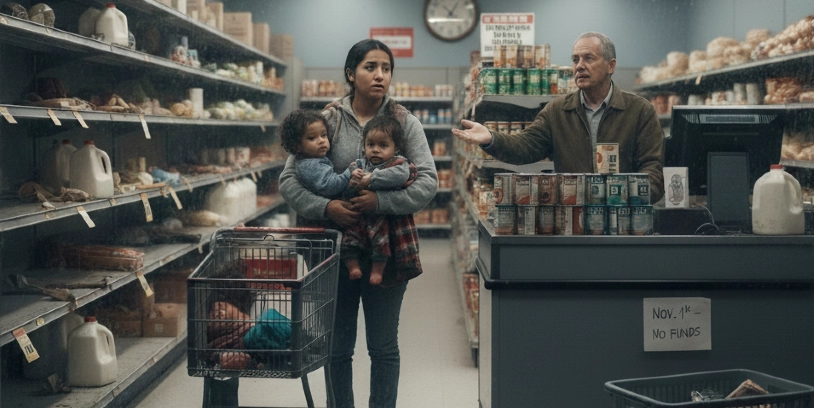
The ongoing federal government shutdown is triggering a potential SNAP benefits delay in November, prompting grocery retailers and food-access advocates to sound alarms over what they call a looming disruption to food security, retail stability, and community welfare.
The U.S. Department of Agriculture (USDA) sent a letter to state agencies on Oct. 10 directing them to pause the transmission of issuance files for the Supplemental Nutrition Assistance Program (SNAP), warning that if the shutdown continues, there will be “insufficient funds to pay full November SNAP benefits for approximately 42 million individuals across the Nation.”
According to the Center for American Progress, the USDA estimates the contingency fund for SNAP stands at roughly $5 billion to $6 billion—below the approximately $8 billion needed to cover a whole month of benefits.
Several states, such as Pennsylvania, Texas, New York, and Colorado, have already issued warnings that November benefits will not be distributed if funding is not restored.
Grocery Retailers Raise Alarm
The National Grocers Association (NGA), representing independent supermarkets, issued a statement noting the risk to SNAP and the Special Supplemental Nutrition Program for Women, Infants, and Children (WIC).
NGA President & CEO Greg Ferrara said, “Independent grocers are often the only source of fresh produce, dairy, and other nutritious essentials for millions of families, veterans, and seniors who rely on federal nutrition assistance to make ends meet. A lapse in funding will disrupt food access, creating instability for shoppers, retailers, and communities alike.”
The statement added that SNAP supports over 388,000 U.S. jobs and generates more than $20 billion in economic activity—highlighting the broader retail and community implications.
Meanwhile, Aurora Grocery Group (Compare Foods, Gala Foods, and Gala Fresh Farms) issued an alert across its regions: “Our priority is to stand with the families and communities we serve,” said President Franky Jorge.
Jorge warns that states such as Florida, North Carolina, New York, Connecticut, and Massachusetts face possible disruptions in November due to the SNAP benefits delay affecting millions of residents unless the shutdown ends.
The SNAP Benefits Delay Impact on Low-Income Households
The SNAP program serves roughly 1 in 8 Americans—about 42 million people nationwide—with an average benefit of around $187 per month.
According to the Food Research & Action Center (FRAC), many recipients are already living paycheck to paycheck; a delay or cut in benefits forces them to choose between essentials like rent, medicine, or groceries.
Meanwhile, state agencies warn that local food banks and emergency pantries will face increased demand and strain if benefits are suspended.
Related Article: SNAP Limits Could Cost Retailers $1.6B
Retail and Community Ripple Effects
Retailers say the SNAP benefits delay will ripple beyond individual households. Grocery stores—especially smaller independent stores in underserved areas—rely on consistent SNAP transactions to maintain inventory, supply chain contracts, and staffing.
NGA’s warning points to a destabilizing effect on community economies if funding stops.
Federal agriculture economists note that SNAP spending functions as fiscal stimulus in local communities; when that spending halts, it can exacerbate retail downturns, especially in low-income regions.
Political and Administrative Pressure Mounts Against the SNAP Benefits Delay
Lawmakers from both sides of the aisle are pressing for action. For example, U.S. Rep. Jennifer McClellan (VA-04) and Sen. Danica Roem (D-Prince William) issued statements urging the USDA to tap its existing contingency funds to assure uninterrupted SNAP benefits. They argued the pause is a policy choice, not just a funding shortfall.
Moreover, articles by the Center on Budget & Policy Priorities (CBPP) and other analysts contend the USDA legally must release funds from its contingency reserves to ensure benefits continue—even amid the shutdown.
What’s Next
If Congress fails to reach a funding agreement, many states will have no mechanism to issue SNAP payments in early November. The USDA could, theoretically, transfer funds or invoke contingency mechanisms—yet there has been no clear indication that it will do so in time.
For retailers and states, the central challenge is uncertainty. “What level of certainty do we have right now? November is coming up in 10 days,” said Senator Roem in a press release.
Grocery operators like Aurora Grocery Group are preparing for worst-case scenarios: adjusting inventory, re-training staff to assist impacted customers, and coordinating with suppliers to mitigate disruption. Yet they warn that the longer the funds are suspended, the broader the damage—to families, stores, farmers, and community economies.
The resolution now depends on Congress and the USDA restoring funding and making clear that the safety-net can remain intact.