
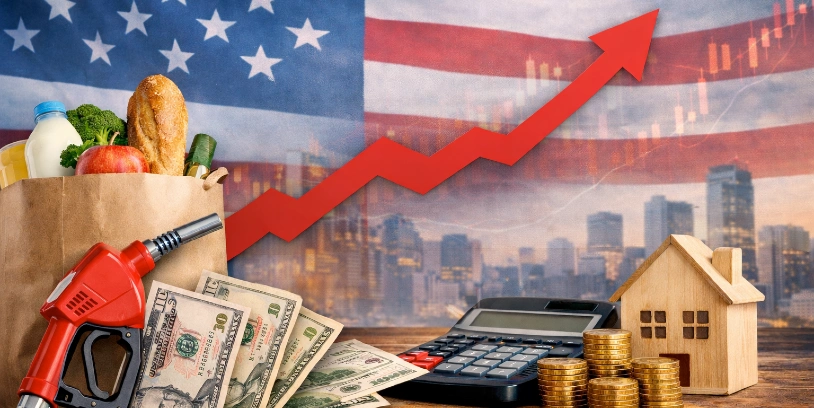
U.S. inflation ticked higher in February as consumer prices increased across housing, food, and energy, according to new federal data and retail price analysis.
The Consumer Price Index (CPI) rose 0.3% in February after a 0.2% increase in January, the U.S. Bureau of Labor Statistics reported. Over the past 12 months, the index increased 2.4%.
Meanwhile, a separate retail-focused index showed a similar trend. Data from Numerator indicated prices for everyday consumer goods climbed 2.7% compared with a year earlier.
Together, the reports suggest inflation remains moderate but persistent, particularly for essential household purchases.
Housing and Food Push Prices Higher
Housing costs again played the largest role in the monthly increase.
The shelter index rose 0.2% in February and accounted for the biggest share of the CPI gain. Food prices also climbed, with the overall food index increasing 0.4%.
Grocery prices rose at the same pace during the month. At the same time, restaurant prices increased 0.3%, reflecting higher costs for both limited-service and full-service meals.
Within grocery aisles, price changes varied widely.
The index for fruits and vegetables increased 1.4%, while nonalcoholic beverages rose 0.8%. Candy and chewing gum prices surged 3.7%.
However, some categories offered relief. Dairy prices fell 0.6%, including a 1.2% drop in cheese. Cereals and bakery products slipped 0.2%.
Overall, food-at-home prices increased 2.4% during the past year. Dining out rose faster, with restaurant prices climbing 3.9% over the same period.
Energy Prices Rebound
Energy prices also contributed to February’s rise in U.S. inflation.
The energy index increased 0.6% after declining 1.5% in January. Gasoline prices rose 0.8% during the month, while natural gas increased 3.1%.
Electricity provided the only major offset, declining 0.7% in February.
Over the past year, energy costs rose modestly overall. Natural gas prices jumped 10.9%, and electricity climbed 4.8%. Gasoline, however, dropped 5.6% compared with a year earlier.
Related Article: U.S. Grocery Store Closures Set to Reshape 2026
Core Inflation Remains Steady
Economists closely monitor core inflation, which excludes food and energy due to their volatility.
In February, the core index rose 0.2% for the month and 2.5% year over year. Both figures matched January’s annual pace.
Several categories drove the increase. Prices rose for medical care, apparel, airline fares, education, and household furnishings.
At the same time, prices declined for communication services, used vehicles, motor vehicle insurance, and personal care.
Those mixed trends suggest inflation pressures remain uneven across the economy.
Everyday Goods Show Similar Inflation Trend
Retail pricing data reinforced the broader inflation picture.
Numerator’s Consumer Goods Price Index (CGPI) showed prices for everyday household purchases increased 0.26% in February. The gain followed a small decline in January.
Year over year, everyday goods prices climbed 2.7%.
The index tracks pricing trends for common consumer purchases and accounts for roughly 20% of the spending categories included in the federal government’s broader inflation measures.
“February’s data is a reminder that the path back to price stability won’t be linear,” said Paul Stanley, senior economist at Numerator.
He noted that inflation accelerated slightly after easing earlier in the year.
Younger and Lower-Income Consumers Feel a Stronger Impact
However, inflation does not affect all households equally.
Numerator’s analysis shows that lower-income and younger consumers continue to face stronger price pressure for everyday essentials.
Since January 2018, prices for goods purchased by low-income households have increased 33.7%. For Generation Z shoppers, prices rose 36%.
Both figures exceed the national average inflation rate of 31.8% for the same period.
Regional differences also emerged. Consumers in the South and West experienced the largest cumulative inflation since 2018.
More recently, however, the Midwest recorded stronger month-to-month price increases.
Inflation Outlook Remains Uncertain
The February data signals that U.S. inflation continues to cool gradually compared with the peaks seen earlier in the decade.
Yet price growth remains uneven across essential categories such as housing, food, and everyday goods.
As a result, households still face a challenging pricing environment despite the slower overall pace of inflation.
Economists say the coming months will reveal whether the recent uptick represents temporary volatility or a renewed phase of price pressure across the consumer economy.