
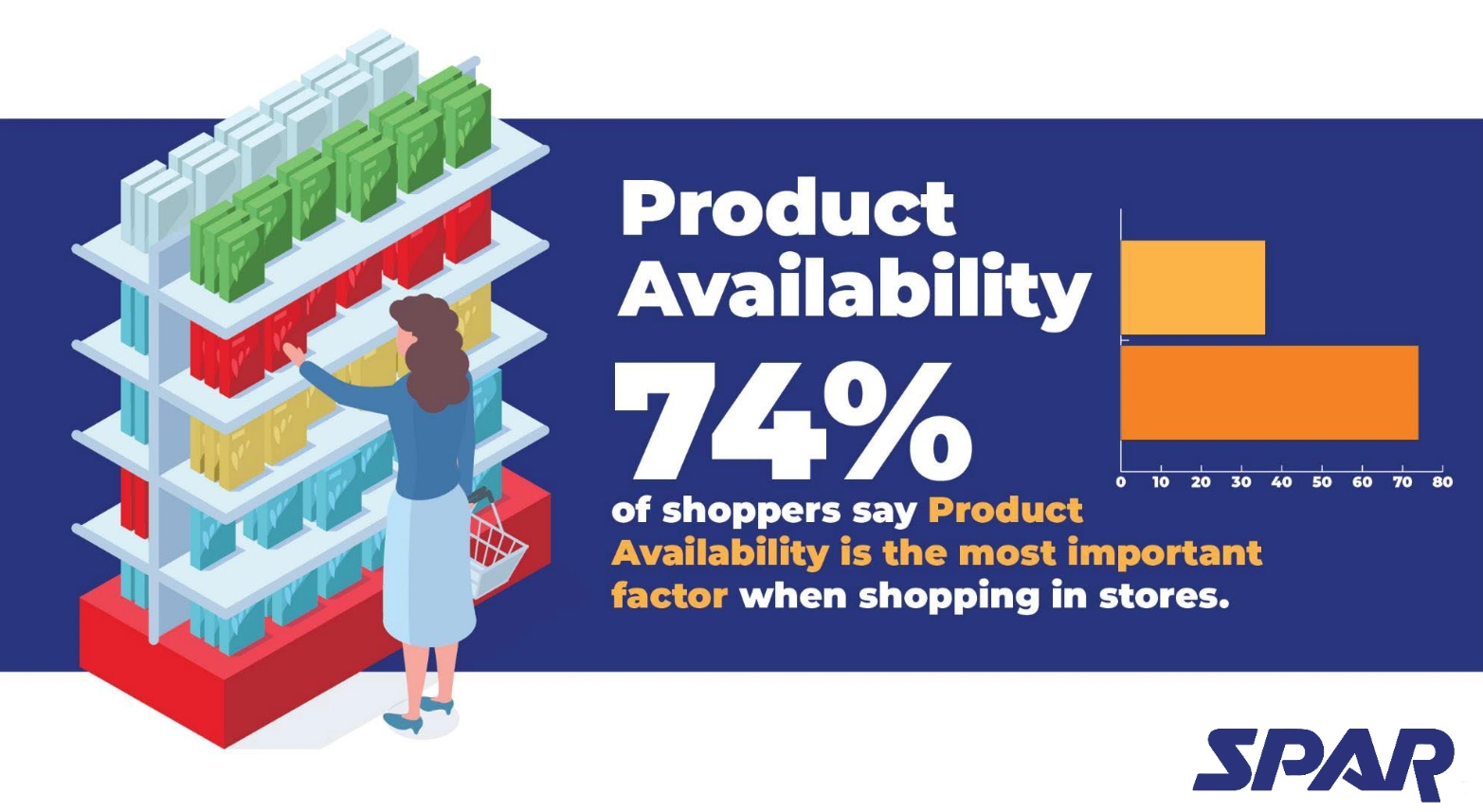
Product availability remains the top driver of in-store shopping satisfaction, according to the 2025 SPAR Group Consumer Survey. The survey, which captured responses from a wide demographic of U.S. shoppers, found that 74% of consumers ranked product availability as their leading priority, beating price, convenience, and technological innovation.
The study also revealed growing anxiety about out-of-stocks, with 73% of respondents listing it as their primary frustration while shopping in-store. That insight places added pressure on retailers to streamline replenishment processes and better monitor shelf inventory in real-time.
Empty Shelves Hurt Retail Margins
“Empty is always wrong,” said Mike Matacunas, president and CEO of SPAR Group. “After decades of investment, inventory in-stock, plan-o-gram compliance, and optimal replenishment remain elusive.”
Matacunas criticized the industry’s reliance on point-of-sale data, calling it reactive and insufficient. “It’s like driving your car while staring into the rearview mirror,” he said.
Instead, he encouraged retailers to adopt proactive shelf monitoring technologies that improve inventory visibility. According to Matacunas, failure to address inventory distortion leads to disappointed consumers, lost sales, and lower margins.
Retail Technology Faces Mixed Reactions
While product availability dominates shopper concerns, the SPAR survey also highlights an evolving relationship with retail technology. Shoppers showed hesitancy toward innovations such as roaming robots, with 71% reporting they felt either uncomfortable or unsure about such devices in stores.
Younger shoppers—particularly those between ages 18 and 54—expressed more openness toward automated tech, while women across all age groups were more likely to feel uneasy about robotic assistants.
“Retailers are piloting everything from stationary cameras to field-mounted imaging systems,” Matacunas said. “But most consumers don’t want cameras on sticks every few feet. Moving field gondola-based cameras are the best mousetrap for balancing shopper comfort and inventory control.”
Tariffs Drive Changes in Consumer Behavior
Product availability isn’t the only concern reshaping shopper habits. Nearly half of all consumers surveyed expressed strong concern about tariffs, particularly regarding grocery prices.
Many anticipate responding by cutting spending, switching brands, or searching more aggressively for coupons and sales. Concern runs highest among younger shoppers aged 18 to 39, who expect the steepest cost increases.
“Tariffs are further aggravating frustration around product availability,” Matacunas noted. “Retailers and brands must act now—investing in process improvements and technology—to stay competitive.”
Related Article: Online Grocery Boom: Less Friction Means More Loyalty
Retailer Rankings Reflect Shopper Sentiment
Walmart continues to dominate when it comes to the in-store shopping experience and mobile app utility, especially among lower-income households. Target ranks a distant second, while wealthier shoppers tend to prefer Costco.
Retailer mobile apps have also emerged as essential tools, with loyalty rewards and competitive pricing named as top benefits. Apps are particularly effective with households earning between $100,000 and $200,000 annually. Meanwhile, features like contactless checkout and buy-online-pickup-in-store (BOPIS) appeal most to the $40,000–$50,000 income range.
In-Store Shopping Remains Strong
Despite the rise of e-commerce, in-store shopping remains resilient. Four in five survey respondents said they prefer buying groceries in person due to the ability to see, touch, and compare products. Shoppers also cited faster checkouts, in-store promotions, self-checkout access, and coupon availability as key positive drivers.
However, crowded aisles and staffing shortages continue to dampen the shopping experience. Still, 61% of respondents said they expect to shop in-store more frequently over the next six months.
Consumers Show Caution Around Data Sharing
Another noteworthy trend: consumers have grown more selective in the data they share with retailers. While most shoppers still provide personal information, about one in four now limit their sharing to specific use cases, up significantly from last year.
This shift reflects growing concerns about privacy and a desire for more control in the digital retail space.
SPAR Group Doubles Down on Solutions
SPAR Group says it’s committed to helping retailers address these evolving needs through shelf-visibility tools, digital compliance solutions, and technology partnerships that ensure shelves stay stocked and promotions work as intended.
“As the retail landscape evolves, our mission remains the same,” said Matacunas. “We’re here to help brands and retailers deliver exceptional experiences—and to do it in a way that keeps shoppers happy, loyal, and coming back.”
SPAR’s survey reinforces a simple message: in the eyes of today’s shopper, nothing matters more than product availability.