
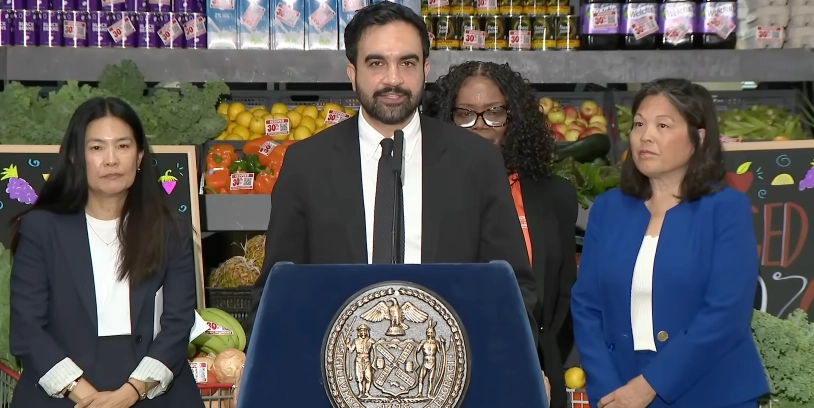
New York City’s independent supermarket owners are bracing for a new competitor, one backed by City Hall itself. Mayor Zohran Kwame Mamdani announced Tuesday that the first wave of municipal grocery stores will sell fresh produce, meat, seafood and roughly 20 other staple categories at 30% below typical market prices.
The plan didn’t sit well with the industry it’s set to disrupt. Anthony Peña, president of the National Supermarket Association, told Abasto Media in a statement that a government-subsidized rival “cannot compete fairly” against the neighborhood stores already serving these communities, a warning that’s likely to shadow the initiative as it moves forward.
The discount itself applies to every shopper, regardless of income. And unlike prices at private grocers, which shift week to week, the city says costs at these stores will stay locked in and predictable.
A Grocery Bill Cut by $1,000 a Year
According to a press release from the Mayor’s Office, city officials project the combined savings will lower the average New Yorker’s grocery bill by 15%. That works out to about $90 a month, or close to $1,000 annually.
The stakes are high in a city where affordability has become the defining political issue. More than 40% of New York families struggle to afford food, city data shows, and the first location will open in Hunts Point in the Bronx, a neighborhood where 77% of households report difficulty covering basic necessities.
From there, the rollout expands fast. One store will open in each of the five boroughs by the end of Mamdani’s first term, including a second confirmed site at La Marqueta in East Harlem. The city has committed $70 million in capital funding to get all five running, in partnership with NYCEDC.
How the Municipal Grocery Stores Will Work
Rather than run the stores directly, the city plans to hand daily operations to a private partner. NYCEDC issued a request for proposals Tuesday seeking qualified grocers or firms willing to manage merchandising, staffing, product sourcing and security at one or more locations.
That operator will also need to meet labor standards the city considers non-negotiable. The RFP requires family-sustaining wages, benefits and a Labor Peace Agreement, so workers can organize without interference, according to the release.
“A trip to the grocery store shouldn’t spell dread for New Yorkers,” Mamdani said in the announcement. “That’s why we are guaranteeing a 30% discount on the most common and most critical groceries for families across the five boroughs, including eggs, milk, chicken and fresh fruits and vegetables.”
Deputy Mayor for Economic Justice Julie Su framed the initiative as part of a broader affordability push. “Groceries are one of the clearest places New Yorkers feel the cost of living every week,” she said. NYCEDC Interim President and CEO Jeanny Pak called the plan a potential blueprint for how public-private partnerships can ease costs citywide.
Related Article: Fair Prices Act Gains Backing from Independent Supermarkets
National Supermarket Association: ‘They Cannot Compete Fairly’
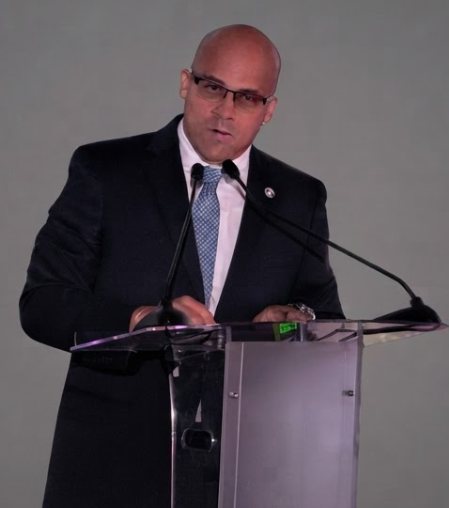
The National Supermarket Association isn’t dismissing the affordability goal; it’s disputing the method. Peña said his organization backs any serious effort to bring down food costs, but he rejects the administration’s framing that publicly funded stores won’t compete directly with existing supermarkets.
His argument centers on economics most shoppers never see. Independent grocers already shoulder rent, property taxes, construction costs, insurance and regulatory fees, he said, and none of that goes away when a city-backed rival opens down the block. A store built with taxpayer money and cushioned by price subsidies, he argued, simply doesn’t play by the same rules.
Excluding items like alcohol, cigarettes, lottery tickets and prepared foods from the discount doesn’t change that math, according to Peña. Produce, meat and dairy aren’t side categories for a neighborhood supermarket; they’re the core of the business, and the categories getting the steepest discount are the ones stores depend on most.
Peña also laid out an alternative path. Rather than opening city-run competitors, he wants the administration to invest directly in the supermarkets already rooted in these neighborhoods: tax relief, help with energy and refrigeration costs, infrastructure grants and targeted subsidies passed straight to shoppers. Before any store opens, he added, the city owes residents transparency around its subsidies and real economic impact studies for each affected community.
The stakes go beyond balance sheets, Peña said. “We are prepared to work with Mayor Mamdani to reduce the cost of food,” he said, “but affordability cannot be achieved at the expense of immigrant- and minority-owned supermarkets that have invested in and served these communities for generations.”
Two Visions for New York’s Grocery Aisles
City Hall sees a public option that finally makes eggs and chicken predictable. The National Supermarket Association sees a subsidized rival muscling into a business immigrant and minority owners built block by block. Both can’t fully win, and the operator RFP now open is where that tension gets tested first.
The city says the plan builds on months of groundwork, including site selection in East Harlem and Hunts Point and an ongoing search for firms to design the N.Y.C. Groceries brand. Whoever gets picked to run the first stores will inherit more than a lease; they’ll inherit a fight over what fair competition looks like in a city where grocery margins are thin and political stakes are thinner still.
That fight will play out in real time before the first location opens in Hunts Point by the end of 2027, giving both sides, and the neighborhoods caught between them, a few years to see whose math holds up.