
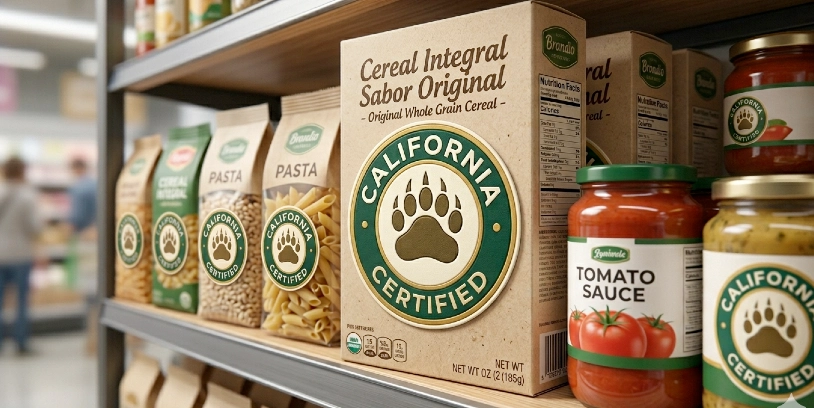
Forget scanning ingredient labels. If California Assemblymember Jesse Gabriel gets his way, shoppers will soon spot a single seal on a package and instantly know: this product is not ultra-processed. Gabriel introduced Assembly Bill 2244, a landmark legislation that would create a first-in-the-nation “California Certified” seal for non-ultra-processed foods (UPFs).
Modeled after the universally recognized “USDA Organic” label, the seal would give consumers a fast, trustworthy way to identify healthier food options. The bill lands at a moment when ultra-processed food regulation has become one of the hottest battlegrounds in American food policy.
Ultra-Processed Foods: A National Health Crisis Demanding Action
The scientific evidence is compelling. A comprehensive review published in The BMJ in 2024 found direct associations between ultra-processed food consumption and 32 health parameters, spanning mortality, cancer, and mental, respiratory, cardiovascular, gastrointestinal, and metabolic health outcomes.
Despite that evidence, most Americans still can’t easily tell a minimally processed product from a heavily engineered one — and the food industry hasn’t made it simpler.
Roughly 72% of U.S. shoppers actively try to cut UPFs from their diets, yet confusion at the shelf remains rampant. AB 2244 zeroes in on that gap. The bill would direct California’s Department of Public Health to oversee a certification program through which food manufacturers could apply to use the “California Certified” label on packaging, a clear, front-of-package signal that a product meets defined standards for not being ultra-processed.
Beyond the label itself, AB 2244 takes an additional step: it would require California grocery stores to display “California Certified” products in a prominent, high-traffic area. That means healthier options don’t just get certified, they get seen.
California Leads While Washington Stalls

AB 2244 doesn’t emerge from a vacuum. California has spent the last two years building some of the toughest food safety laws in the country.
Gabriel authored the California Food Safety Act (AB 418, 2023), which banned several harmful food additives statewide. In 2024, the California School Food Safety Act (AB 2316) pulled harmful food dyes from public school menus. Then, in 2025, the Real Food, Healthy Kids Act (AB 1264) established the nation’s first statutory definition of ultra-processed foods and launched a process to remove harmful UPFs from California schools by 2030.
Meanwhile, federal regulators have moved far more slowly. In July 2025, the FDA and USDA issued a call for public comments on a federal definition for UPFs, a process that closed at the end of October 2025, with no final rule yet in place.
Gabriel addressed the federal lag directly. “While Washington D.C. is paralyzed by inaction, California is stepping up to protect our kids and confront the health risks associated with ultra-processed foods,” he said.
Related Article: California Governor Targets Ultra-Processed Foods
The ‘California Effect’ and What It Means for Food Manufacturers
California has a history of pushing food policy changes that spread nationally, what analysts call the “California Effect.” More than half the nation began working on food dye bans after California passed one in 2024. AB 2244 could trigger the same domino effect for non-UPF certification.
Across the country, states are already moving aggressively. Louisiana and Texas enacted warning-label legislation requiring manufacturers to disclose ingredients banned in other countries, and Wisconsin followed suit with its own version in 2025.
At the same time, plaintiffs’ attorneys have begun targeting major food companies, including by filing a lawsuit in December 2024. The complaint alleges that UPFs caused a teenager’s fatty liver disease, Type 2 diabetes, and other serious health problems.
Food industry groups, including the American Beverage Association, Consumer Brands Association, and the National Confectioners Association, pushed back in December 2025. They filed a lawsuit in federal court challenging Texas’s warning label law. They argued that it violates the First Amendment and imposes a burden on interstate commerce. The outcome of that case could shape how far states can push UPF-related labeling requirements nationwide.
AB 2244, however, sidesteps that friction by making its certification program entirely voluntary. Manufacturers choose whether to apply. Those that qualify earn both a credible label and prominent shelf placement. A built-in market incentive to reformulate products and compete for health-conscious consumers.
A Voluntary California Certified Seal with Market Muscle
The voluntary nature of AB 2244 marks a strategic departure from other state UPF laws that restrict or ban specific ingredients or products. Rather than penalizing manufacturers, the bill rewards them, and that distinction matters.
Third-party labeling and certification programs for non-UPF foods have already begun emerging in the private sector. This reflects strong consumer demand for clearer guidance on store shelves. AB 2244 would formalize and amplify that trend with the weight of state government behind it.
Public health experts are rallying behind the bill. Alyssa J. Moran, deputy director of the Center for Food and Nutrition Policy at the University of Pennsylvania, called the approach essential. “Clear, science-based labels make it easier for consumers to identify healthier items. They also serve as the foundation for other policies, like requirements for retail marketing.”
Melanie Benesh, vice president of government affairs at the Environmental Working Group, called the bill “a landmark piece of legislation”. She noted that even food law experts “often struggle at the grocery store” trying to make informed choices. The EWG formally endorsed AB 2244.
What’s Next for AB 2244
The bill now advances through the California legislature. If signed into law, it would put retailers — not just manufacturers — on the front lines of the non-UPF movement. It will require them to physically carve out high-visibility space for certified products.
For food manufacturers, the message is clear: California continues to set the agenda. Brands that proactively reformulate to qualify for the “California Certified” seal position themselves ahead of what could become the next national standard.