
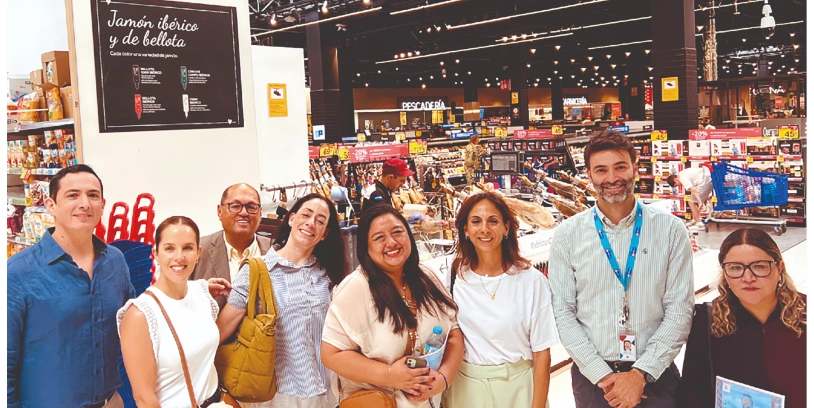
2026 was a year of many kilometers. I had the opportunity to speak about retail and the human experience in different countries: Spain, Chile, Peru, Mexico, and the United States. These included conferences, conversations with leaders, projects, and many store visits, where I witnessed innovation and saw how our employees serve customers.
The markets are different, but I was surprised by how similar some of their challenges are. That’s why, instead of predictions for 2027, I’m sharing five things I learned and, above all, what those of us who serve Hispanic consumers in the United States can do with them.
Spain: Making Coming to Work Worthwhile
Spain faces a major absenteeism problem. During the second quarter of 2026, absenteeism accounted for 7.2% of agreed-upon working hours, and more than 1.6 million people missed work every day.
The problem, also evident elsewhere in the world, reflects weaknesses in employee retention and engagement.
I was left with a question: What can we do to make our employees want to come to work?
In a supermarket, employees aren’t just behind the customer experience. They are part of the experience.
Task for 2027: better train, listen to, and recognize our teams. It’s not enough to get them to show up. Let’s make it worthwhile; our store managers bear the greatest responsibility.
Related Article: Overcoming Inflation with Human Experience and Customer Loyalty
Chile: Our Physical Store Is Now the Premier Retail Media Platform
Chile is at the forefront of retail media in Latin America. Its sophistication is impressive, but, as in the United States, we seem to be looking too much at screens and not enough at our aisles.
A study by dunnhumby found that in-store displays were the most influential retail media format among U.S. consumers, surpassing online ads and personalized recommendations.
For Hispanic supermarkets, this is a huge opportunity. Brands want to reach our consumers. We already have them in our aisles, making decisions.
Goal for 2027: Explore how screens, tastings, digital signage, promotions, and experiences can bring the store to life and allow brands to influence and measure conversion.
Peru: Protect Without Intimidating
In Peru, I spoke at the launch of the country’s first major shrinkage study. The global statistic on in-store losses is alarming: $4 trillion.
Technology is advancing in hardware, analytics, and applied artificial intelligence. But the challenge I posed to the Peruvian industry was: how does the honest customer feel when faced with all that technology?
We can protect merchandise so much that we end up telling the customer, “I don’t trust you.”
Task for 2027: Invest in better control systems, but evaluate them on two criteria: how much they reduce our losses and how much they contribute to a safe, pleasant experience. Let’s protect inventory without making customers feel watched or losing trust.
Mexico: Purpose Is Demonstrated
Mexico took me to Culiacán, home to Coppel, the major retailer celebrating 85 years in business this year and well known to Mexican consumers in the United States. We talked about the customer experience, but above all about purpose and trust.
We can have NPS, surveys, dashboards, and customer journeys. But no tool can replace a more basic question: Why should a customer trust us?
Purpose isn’t just a slogan on the wall. It’s demonstrated when we streamline the return process for a defective product or greet customers with a smile and address their concerns.
Task for 2027: Turn our purpose into behaviors that every employee can understand and put into practice. Trust is built one interaction at a time.
United States: Listening, Serving, and Protecting Wallets
Back home: 2026 was a difficult year for many families, particularly our own. By mid-year, 71% of U.S. grocery shoppers said they were very concerned about inflation, and 77% were changing their spending habits.
For part of our community, economic pressure was compounded by uncertainty and fear surrounding immigration issues.
That’s why Hispanic supermarkets must be obsessed with listening to our customers, offering them the best possible value, and serving them exceptionally well.
We have more tools than ever before. Now we need better inventory, logistics, and control systems that reduce costs and prevent stockouts, and, especially, a customer relationship management (CRM) system that lets us get to know each customer individually.
Consumers are ready: 85% of Hispanic consumers have at least one supermarket loyalty card, and 90% use a grocery shopping app during their visits.
Task for 2027: Move from knowing the Hispanic consumer to knowing each Hispanic consumer. Implement or update our loyalty platform and help them save money through a personalized experience.
Five countries later…
The big question 2026 leaves me with isn’t whether we need more technology, but what we need it for.
To care for our employees, energize our stores, and protect without intimidating, to build trust. To operate more effectively. And to listen to and serve our customers better.
We Hispanic supermarkets already have something extraordinary: closeness, culture, and community.
In 2027, we don’t need to become more high-tech supermarkets. We need to use technology to become better supermarkets.