
IGA, the Independent Grocers Alliance, is “just getting started,” CEO John Ross told Abasto Magazine in an exclusive interview.
Indeed, IGA has tripled in U.S. size in four or five years. It now runs about 8,000 stores worldwide. Still, Ross admitted independent grocers are lagging with younger shoppers, calling it “a problem we need to solve.”
Moreover, he argued that a supermarket should be “the most egalitarian business model there is.”
Ironically, Ross once swore off the business. He still remembers coming home from his first supermarket job at 16. His verdict: “This is very, very hard. I never want to work in retail.”
Yet he never left. Decades later, the grandson of a West Virginia grocer leads the Independent Grocers Alliance (IGA).
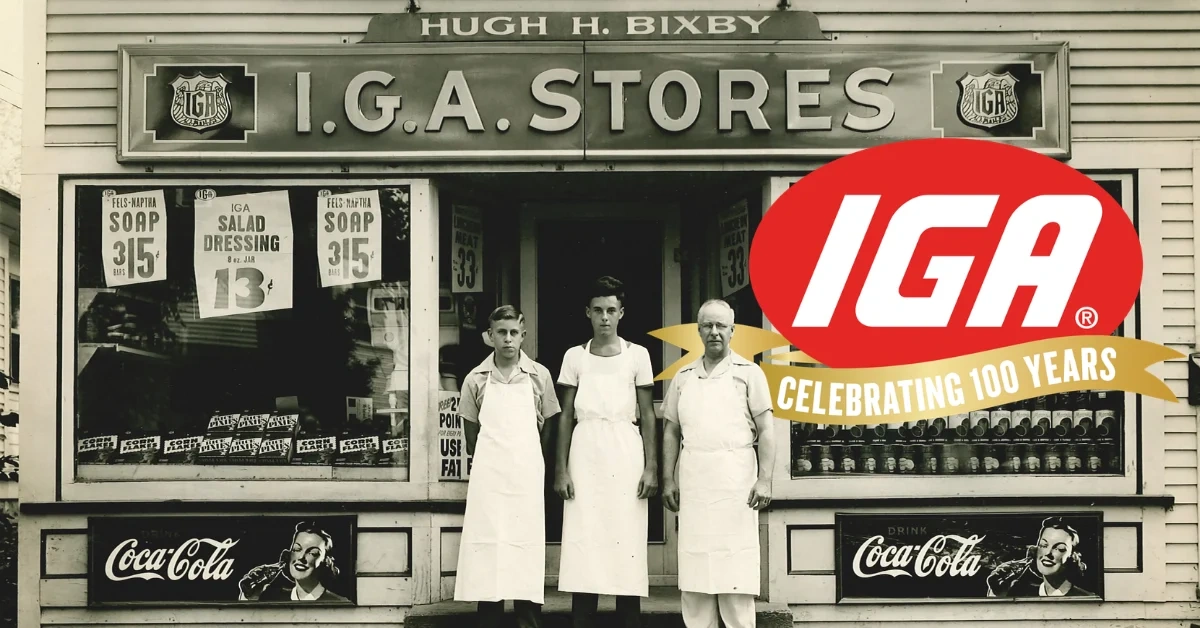
This fall, the alliance celebrates its 100th anniversary.
Throughout, Ross sounded less like a global alliance leader and more like the store boy he once was.
Moreover, he said the best part of his job is still helping family-owned independent grocers grow.
“It’s the coolest job there is,” he said.
Your grandfather owned a grocery store, and you started as a parking attendant. How did that shape your leadership?
You could say the grocery business is in my DNA. Retail teaches you an incredible work ethic and discipline.
Those who end up loving it see a customer with a problem—or someone upset—and don’t run away.
Rather, they see something to run toward. If you solve that problem, you create a connection that lasts forever.
The 100 Anniversary Celebration

What does the centennial mean for IGA and independent grocers?
It’s a great story. In 1926, the first national chains were driving small businesses out left and right.
That’s why its founders created IGA so independent stores could band together and use their collective strength to compete.
The competitors have changed, but the need for this business remains the same.
Consider anyone reading this magazine who inherited the business from parents and grandparents.
They can rightly tell their family, “My job is harder than yours.”
Think about the skills required today: loyalty programs, e-commerce, digital media, and social media.
IGA continues to grow. Where is the opportunity for independent grocers?

We’ll end this year with about 4,000 stores in the United States alone.
And worldwide, we’ll have well over 8,000—close to 9,000.
In fact, the company has tripled in size in the United States over the past four or five years.
But I believe we’re just getting started. There are 30,000 independent stores in the country.
And they’re not the same businesses they were 20 or 30 years ago.
Many have Hispanic owners or serve Hispanic neighborhoods.
How are young and multicultural shoppers changing the landscape for independent grocers?
As a group, independent retailers tend to lag. Our stores focus on our primary customer today, who is increasingly older.
We may not have the same connection with their children or grandchildren.
That’s a shortcoming and a problem we need to solve.
But no generation of consumers has ever been more passionate about food.
They’re passionate about local products, and authenticity matters a great deal.
Plus, they’re much more open to trying new things. In reality, our audience is everyone who eats.
You can’t afford to run a low-margin business like a supermarket and fail to serve your entire community.
The Challenges Facing Independent Grocers
What was the biggest challenge this year?
To be honest, it’s tough.
The policies coming out of Washington, from immigration to SNAP to tariffs, all conspire to make things harder for consumers.
Inflation is very, very bad, and consumers need more value.
Our shoppers deserve the same deals, savings, and prices as someone in a more affluent suburban neighborhood.
Related Article: 2026 Review: Challenges, Opportunities, and the Hispanic Market
How can a small-town independent grocer use AI?
I’m very optimistic about AI.
However, I’m not at all interested in the big corporate AI deals that mega-retailers are making.
Instead, I’m interested in taking the data we already generate and bringing it down to the lowest levels.
That way, any young person in the produce department can walk down an aisle with their cell phone.
They can ask, in English or Spanish, “Are there any issues with any of the items on sale this week?”
Hundreds and hundreds of stores are already doing this.
What keeps you up at night?
In general, I’m very optimistic. Many of our retailers make a 2% net profit on a good day.
Even so, they’ve managed to grow and stay afloat. But we have to be honest about succession planning.
Sometimes the founders’ children don’t want to work in this industry the way their parents did.
The hours are long. It’s very difficult.
What do you like most about your job?
It’s when a family comes back and tells you, “We implemented your visual merchandising program, and sales went up 12%.”
Then you think: I played a small part in that.
If I do my job well and the team does theirs, we help leave a legacy.
As a result, their children and grandchildren can keep supporting those communities like no one else.
That’s why it’s worth getting up every morning.