
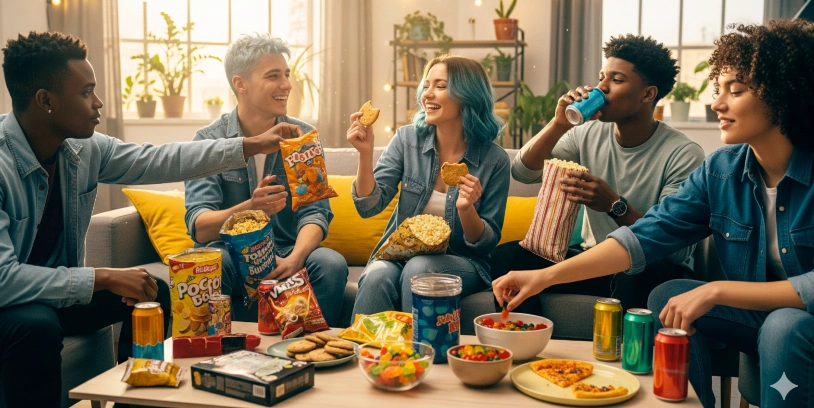
Conagra Brands has released its “Future of Snacking 2025” report, highlighting the $148.6 billion U.S. snacking industry and the evolving consumer habits. Once considered a bridge between meals, snacking has now surpassed breakfast, lunch, and dinner in frequency, adding 13 more snack moments per person each year compared with pre-pandemic times.
Globally, the snacking market reached $539 billion in 2024, led by the U.S., followed by China, the U.K., Japan, and Germany. Conagra partnered with Circana LLC to provide sales and consumption data, giving the report strong credibility and scope.
“Winning in this space means delivering the right food at the right time,” said Bob Nolan, senior vice president of demand science at Conagra Brands. “Consumers want bold flavors, better-for-you options, and choices that bring both taste and purpose.”
Flavor Explosion Defines Consumer Choice
The first of the five Future of Snacking 2025 trends is the explosion of bold flavors. Sea salt, nacho cheese, and barbecue remain classics, but innovation is reshaping the aisle. Hot honey, garlic parmesan, and sriracha are gaining popularity rapidly.
Social media has amplified flavor trends. Pickle-flavored snacks, once a novelty, have become a $67 million business, thanks to the virality of TikTok and Instagram. Searches for pickle snacks increased by 23% year-over-year, while more than 2.5 million Instagram posts featured dill-inspired creations.
Generational preferences also drive taste. Gen Z gravitates toward spicy heat, Millennials prefer nacho cheese and sour cream with onion, while older consumers lean toward simple, familiar choices like sea salt.
Global Flavors Without Borders
The second major trend is Snacking Without Borders. Globally inspired flavors generated $5.7 billion in retail sales, with a 22% volume growth over the past three years.
Popular flavors such as teriyaki and salsa continue to resonate, but emerging tastes like gochujang, curry, and Tajín are reshaping shelves. Younger generations and households with teenagers are far more likely to seek multicultural snacks, signaling long-term momentum.
Snack forms are also diversifying, from crunchy chickpeas and cassava chips to roasted seaweed, offering both texture and cultural authenticity. These innovations are pushing snacks beyond familiar forms, such as chips and pretzels.
Related Article: Retail Academy: Strategies for Confectionery and Snacks
Better-for-You Snacking on the Rise
Wellness is no longer an afterthought. Better-for-You Snacking has become a defining part of the landscape, particularly among Millennials and Gen Z. Protein-rich, portion-controlled, and nutrient-dense options are driving demand.
Meat sticks, nuts, seeds, and fruit-based snacks outpace overall category growth. Grass-fed claims saw 81% volume growth in 2025, while probiotic claims surged 186%. Searches for “high-protein snacks” hit 1.1 million in the past year, the highest among snack-related searches.
The GLP-1 medication boom has also influenced eating habits. With 7.4% of U.S. adults using weight-loss drugs, snacks offering fiber, protein, and satiety are gaining traction. Popcorn, for instance, fits perfectly into this new diet environment.
Partnerships Create Co-Branded Bites
Co-branding represents the fourth of the Future of Snacking 2025 trends. Strategic collaborations between snack companies and restaurants, as well as candy brands and entertainment properties, are thriving.
Co-branded retail snacks now account for $678 million in annual sales, with restaurant collaborations contributing nearly $1 billion. From Taco Bell-inspired chips to Hidden Valley Ranch-flavored seeds, these partnerships give shoppers familiar flavors in new, portable formats.
For younger consumers, co-branded items provide instant recognition and cultural relevance, while also satisfying cravings for indulgence.
Snacks on the Go Dominate Consumption
Ultimately, Snacks on the Go exemplifies how convenience has become a central aspect of consumer behavior. Away-from-home snack occasions are projected to jump 39% by 2027.
Impulse purchases are rising at gas stations, dollar stores, and even hardware retailers, while online sales of bulk snack packs continue to grow. Seasonal moments, such as back-to-school, also boost demand for lunchbox-friendly formats, with granola bars, cheese snacks, and mini meal kits among the top sellers.
The report notes that “on the move” is now one of the fastest-growing motivations for snacking. This trend reflects busy lifestyles and the demand for products that satisfy both hunger and convenience.
Conagra’s Future of Snacking 2025 Report makes one fact clear: snacking is no longer secondary. It has become a dominant part of the U.S. food economy, shaped by bold flavors, cultural influences, health-conscious shoppers, and convenience-driven habits.
Brands that adapt to these consumer expectations stand to capture growth in a market projected to add nine billion more snacking occasions by 2027.