
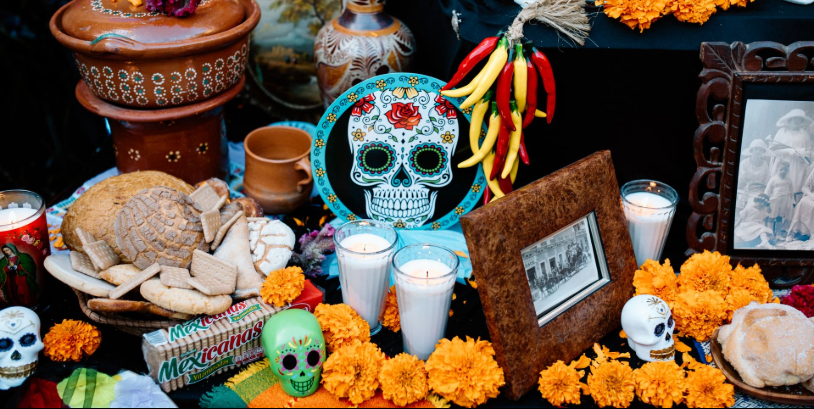
In October, many homes smell like marigolds, mole, and freshly baked bread. The atmosphere confirms that traditional Day of the Dead celebrations have already begun in the kitchen.
Setting up an altar for deceased loved ones raises questions about what to place on it and where everything should go. Families often recreate what their grandparents used to do, worried that they might forget something.
This guide organizes the menu and explains the meaning behind each food.
Table of contents
Why the Ofrenda Is Filled With Food and Not Just Flowers
Far from being simply a decoration for the home, the altar is a banquet for deceased loved ones who return. That is why food matters more than many of the other elements.
UNESCO declared the celebration intangible cultural heritage in 2008 after documenting how families prepare their loved ones’ favorite foods to welcome them.
Marigold flowers and lit candles show them the way, while hot dishes are intended to nourish the souls.
Food as a Welcome: What Does the Soul Receive When It Arrives?
The Day of the Dead tradition holds that the deceased do not physically consume the food. Instead, they absorb its essence through the steam, aromas, and colors:
- Mole is served hot and chocolate is thoroughly whisked so they release their full aroma.
- No one touches or tastes the food on the altar during the visit out of respect for the guests.
- The dishes are said to lose their flavor the next day because the souls have already taken their essence.
- The family does not eat or share the food on the table until the deceased have departed.
November 1 and 2 Do Not Have the Same Foods
The ofrenda changes depending on who is being welcomed each day. November 1 is dedicated to children, who are welcomed with toys, sweets, milk, atole, and small portions of fruit.
November 2 is dedicated to adults. At that point, families serve tamales, hot mole, black coffee, and the alcoholic beverages their loved ones preferred in life.
If a home altar honors both groups, it is appropriate to separate children and adults onto different levels or opposite sides of the table as a matter of respect and hierarchy.
The Levels of the Altar and Where Each Food Goes
The design of the altar varies according to local traditions and the space available at home, without one version being better than another. The design determines how dishes are distributed across each level.
In any design, the same basic rule applies: heavy pots and drinks go on the lower levels, within easy reach, while lighter elements remain higher up.
3 Foods for a Day of the Dead Ofrenda That Are Always Present
Before planning the deceased person’s favorite dish, you need to establish the foundation. Three specific elements appear on almost every table, from the simplest to the largest.
Seasonal ingredients fill Hispanic supermarkets during the final days of October. Each one carries its own meaning, which explains its specific place on the altar.
1. Pan de Muerto: What the Ball and Strips of Dough Represent
This is the most famous item on the altar, and its shape tells an entire story. Far from being an ordinary sweet bread, every detail of the dough has a specific meaning related to welcoming the deceased:
- The ball in the center represents the skull.
- Four strips of dough cross over one another, imitating bones and pointing toward the four cardinal directions.
- The round shape symbolizes the continuity of time, with neither a beginning nor an end.
2. Sugar, Amaranth, and Chocolate Skulls
These figures represent how death naturally accompanies life. They are molded from sugar, chocolate, or amaranth and are essential to the Day of the Dead celebration.
It is common to paint the names of deceased loved ones or living family members on their foreheads as an affectionate joke. Seed-based versions preserve recipes associated with pre-Hispanic rituals.
Traditionally, the sizes are divided across the table. Small skulls are placed in the children’s area, while larger pieces belong to adults.
3. Salt, Water, and Corn: The Foundation of the Entire Table
These elements are placed first without spending too much money or requiring complicated recipes. They begin the setup because each one is part of the traditional hospitality offered to the deceased:
- Salt is placed on a small plate to protect the soul during its journey there and back.
- Water is served in open glasses because the visitors arrive thirsty after their long journey.
- Tortillas, tamales, or ears of corn mark the end of the harvest, which coincides with the celebration.
The Hot Dishes Prepared for the Souls
At this point, the ofrenda takes on a personal character. Although the foundation of the altar is shared, the menu is selected according to the foods the deceased enjoyed while alive.
This tradition crosses borders. Data from Pew Research indicates that the Mexican population in the USA has reached 40 million people, helping explain why this tradition remains alive in so many kitchens.
Brands also celebrate the season with large-scale events. Companies such as Jumex and La Costeña have brought the Day of the Dead celebration to San Antonio and Times Square.
Mole, Tamales, and the Deceased Person’s Favorite Dish
Hot food is prepared with the goal of honoring the returning visitors, and the menu follows a few simple rules:
- Mole with chicken and rice dominates tables in central and southern Mexico because it is the quintessential celebration dish.
- Tamales are prepared in large quantities because they are also shared with living guests who come to see the altar.
- Each serving is placed on the altar while still steaming so the aromas spread throughout the room.
- The deceased person’s favorite dish takes priority, even if it is beef soup or enchiladas that have no mystical symbolism.
Rice, Beans, and the Savory Bread Served With the Main Dish
Everyday dishes are arranged around the main meal. Mexican red rice and pot beans complement the menu and give the table more substance.
Many regions prefer savory bread, such as bolillos or teleras served in baskets. These foods fill open spaces without taking attention away from the pan de muerto or the fruit.
How Much Food to Place and When to Set It Out
The amount of food depends on the available space and how many people the household welcomes. The setup begins on the afternoon of October 31 with the foods that do not spoil easily.
That night, atole and sweets are served for the children, and 24 hours later, the adults’ main dishes are added. On November 2, it is enough to reheat whatever is needed for the Day of the Dead celebration.
Seasonal Fruits and Sweets That Add Color to the Altar
These foods fill the table with color and reflect the end of the fall harvest, which is closely connected to the agricultural roots of the celebration.
The fruits and sweets can remain at room temperature for several days, an important quality given the number of days the tribute to the deceased lasts.
Tangerines, Tejocotes, Sugar Cane, and Jícama
The four traditional seasonal fruits are arranged around the edges of the table so their colors stand out throughout the Day of the Dead celebration:
- Tangerines fill the room with fragrance when peeled and attract attention with their bright orange color.
- Tejocotes represent the classic flavor of the season and are used in ponche.
- Pieces of sugar cane are used to create an arch over the ofrenda.
- Jícama adds visual freshness with its white flesh, cut into slices that often feature decorative shapes.
Candied Pumpkin, Sweet Potato, and Jamoncillo
The traditional sweets of the season share a similar foundation when cooked with piloncillo, an unrefined sugar that gives them a dark color and molasses-like flavor.
Candied pumpkin cooked with cinnamon and soft, honey-coated sweet potatoes are among the most common recipes. They are accompanied by jamoncillo made with walnuts or sugar and cut into bars.
The Ofrenda Changes According to the Region and the Family
No two altars look exactly alike, and this variety enriches the tradition. Details change according to geography and each family’s heritage.
In Pátzcuaro, graves are filled with food throughout the night. Oaxaca favors pan de yema with little dough faces, while Puebla and Tlaxcala use hojaldra bread topped with sesame seeds.
Yucatán contributes pib, or mucbipollo, a tamal buried underground for Hanal Pixán. Any of these traditions can serve as inspiration for creating a table that remains faithful to family memories.
What Happens to the Food on November 3?
When the celebration ends, the food is shared. Tradition says that the souls have already taken the essence of the dishes, so families eat the leftovers.
This moment is just as important as setting up the altar. The food is shared with neighbors and those who helped, fruit is turned into aguas frescas, and tamales go straight into the freezer.
Your Ofrenda, With the Flavors Your Family Remembers
Setting up an ofrenda does not require a huge space or a perfect list of foods. With bread, water, salt, fresh fruit, and the deceased person’s favorite dish, the table fulfills its purpose.
Additional details are added over the years, following the memories and traditions of each household. To see how the Day of the Dead is celebrated in the USA, take a look at Northgate González Market.