
When the first cloudy week arrives, your body no longer craves cold drinks. But what if your usual coffee has stopped exciting you? Then it is time to make Mexican hot drinks!
Mexico has an entire pantry of answers, and some of them are older than coffee itself. Best of all, most can be made with ingredients you can find at any supermarket.
Below, you will discover why these drinks dominate the season, which recipes are the most iconic, and even how to fix common preparation mistakes.
Table of contents
Why Mexican Hot Drinks Define Fall
Lower temperatures, the end of the harvest cycle, and the start of the holiday season explain why large pots come out of the pantry from October through December.
Tradition also travels with people. According to Pew Research Center, nearly 40 million Mexicans lived in the USA in 2024, representing 57% of the country’s Hispanic population.
With them came atole, ponche, and the wooden molinillo. There is also a practical argument: one pot serves the whole family, and the ingredients are affordable.
Atoles, the Corn-Based Foundation That Starts the Morning
This is the oldest and most versatile drink on the list. In fact, UNESCO highlighted it when traditional Mexican cuisine was added to its Intangible Cultural Heritage list in 2010.
Starting with nixtamalized corn dough, you can change the flavor with fruit, cacao, or sweeteners. This allows you to enjoy a different drink every week without much effort.
Atole: The Classic Mexican Drink for Cool Mornings
White atole is the original and simplest version: corn dough, water or milk, piloncillo, and cinnamon. It is enjoyed on its own or with tamales. From there, other variations add just one ingredient:
- Vanilla: Add the vanilla bean or extract at the end so it retains its aroma.
- Strawberry: Blend and strain the fruit before adding it.
- Guava: Sweet and highly fragrant, it is especially popular this time of year.
- Corn: Made with fresh corn kernels blended into the mixture, making it creamier and less thick.
The best part is that it takes only about twenty minutes to prepare and requires no previous experience. It is so filling that many families enjoy it as a complete breakfast.
Champurrado: Chocolate and Corn Dough to Fight the Cold
This is one of the Mexican hot drinks most closely associated with November and December evenings. It uses the same basic foundation, but chocolate tablets are added.
The rustic disk of cacao, sugar, and cinnamon melts into the hot liquid. The result is thick and dark, with a slightly grainy texture that is part of its character.
Coffees and Chocolates for Cool Afternoons
The National Coffee Association reports that two out of every three U.S. adults drank coffee the previous day, and during winter, 70% of cups were served hot.
Among Hispanic consumers, this habit is even more pronounced. If you want to understand the background behind this trend, take a look at the analysis published by Abasto.
Café de Olla: Cinnamon, Piloncillo, and Tradition
It is prepared in a clay pot, and that detail is not simply decorative: clay distributes heat evenly and adds an earthy aroma that metal does not. The ingredients and steps are:
- Water: Bring it to a boil first along with the aromatics.
- Piloncillo: This unrefined cane sugar is responsible for the dark color and molasses-like flavor.
- Cinnamon sticks: Never use ground cinnamon, since the goal is to add fragrance without clouding the coffee.
- Coarsely ground coffee: Add it at the end, once the pot has been removed from the heat, and let it steep for five minutes before straining.
Some versions include cloves, anise, or orange peel. The truth is that each ingredient has a clear purpose. The final result is absolutely delicious.
Mexican Hot Chocolate: Frothy, Aromatic, and Comforting
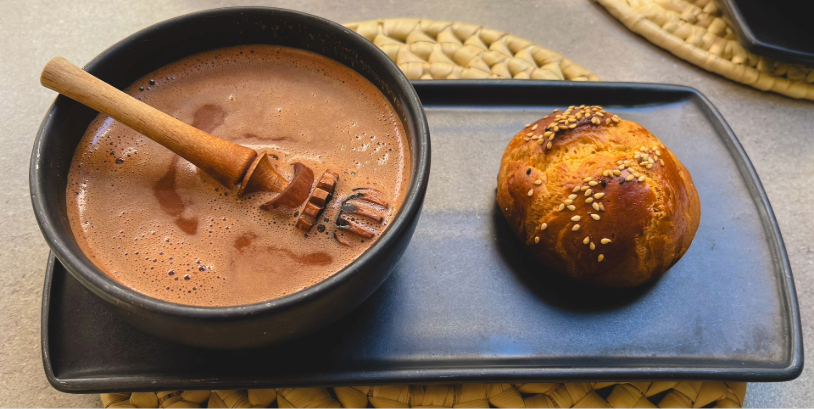
There are two specific details that distinguish Mexican hot chocolate from European versions. First, the chocolate tablet already contains sugar and cinnamon from the grinding process, so it arrives in your kitchen already seasoned.
Second, it is whisked with a molinillo. This movement incorporates air and creates a thick foam that tradition considers the best part of the cup. For extra creaminess, add milk.
Regional Drinks Few People Know Outside Their Home State
Mexican hot drinks go far beyond atole and champurrado. Each region developed its own drinks using the ingredients available nearby, and many remain unknown outside their home states.
They are worth seeking out because they expand your repertoire without requiring a new technique. You can find them in Hispanic stores or markets in cities with large Oaxacan populations.
Hot Tejate: A Warm Version of an Ancestral Drink
Tejate comes from Oaxaca and has pre-Hispanic origins. It is traditionally served cold, but the hot version fits perfectly into fall. Four ingredients that do not often appear together define it:
- Nixtamalized corn: Ground until it becomes a paste.
- Toasted cacao: Provides the drink’s bitter undertone.
- Mamey seed: When toasted and ground, it is directly responsible for the characteristic white foam.
- Cacao flower: Known as rosita de cacao, it provides the unforgettable floral aroma.
Would you like to try it? Head to Oaxacan stores, where you can find ready-made paste to dissolve in hot water. In just a few minutes, you will have a comforting drink.
Tascalate: Cacao, Corn, and Spices with a Chiapas Flavor
This is the emblematic drink of Chiapas and is immediately recognizable by its reddish color, which comes from annatto. The mixture combines toasted and ground corn, cacao, cinnamon, and sugar.
Vanilla is occasionally added, with everything ground into a fine powder that is sold ready to use. To enjoy it, dissolve two tablespoons in a cup of hot milk or water.
Seasonal Drinks for Long Nights
The final two Mexican hot drinks share one characteristic: they are prepared in large pots for sharing. They appear on any night when the house is full of people.
They also serve a different purpose than morning atole because they are enjoyed after dinner, when no one is hungry but everyone wants something warm in their hands.
Mexican Ponche: An Essential Fruity Fall Drink
It consists of a fruit infusion slowly cooked with piloncillo and cinnamon. Its aroma fills the entire house. Although the ingredient list varies by region, the classic foundation includes:
- Tejocote: The small yellow fruit that defines the flavor. It is sold fresh or in syrup.
- Sugar cane: Cut into sticks, it sweetens the drink as it cooks.
- Guava: Halved, it adds fragrance and body.
- Apple and prunes: They provide sweetness and texture.
- Hibiscus or tamarind: Optional ingredients that add an acidic contrast.
Cook all the ingredients for 40 minutes to one hour over low heat with the pot covered. Then serve and enjoy good conversations with friends or family.
Lemon Tea with Honey: A Homemade Remedy for Cold Afternoons
This is the simplest option on the list and the one that solves any unplanned afternoon. In Mexico, it is prepared in two ways, one using boiled lemon tree leaves.
The other uses lemongrass, also known as zacate limón. It is then sweetened with honey, a splash of lemon juice is added, and even a cinnamon stick can be included. It is used for colds.
If You Already Made Them and They Did Not Turn Out as Expected, Check This
All these Mexican hot drinks use simple techniques, but two or three details can make the difference between a perfect cup and a disappointment. Here is how to fix those mistakes:
How to Prevent Lumps in Any Atole
Lumps appear for one reason: the corn dough comes into contact with hot liquid before it has been dissolved. The solution takes only four steps, regardless of the type of atole:
- Dissolve the dough in cold liquid: Use a cup of room-temperature water or milk until no dry spots remain.
- Strain the mixture: Use a fine-mesh strainer before adding it, because some undissolved bits will usually remain.
- Add it in a thin stream: Pour it into the hot liquid gradually. Never add it all at once.
- Keep stirring: Stir continuously throughout cooking with a wooden spoon, reaching all the way to the bottom of the pot.
If lumps still appear, blend the hot mixture for a few seconds to restore its texture. Fixing this takes only a few minutes and completely changes the final result.
How to Serve Them and What to Pair Them With
The vessel and accompaniment complete the experience, so this is an aspect worth paying attention to. Fortunately, tradition has already tested the best combinations:
- Clay mug: The classic choice for café de olla, ponche, and hot chocolate because it retains heat much longer than glass.
- Tamales: The natural pairing for atole and champurrado, whether sweet or savory depending on the time of day.
- Pan dulce: Conchas, orejas, or cuernitos are ideal with afternoon hot chocolate.
- Buñuelos: Crispy and dusted with sugar, they are perfect with December ponche.
When serving Mexican hot drinks, make sure to fill the cups about three-quarters full. This gives the foam room to rise without spilling over. Finally, enjoy them.