
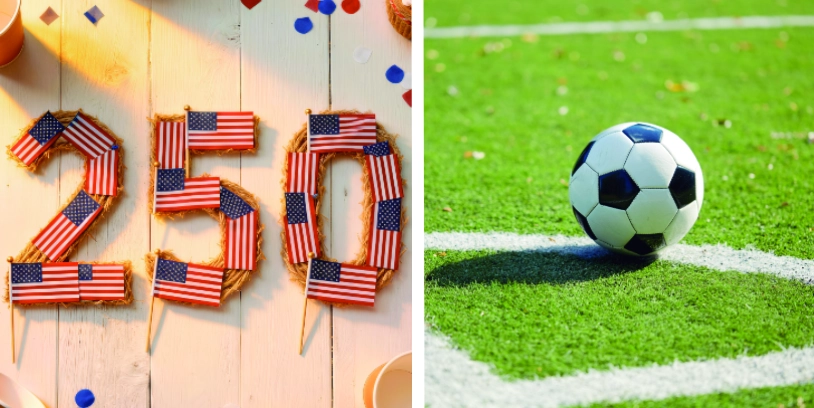
2026 is set to be an exceptional year for global trade, driven by the convergence of two major events capturing worldwide attention: the FIFA World Cup in the United States, Canada, and Mexico, and the 250th anniversary of U.S. independence. Both are expected to generate significant economic momentum through consumption and tourism.
The introduction of the 48-team format in the World Cup represents more than a sporting change; it is a business strategy of enormous economic scale. Revenue from broadcasting rights is expected to reach unprecedented levels as global audiences expand, while sponsorships offer fertile ground for brands to align with the world’s most visible sporting event.
Celebrating 250 Years
Meanwhile, the U.S. sesquicentennial offers a unique platform to reinforce its international image as a leader in democracy, diversity, and innovation. High-profile commemorative and cultural events, along with global collaborations in science, technology, and sustainability, provide an opportunity to strengthen the country’s global leadership. Incidentally, the celebration boosts global trade.
In sports, excitement is amplified by the participation of more nations and by fans eager to experience the World Cup, whether in stadiums or through media broadcasts.
Related Article: U.S. Tariffs 2025 Reshape Global Trade and Drive Inflation
The Lucrative World Cup Business
These events translate into assured financial prosperity for FIFA and its member associations, consolidating the organization as a leading player in global trade. FIFA President Gianni Infantino has said, “Football is much more than a game… it is a business.”
Commercially, the 250th anniversary strengthens strategic partnerships with local and international companies, encourages foreign investment, and expands the global reach of U.S. brands, reinforcing the country’s position as a world power both symbolically and economically.
The FIFA-expanded format also creates opportunities for more nations to qualify, making the qualifiers more inclusive and competitive and potentially raising the overall standard of global football.
In the new format, the group stage features 12 groups of four teams each, with the top two from each group and the eight best third-place teams advancing to the round of 16. This structure generates more matches and engagement.
A Dual Boost for the U.S. Economy
Therefore, the “linked” celebration of these two events in the United States, especially the first due to its sporting nature and the second due to its historical and cultural significance, will monopolize international attention.
They will significantly boost global trade through consumption, tourism, and marketing, with brands reaping multiple benefits from media visibility and the global reach this creates.