
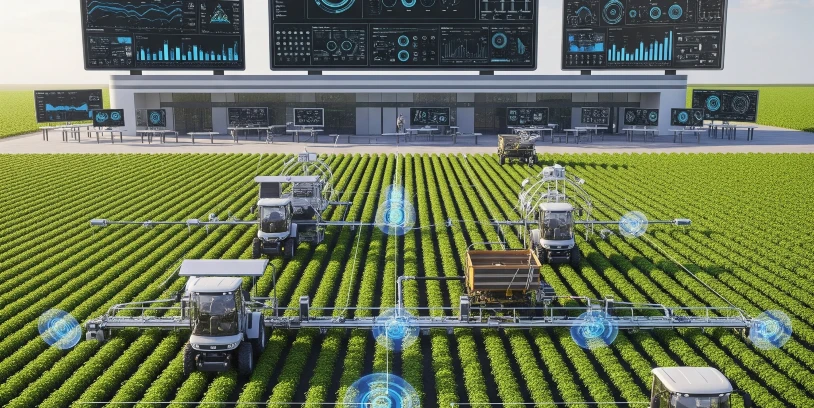
The global food system stands at the precipice of a technological revolution, largely driven by artificial intelligence and advanced biotechnologies. These innovations promise to deliver a more efficient, sustainable, and personalized approach to feeding a growing world, according to recent insights from industry leaders and academic research.
From optimizing crop yields to crafting novel proteins, technology is reshaping every stage of the food supply chain. Experts believe these advancements will address critical challenges like food security, environmental impact, and evolving consumer demands.
AI Transforms Food from Farm to Plate
Artificial intelligence, a suite of tools making decisions from data, now integrates into every facet of our food systems. It boosts efficiency and sustainability while yielding healthier food with less environmental impact.
“AI is a game-changer,” says Ilias Tagkopoulos, director of the Artificial Intelligence Institute for Next Generation Food Systems (AIFS) at UC Davis. “It enables the food industry to create solutions both innovative and aligned with sustainability and scalability goals.”
AI-powered applications span the entire food lifecycle. In agriculture, AI combines vast datasets—including plant images, water and fertilizer inputs, and environmental conditions—to provide farmers with predictive forecasts, enhancing their knowledge and experience. For example, AI-driven technology analyzes thousands of grapevine images, offering insights that traditional inspections miss.
Further along the supply chain, AI minimizes food loss. It transforms processes within food canneries, where automation already thrives. AI helps screen produce for quality and streamlines operations, moving beyond human data analysis to greater efficiency.
Ultimately, AI impacts individual consumers through personalized nutrition. AI-driven platforms and apps deliver tailored dietary recommendations based on individual preferences, health conditions, genetics, and even gut microbiome data. This promises a future of highly customized eating.
Related Article: How AI in Retail Enhances Shopping and Store Efficiency
Biotech Innovates Protein and Production
Alongside AI, biotechnology spearheads significant innovation in food. Precision fermentation, a cutting-edge approach, produces specific ingredients like proteins, enzymes, and fats with unprecedented precision and efficiency. This revolutionary technology uses microorganisms in controlled environments, paving the way for sustainable food innovation and efficiently meeting the demands of a growing global population.
Cultivated meat, also known as lab-grown meat, offers a compelling alternative to traditional livestock farming. Produced from animal cells, this technology addresses environmental and ethical concerns.
Hadar Sutovsky, VP Corporate Investments at ICL Group, notes, “Cultivated meat holds great potential, but the path to mainstream acceptance involves overcoming challenges in cost, regulatory approval, and consumer perception.”
Achieving the right taste, texture, and aroma remains crucial for widespread adoption.
Beyond cultivated meat, the industry explores a broader range of alternative proteins. While plant-based options continue to evolve, the focus expands to include mushroom-based proteins and innovative seafood alternatives.
Developers actively work to improve the sensory experience, ensuring these new products truly satisfy consumer expectations.
Sustainable Practices Gain Momentum
The drive for sustainability underpins many of these technological advancements. Carbon utilization, for example, explores innovative methods to convert carbon dioxide into valuable food ingredients. Similarly, regenerative agriculture, which restores soil health and enhances ecosystem resilience, moves from niche interest to a mainstream strategy within the food system.
Controlled Environment Agriculture (CEA), including hydroponics and aeroponics, optimizes growing conditions for higher yields with significantly less water. This facilitates the expansion of urban and vertical farming, which reduces “food miles” and enhances local food security.
Furthermore, the industry increasingly demands sustainable packaging solutions to combat plastic waste, while upcycled ingredients play a larger role in reducing overall food waste.
The integration of blockchain technology also boosts transparency and traceability throughout the supply chain. This real-time tracking helps combat food fraud and builds greater trust between producers and consumers.
A Future of Healthier, Smarter Food
These trends collectively paint a picture of a food future that is healthier, more sustainable, and more accessible.
By harnessing the power of artificial intelligence and advanced biotechnologies, the food industry moves towards scalable, climate-friendly solutions for a growing global population.
This innovative trajectory promises not only to revolutionize how we produce and consume food but also to address some of humanity’s most pressing challenges.