
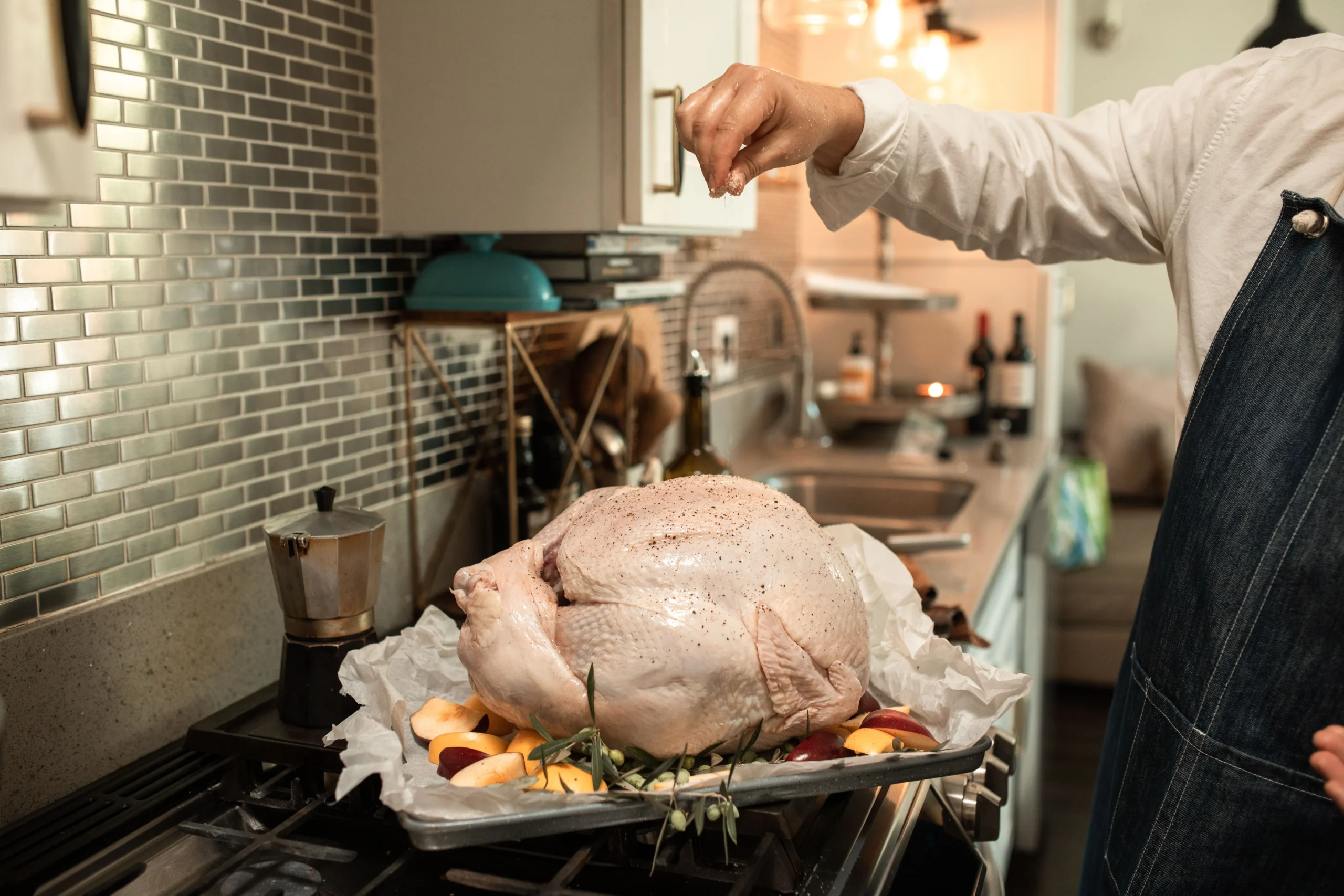
Turkey sits at the center of the Thanksgiving table, and nobody wants to carve into a dry one, right? This juicy Thanksgiving turkey recipe pairs a Latin-style adobo with a slow, steady roast, so the meat comes out tender and full of flavor.
The guide covers the whole process, from the grocery store to the carving board. Every step comes with clear times and simple tricks, so you can walk into the big day relaxed.
Below, you’ll learn how much turkey to buy, how to thaw it safely, how to make the adobo and how to roast the bird step by step. We also show you the mistakes that dry out the meat and the Latin sides that round out the meal.
table of contents
What You Need Before You Start
Before you turn on the oven, three decisions shape the result. They are the size of the bird, the time you give it to thaw and the ingredients for the adobo.
How Much Turkey to Buy for Your Guests
Plan on about 1 pound of whole turkey per person, since the bones account for a good share of the weight. Want leftovers for the next day? Then add 2 more pounds.
For example, a 12- to 14-pound turkey is enough for about 10 people. For a smaller group, a turkey breast is the better buy, and it roasts much faster.
Before you buy your Thanksgiving turkey, also check your oven. A large bird needs room for hot air to circulate, so take the measurements of your roasting pan with you to the store.
How to Thaw a Turkey Safely
The safest place to thaw a turkey is the refrigerator. The U.S. Department of Agriculture (USDA) recommends allowing about 24 hours of refrigerator time for every 4 to 5 pounds of turkey.
In practice, a 16-pound turkey needs three to four days to thaw completely. That’s why it pays to move it to the fridge on the Sunday before Thanksgiving dinner.
While it thaws, leave the turkey in its original wrapping and set it on a tray on the lowest shelf. That way, the juices won’t drip onto other food.
Latin Adobo Ingredients
The flavor comes from an adobo inspired by Caribbean pernil, the garlicky roast pork shoulder served at many Latin holiday tables. You’ll find every ingredient at any supermarket, most of them in the Hispanic aisle.
Keep in mind that these amounts are for a 12- to 14-pound bird. If yours weighs more, increase each ingredient in the same proportion.
Gather everything on the counter before you start, because the turkey adobo comes together in the blender in just a few minutes. For a medium turkey, you’ll need:
- Garlic: one whole head, peeled.
- Sour orange juice: 1 cup, or half orange juice and half lime juice.
- Olive oil: ½ cup.
- Dried oregano and cumin: 2 tablespoons of oregano and 1 tablespoon of cumin.
- Sazón with annatto and salt: 2 packets of sazón and 2 tablespoons of salt.
- Butter: 1 stick, at room temperature.
How to Make the Latin Adobo for Your Turkey
This step gives the meat its moisture and its bold garlic and citrus flavor. The good news is that it’s simple, as long as you follow these tips.
Blend the Adobo Into a Thick Paste
First, add the garlic, sour orange juice, olive oil, oregano, cumin, sazón and salt to the blender. Then blend until you get a thick, fragrant paste.
Next, set aside ½ cup of the turkey adobo and mix it with the softened butter. That seasoned butter goes under the skin, where it adds flavor and moisture to the breast.
Save the rest of the adobo to coat the bird inside and out. One tip: taste it before you use it, since each brand of sazón contains a different amount of salt.
Rub the Turkey Inside, Outside and Under the Skin
Start by removing the neck and giblets from the cavity. Then pat the turkey dry with paper towels so the adobo sticks to the skin.
Next, gently loosen the skin over the breast with your fingers, taking care not to tear it. Push the seasoned butter underneath, then spread it evenly by pressing on the skin from the outside.
Finally, rub the remaining adobo over the outside of the bird and inside the cavity. For extra aroma, tuck half an onion, an orange and a handful of cilantro into the cavity.
Let the Turkey Marinate Overnight
Once the turkey is seasoned, cover it with plastic wrap and refrigerate it. For the flavor to reach deep into the meat, let it marinate for 12 to 24 hours.
Compared with a marinade of just a few hours, a full night makes a clear difference in taste. On top of that, the salt in the adobo helps the meat hold on to its juices in the oven.
Take the turkey out of the fridge one hour before roasting. That hour takes the deep chill off the meat, so the bird cooks more evenly.
How to Roast a Turkey Step by Step
You don’t need to be a professional chef to get the timing right. What you need is the right technique, and here’s how to roast a turkey that stays juicy from the first slice to the last.
Oven Temperature and Roasting Time by Weight
Heat the oven to 325°F and set the turkey on a rack inside the roasting pan. Then pour 2 cups of broth into the bottom of the pan to keep the bird from drying out.
After that, cover the breast with foil for the first two hours, since the breast is the first part to dry out. For the last hour, remove the foil so the skin browns all over.
Roasting time depends on the weight of the unstuffed turkey. To plan your day, use the USDA roasting timetable for a 325°F oven as your starting point:
- 8 to 12 pounds: 2¾ to 3 hours.
- 12 to 14 pounds: 3 to 3¾ hours.
- 14 to 18 pounds: 3¾ to 4¼ hours.
- 18 to 20 pounds: 4¼ to 4½ hours.
- 20 to 24 pounds: 4½ to 5 hours.
Let the Turkey Rest Before Carving
When you pull your Latin-style turkey out of the oven, the juices are still moving through the meat. So if you carve it right away, those juices run onto the board and the meat loses moisture.
For that reason, let it rest for at least 20 minutes, loosely tented with foil. During that time, the juices spread back through the meat, and the turkey stays hot.
Mistakes That Dry Out Turkey and How to Avoid Them
If you’ve roasted a turkey before and it came out dry, check these two points. Both have an easy fix, and knowing them helps you roast a turkey with confidence.
Roasting at Too High a Temperature
Above 350°F, the skin browns quickly while the breast loses its juices. At 325°F, by contrast, the meat cooks slowly and evenly all the way to the center of the bird.
As a result, the breast and the thighs reach the right doneness at about the same time. Also, try not to open the oven too often, because each time it loses heat and the roast takes longer.
Skipping the Thermometer and Overcooking the Meat
Another common slip is judging doneness only by the clock or by the color of the skin. However, not every oven heats the same way, so cooking times can vary.
A meat thermometer takes the guesswork out of it. According to the USDA, the turkey is done when the thickest part of the breast and the innermost part of the thigh reach 165°F.
One extra tip: if the breast reaches temperature before the thighs, cover it with foil. That way, the breast stays protected while the thighs finish cooking.
Latin Side Dishes for Your Thanksgiving Turkey
This turkey tastes great on its own. Even so, a few sides with Latin roots turn it into a full holiday spread.
Sides That Pair Well With Latin Flavors
Balance the menu with something sweet, something fresh and some rice, so every guest can build a plate to taste. Round out your table with two or three of these Thanksgiving turkey side dishes:
- Arroz con gandules: the Caribbean rice and pigeon pea classic that goes with pernil and pairs just as well with turkey.
- Mashed sweet potatoes with cinnamon: a sweet, smooth take on mashed potatoes.
- Baked ripe plantains: their sweetness balances the salt in the adobo.
- Avocado and tomato salad: adds a fresh contrast to a rich plate.
- Chorizo and bread stuffing: a Latin spin on the traditional stuffing.
If you’d like a second rice option, try this green rice with poblano chile, which is ready in about 30 minutes. For a starter while the turkey rests, these mushrooms with cava and crispy serrano ham make an easy holiday pairing.
What to Do With Turkey Leftovers
When dinner is over, refrigerate the leftovers within two hours, as the USDA advises. That way, the meat stays safe and ready for more meals.
For example, use the shredded meat in tacos, quesadillas or sandwiches with the pan drippings. Finally, simmer the bones to make a homemade broth.
Your Latin-Style Turkey, Ready for the Thanksgiving Table
With this juicy Thanksgiving turkey recipe, you get tender meat with the flavors of home. Best of all, most of the work happens the day before, so you can spend the holiday with your family instead of in the kitchen.
Make the adobo your own with more garlic, extra butter for a richer bird or a touch of heat. Looking for more holiday ideas? Explore Abasto’s recipe section.