
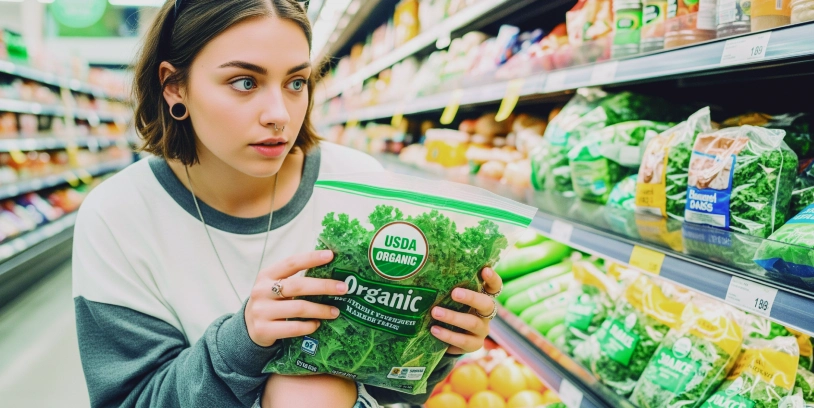
Millennials and Gen Z are fueling the organic food market’s momentum, according to a new survey from the Organic Trade Association (OTA). The report highlights how younger generations value health and nutrition over price when purchasing USDA-certified organic products.
The U.S. organic food market now totals $70 billion. Though maturing, it continues to grow—largely because younger consumers, including new parents, are embracing organic for themselves and their families.
Organic Stands Out in Crowded Label Landscape
OTA’s survey, “Consumer Perception of USDA Organic and Competing Label Claims,” conducted with Euromonitor International, polled more than 2,500 U.S. consumers in October 2024. It found that USDA Organic holds more trust than any other food label across all generations. However, its appeal is strongest among Millennials and Gen Z.
“Consumers of all ages value the Organic label more than any other food label or claim,” said Tom Chapman, OTA Co-CEO. “Younger consumers are embracing organic in growing numbers.”
That trust in the USDA Organic label comes from its alignment with health priorities. Survey respondents strongly associated organic with food free from synthetic hormones, pesticides, and antibiotics.
Younger Generations Are Willing to Pay More
Despite higher prices, Gen Z and Millennials are the most frequent organic shoppers. Nearly 90% of Gen Z respondents identified as committed or recent adopters of organic products.
These young consumers view organic food as a long-term investment in their personal health. The study reveals that Gen Z is particularly willing to pay a premium, regardless of income, to ensure cleaner and safer food.
Matthew Dillon, OTA Co-CEO, sees this trend as a pivotal opportunity: “Younger consumers are driving organic’s growth. But many still don’t realize organic meets the same ‘free-from’ standards they value, like no GMOs or antibiotics.”
‘Free From’ Claims Dominate Shopper Priorities
When browsing labels, consumers continue to prioritize safety. Claims like “no added hormones” and “raised without antibiotics” influence purchases more than broad terms such as “natural” or “local.”
Still, the survey notes a disconnect: many buyers don’t know that USDA Organic certification already guarantees these health-related attributes. Organic’s comprehensive standards are often misunderstood or overlooked amid competing claims.
This gap in consumer knowledge represents a missed chance for deeper market engagement.
Health Trumps Environmental Motivations—for Now
While organic farming’s environmental benefits are well-documented, the study finds that younger consumers are more motivated by personal health. They choose organic food primarily for what it offers their bodies—not the planet.
However, OTA’s data suggests a potential shift. As Gen Z matures, their awareness of food’s social and ecological impacts may grow. For now, though, sustainability takes a back seat to wellness.
“There’s a foundation of interest in sustainability, but it doesn’t yet drive most purchase decisions,” Dillon said.
Related Article: How Retailers Can Benefit From the Rapid Increase in Sales of Natural/Organic Products
Organic Label Most Trusted Across Food Categories
More than two-thirds of Millennial and Gen Z shoppers actively seek the USDA Organic label in nearly every food category. Fruits, vegetables, dairy, meat, eggs, and baby food top the list of items purchased as organic.
Among parents, trust is strongest in baby products. The survey found that 93% of respondents who bought baby food in the past year chose organic.
In bread purchases—a staple across demographics—27% of respondents said they selected organic options. More than half reported buying at least one organic fruit or vegetable over the past year.
Confusion Around ‘Regenerative’ Labels
Despite growing interest in sustainability, the “regenerative” label remains murky to consumers. Only 25% of respondents said the regenerative claim mattered to them, and just 10% were willing to pay more for it.
Over 40% admitted they didn’t understand what “regenerative” means—a barrier for emerging eco-certifications.
By contrast, nearly 90% of respondents recognized the USDA Organic label and linked it to clear, government-backed standards.
Educating Consumers Remains a Key Challenge
The OTA sees an urgent need to clarify the value of organic to the next generation. While young consumers care deeply about food quality, they often don’t connect the dots between USDA Organic and the “clean food” features they prioritize.
“There’s an opening here to educate consumers about the broad sweep of value the Organic label offers,” Dillon said.
With health-conscious, label-savvy young shoppers on the rise, the organic food market is poised for sustained growth—if it can cut through the noise and communicate its full worth.