

Americans are grappling with the highest rates of food and financial insecurity in two years, according to new data released by dunnhumby. The findings, unveiled during the Groceryshop conference, highlight how inflation perceptions, shrinking budgets, and shifting consumer habits continue to pressure households nationwide.
More than 35% of U.S. families with children reported skipping meals in the past month due to financial strain. Overall, 28.5% of consumers said they reduced meal sizes or went without food because of economic hardship. These numbers mark the sharpest rise in food insecurity in the U.S. since August 2023, when grocery inflation spiked to 3.7%.
While actual food-at-home inflation measured just 2.7% in August, consumers believe prices are climbing nearly seven times faster. On average, they estimate a 19.4% increase in grocery costs. Families earning less than $25,000 a year feel the pinch most, perceiving inflation as 24.8%.
Financial Pressures Mount
The study found that 59% of Americans would struggle to pay an unexpected $400 bill. That share jumps to 70% among young adults aged 18 to 34 and 77% for those with household incomes under $25,000. Both figures represent the highest levels of financial insecurity in the U.S. recorded since 2023.
Matt O’Grady, president of the Americas for dunnhumby, said the report reflects a troubling trend.
“Unfortunately, we’re now seeing similar concerning trends emerge again, and families are having to adjust their shopping habits and spending priorities as a result,” O’Grady said.
Shoppers Shift Priorities
Consumers are prioritizing value more than ever. About 62% said they now choose stores with consistently low prices, up 2.3% since the last study. Additionally, 40% compare prices online before shopping, while another 40% visit multiple stores to secure the best deals. At the same time, fewer shoppers are purchasing organic groceries, with participation falling 2.7% to 29%.
Retail channels are shifting as well. Dollar stores gained 4% in penetration over the past year, the fastest growth among formats. That surge places dollar stores ahead of discounters and club stores, making them the third-most-popular grocery destination after supermarkets and mass retailers.
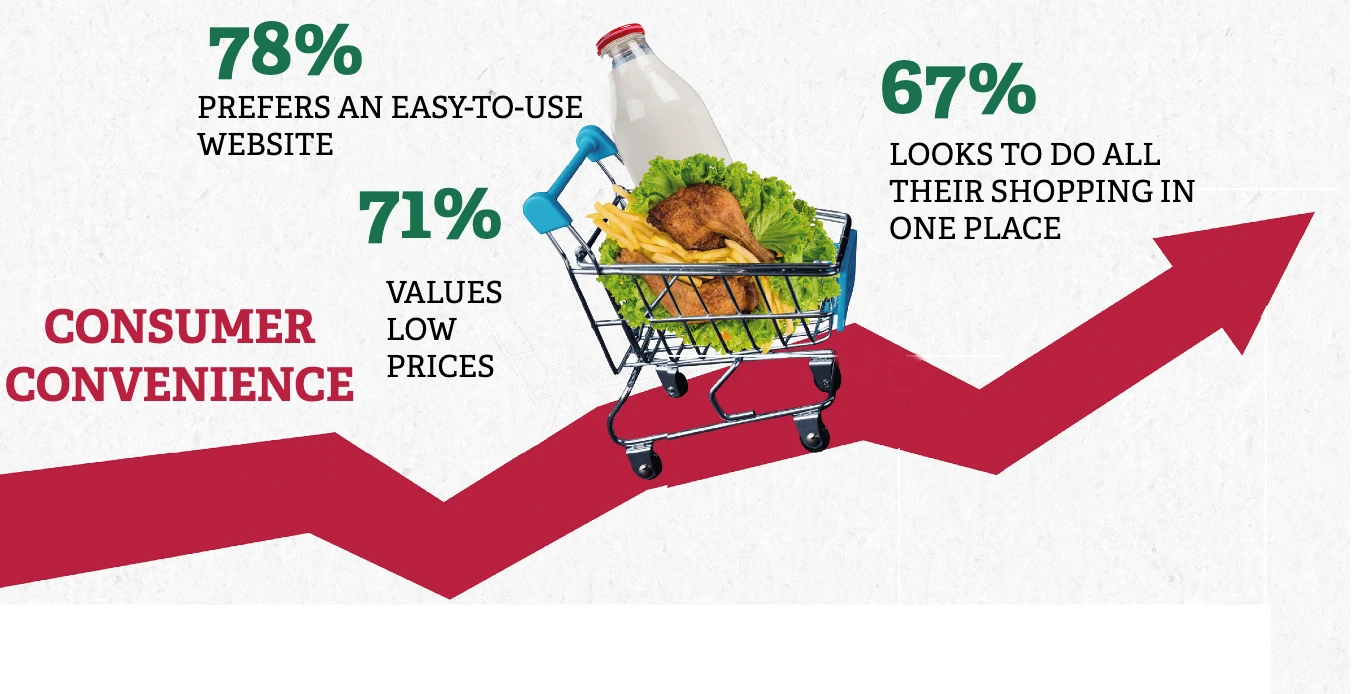
Shoppers also rank convenience and affordability as their top priorities. Nearly 78% prefer an easy-to-navigate website, 71% value low base prices, and 67% seek one-stop shopping.
Related Article: Food Industry: Highlights of 2025
Distrust in AI Remains High
The survey also examined how shoppers view artificial intelligence, revealing low confidence in the technology. Only 23% of Americans said they trust AI, the second-lowest level across the Americas. By comparison, trust runs higher in Latin America: 33% in Mexico, 34% in Colombia, 40% in Chile, and 46% in Brazil.
Despite skepticism, U.S. shoppers still see potential benefits. Among the most appealing applications are personalized rewards, security tools, budgeting assistance, and health-tracking features. High-tech options such as virtual shopping assistants, smart shelves, and self-driving carts also drew interest, though to a lesser extent.
O’Grady noted that retailers can build trust by using AI to meet customer needs directly.
“Although this wave underscores how many individuals are struggling now, it also shows that shoppers are increasingly receptive to retailers who can meet them where they are and provide them with AI tools,” he said.
Study Background
The dunnhumby Consumer Trends Tracker, now in its third year, measures shopping behavior, spending priorities, and inflation perceptions each quarter. Wave 11 included responses from 8,500 grocery shoppers across the U.S., Canada, Brazil, Colombia, Mexico, and Chile. The online interviews were conducted in August 2025, with between 1,000 and 2,000 participants surveyed in each country.
By comparing perceptions against real economic data, the study offers insights into how families adapt when faced with tighter budgets. As inflation fears persist, more Americans appear to be relying on low-cost retailers and value-driven strategies, highlighting ongoing shifts in food and financial insecurity across the U.S. and the nation’s grocery landscape.