
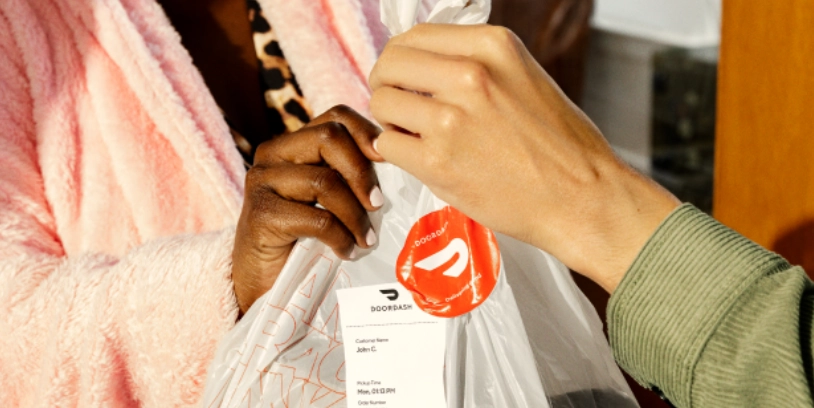
SNAP grocery delivery is turning into a steady source of new customers for supermarkets, according to new research from DoorDash. The company’s third annual SNAP/EBT report finds that most shoppers who pay with benefits on the platform had never ordered from that store before.
DoorDash released “Groceries Within Reach” on Sept. 22 during Hunger Action Month. The study combines internal platform data with a survey of 1,107 consumers who used SNAP/EBT on DoorDash in the past month. The survey carries a margin of error of plus or minus 3 percentage points.
A Fast-Growing Channel for SNAP Shoppers
DoorDash began accepting Supplemental Nutrition Assistance Program payments through electronic benefit transfer, or EBT, cards in 2023. Since then, adoption has climbed quickly. Between June 2025 and June 2026, the number of consumers who added SNAP/EBT cards to the app jumped from nearly 3 million to more than 4.5 million.
Retail participation grew as well. Nearly 75,000 stores now accept the benefit on the platform, up from about 50,000 a year earlier. As a result, the company reports that 99% of SNAP-receiving households nationwide can reach at least one participating store.
Alongside the report, DoorDash also welcomed seven grocery partners: Albertsons Market, Amigos, Boyer’s Food Markets, Food Smart, Hays Supermarkets, Market Street and United Supermarkets.
Why SNAP Grocery Delivery Matters to Retailers
For supermarket operators, the merchant data stands out. About 80% of a store’s SNAP customers on DoorDash had never ordered from that location before it enabled SNAP/EBT payments.
These shoppers also buy more. SNAP customers spend roughly 50% more per order than non-SNAP customers at the same stores. Moreover, they order about three times as often each month.
Those patterns point to full stock-ups rather than quick fill-in trips. Meat and fish lead SNAP grocery spending at 15%, followed by pantry staples at 12%, produce at 8%, and dairy and eggs at 7%.
Loyalty to the channel runs deep, too. If SNAP/EBT delivery disappeared, 61% of respondents said they would switch to an online big-box retailer. Only about 25% would return to the same store in person. Among consumers with a disability, 67% would turn to another delivery option.
The stakes are significant. Citing the National Grocers Association, the report notes that SNAP represents roughly 12% of U.S. grocery sales. At grocers serving low-income rural and urban communities, that share can top 60%.
Related Article: USDA Cracks Down on SNAP Retailer Fraud Across New York City
Who Relies on the Service
The survey paints a clear portrait of these shoppers. Women make up 86% of respondents, and 71% are parents or caregivers. Just over half (52%) report household income below $25,000 a year.
Many face real obstacles to in-store shopping. SNAP/EBT users on DoorDash are twice as likely as other DoorDash customers to live in a food desert. Additionally, 37% report a disability or chronic illness, compared with 24% of DoorDash consumers overall.
Respondents most often cited caregiving duties (46%) as their reason for choosing delivery. Transportation problems followed closely at 43%, while 36% pointed to app deals and rewards.
“Every day families who use SNAP can face impossible challenges getting to the door,” Max Rettig, DoorDash’s global head of public policy, said in a statement.
Budgets, Health and Time
Shoppers also report tangible benefits. According to the survey, 83% say delivery makes their food budget easier to manage. Similarly, 81% say it helps groceries last the entire month.
Respondents credited app features for that control. They highlighted clearly labeled SNAP-eligible items and a preview of how each order splits between benefits and other payment before checkout.
Eating habits shifted, too. Seventy percent reported positive changes, such as cooking at home more or buying more fruits and vegetables. Of that group, 90% said their household’s health improved.
Time savings round out the picture. Fully 93% said the service freed up time, and 57% used those hours to cook or prepare food.
Baby formula offers a telling example of urgent demand. Formula accounts for about 18% of SNAP spending at pharmacies on the platform. Orders placed between 5 and 7 a.m. are nearly twice as likely to include formula as the daily pattern would predict.
A Shifting Regulatory Backdrop
The findings arrive as federal SNAP rules evolve. In May, the U.S. Department of Agriculture finalized a rule requiring authorized retailers to carry seven varieties of items across four staple food categories: protein, grains, dairy, and fruits and vegetables. The agency said the updates take effect this fall.
USDA also noted that SNAP-authorized retailers accept more than $90 billion in benefits each year. With that much spending in play, digital access could influence where those dollars land.
For grocers, the takeaway looks practical. Offering SNAP grocery delivery can reach shoppers who might otherwise never enter the store.