
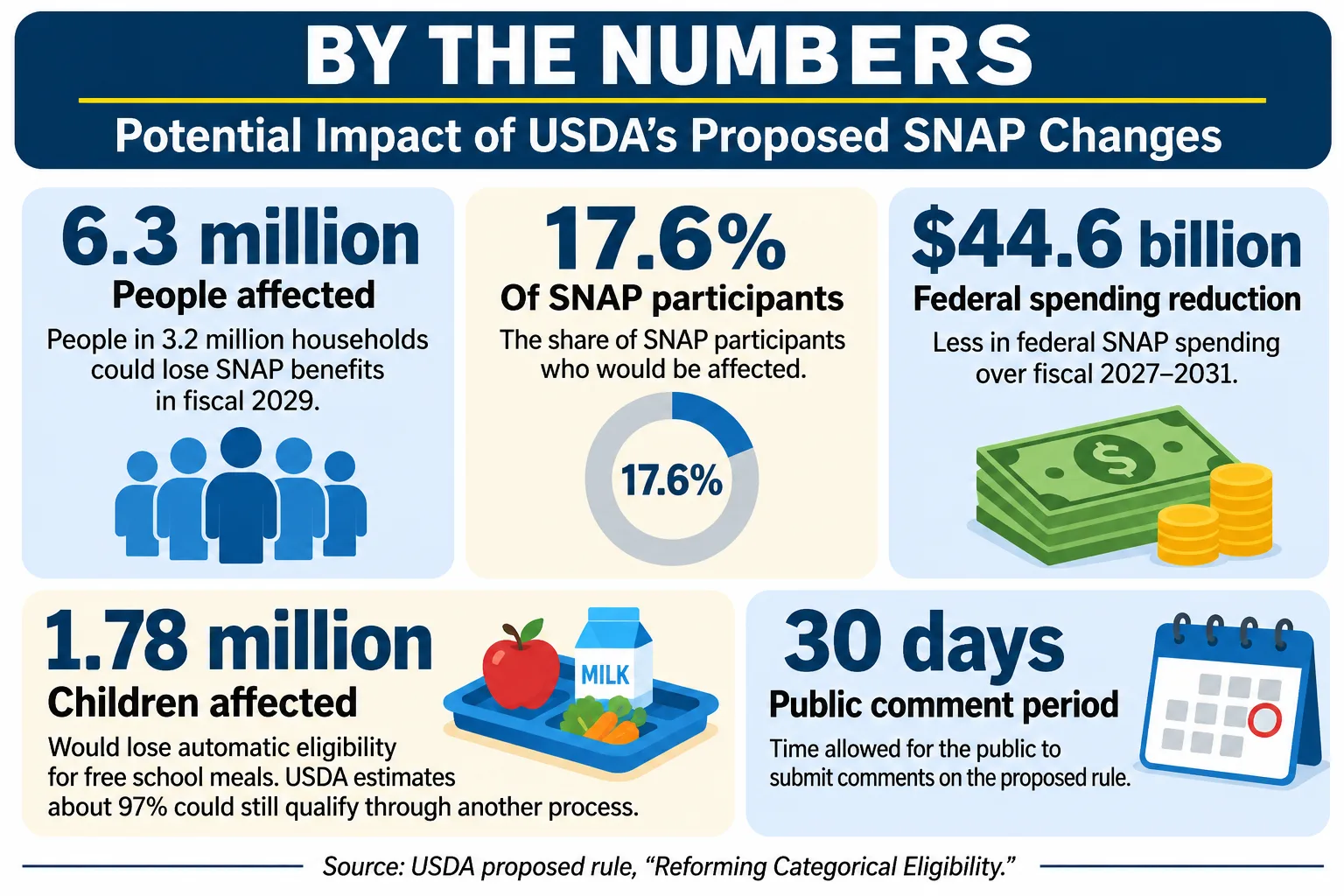
A new USDA SNAP eligibility rule could strip food benefits from 6.3 million people by fiscal 2029.
Now, the union representing 1.2 million grocery, meatpacking, and food processing workers is pushing back.
The United Food and Commercial Workers International Union says supermarkets and their employees will feel the hit.
The proposal also lands while grocers still absorb earlier cuts. UFCW says 5.5 million people already lost SNAP under H.R. 1, the 2025 budget law.
What the SNAP Eligibility Rule Changes
The Department of Agriculture’s Food and Nutrition Service published the proposal in the Federal Register on Nov. 10.
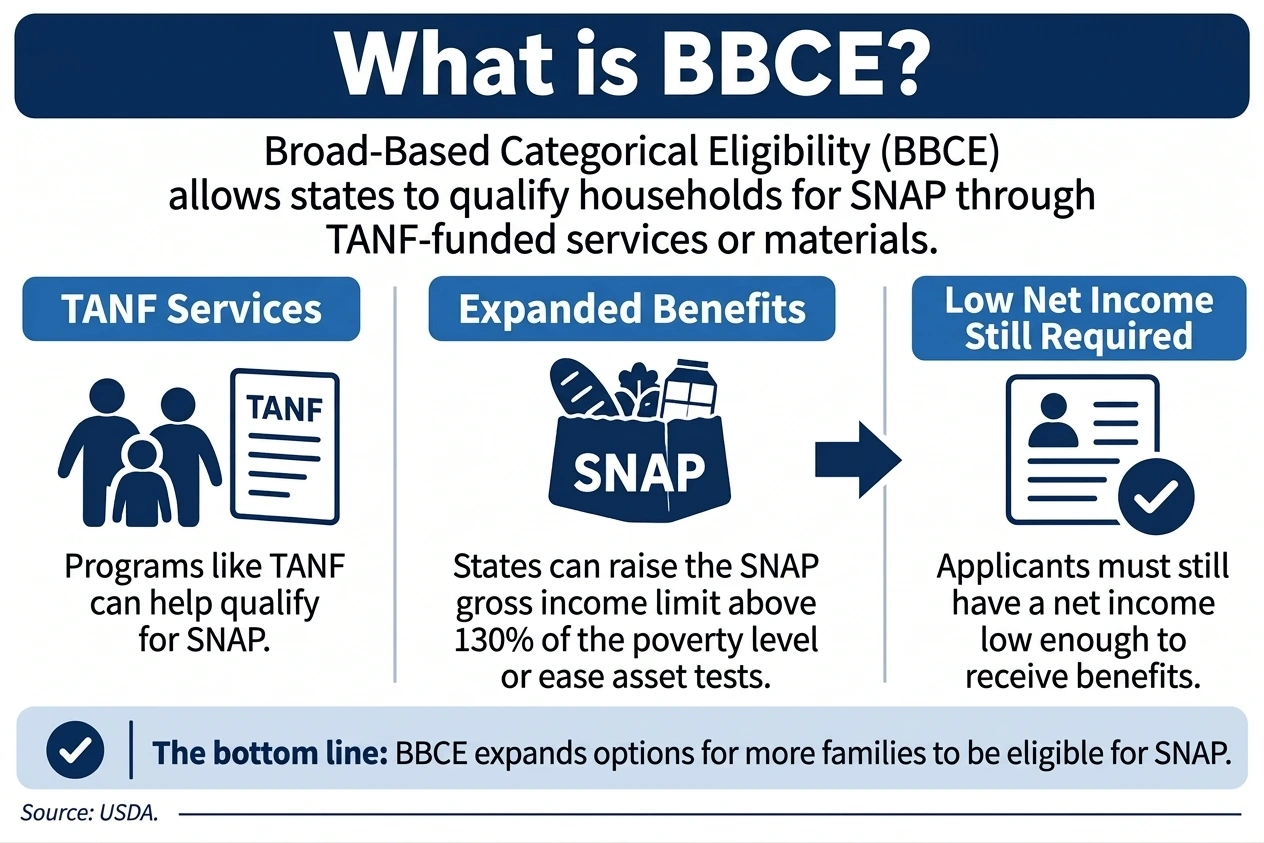
It targets a state option called broad-based categorical eligibility, or BBCE.
Today, BBCE lets states extend SNAP to households receiving non-cash aid from Temporary Assistance for Needy Families.
As a result, many states apply higher income limits or skip asset tests entirely.
Under the proposal, only households receiving actual TANF assistance would keep that automatic path.
According to the rule, 46 states used BBCE as of December 2025. Of those, 41 had no resource limit.
Why Supermarkets Are Watching Closely
For food retailers, the stakes are direct.
The union says 80% of SNAP dollars go to large stores such as supermarkets and superstores.
In fact, USDA itself acknowledges the retail risk. Its analysis states that lower redemptions mean “some small retailers may experience reductions in sales.”
Earlier cuts already show up in earnings reports. Ahold Delhaize said SNAP cuts shaved 40 basis points off second-quarter U.S. sales growth.
SNAP represents roughly 5.3% of the company’s U.S. sales.
Meanwhile, year-over-year grocery sales rose just 0.5% in April and May 2026. That figure comes from NielsenIQ data cited by Bain & Company.
Exposure, however, varies widely by store. At some independent grocers, SNAP is under 1% of sales. At others, it reaches about 70%, according to the NGA.
Union Calls on the New Congress
UFCW International President Milton Jones tied the rule to the holiday shopping season.
Jones said this is the “second straight holiday season” of uncertainty for SNAP households and grocery workers.
“This rule will only mean more hardship and pain,” he said.
He added that union members in stores, meatpacking plants and processing facilities “feel the ripple effects.”
“SNAP acts as an economic driver, supporting the entire food supply chain.”
— Milton Jones, UFCW International President
Therefore, UFCW wants the incoming Congress to make restoring SNAP funding “a key priority.”
The union also seeks stronger oversight of USDA’s management of the program.
“SNAP is an engine of growth for our families and our economy that must be fixed,” Jones said.
Related Article: NGA Rejects SNAP Restrictions in Farm Bill
Policy Experts Warn of a Work Penalty
The Center on Budget and Policy Priorities, a Washington-based research group, also opposes the SNAP eligibility rule.
CBPP says households earning slightly above 130% of the poverty line would lose SNAP.
That cutoff equals about $35,500 a year for a family of three, the group estimates.
Moreover, USDA released a second proposed rule on Nov. 10 to implement expanded work requirements.
CBPP argues the two rules together create a trap for low-wage workers. The group warns that some who earn more could lose more in benefits than they gain.
States face pressure, too. Under the 2025 law, most states will pay 5% to 15% of benefit costs for the first time.
Each state’s share depends on its payment error rate. CBPP says losing BBCE would make administration harder and more expensive.
USDA Says It Is Closing a Loophole
USDA, meanwhile, says the rule restores limits Congress wrote into law.
“Correcting this loophole is long overdue,” the department said in a statement CNN reported.
According to the proposal, the change would keep benefits focused on “the truly needy.”
USDA also estimates that households above federal limits received nearly $214 million in minimum benefits in 2024.
This is not the first attempt. The Biden administration withdrew a similar 2019 proposal in 2021.
Comment Window Closes in December
The public can comment for 30 days after the Nov. 10 publication, or through Dec. 10.
Retailers and others can file at Regulations.gov under docket FNA-2026-0661.
USDA expects the SNAP eligibility rule to reach full effect in fiscal 2029.
For grocers, that timeline leaves a narrow window to weigh in and plan.