
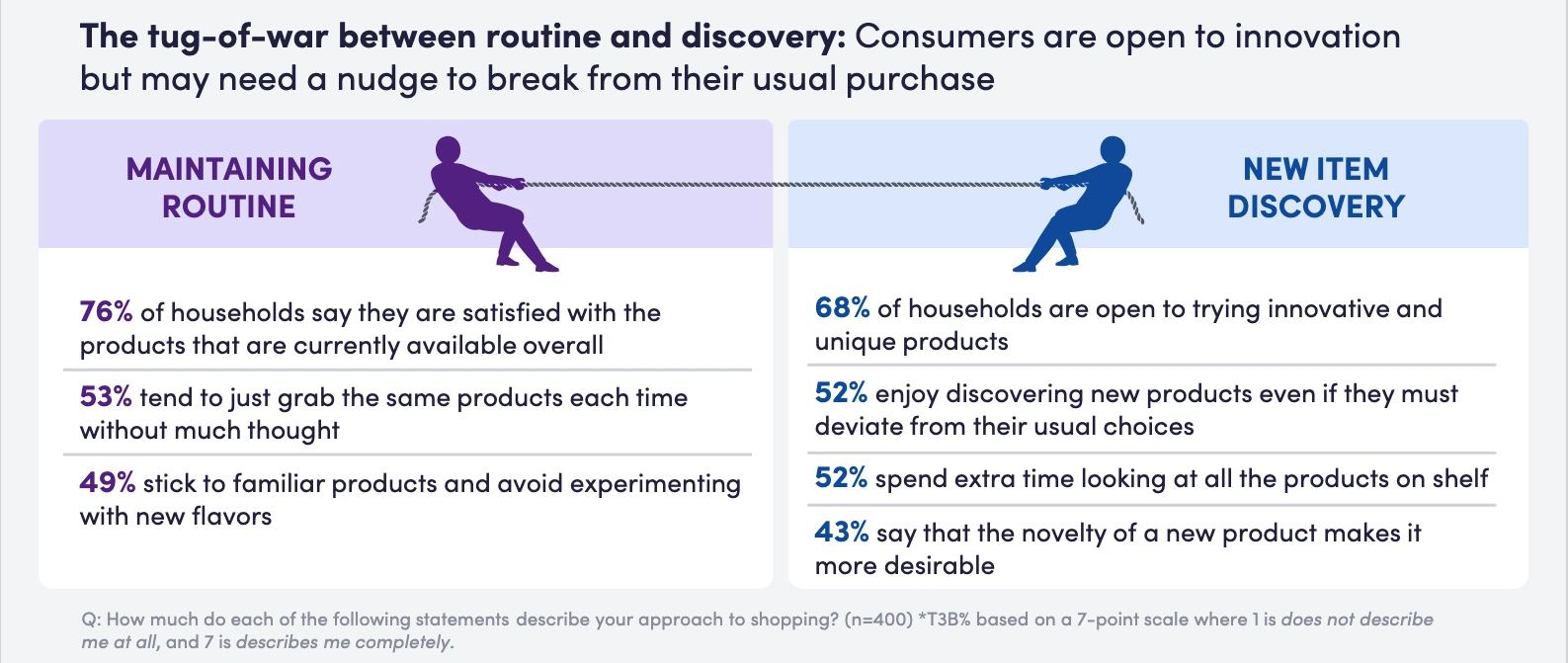
Despite widespread claims of openness to grocery innovation, most shoppers continue to rely on familiar products and established habits.
New research from Kroger Precision Marketing, powered by 84.51°, shows that while consumers express curiosity about innovation, routine remains the dominant force shaping purchase decisions at the shelf.
Based on a December 2025 survey of 400 recent Kroger shoppers, the study highlights a persistent gap between intent and action. For retailers and brands, the findings clarify what grocery innovation really means to shoppers and what it takes to move them off autopilot.
Familiarity Over Disruption
For most consumers, grocery novelty does not mean radical change. Instead, it reflects small, low-risk updates to products they already trust.
According to the study, 88% of shoppers consider a new flavor from an existing brand to be innovative. Meanwhile, 56% say seasonal versions qualify as grocery innovation.
By contrast, changes such as new packaging, brand collaborations, or sponsorships rank far lower. As a result, grocery innovation works best when it builds on familiarity rather than novelty.
More than half of respondents also say they consider a product “new” for about six months after launch, giving brands a limited window to drive trial.
Where Grocery Innovation Breaks Through
Although shoppers plan budgets and preferred brands in advance, grocery change decisions typically occur during the trip.
Four out of five shoppers say they decide to buy new items while shopping, not beforehand. Consequently, in-store placement plays a critical role.
Among in-store shoppers, 68% expect grocery innovation to appear on endcaps. Regular aisles and checkout areas trail far behind. Seasonal and promotional zones also perform strongly.
Online, visibility still drives discovery. Fifty-one percent of digital shoppers rely on ads to find grocery innovation. Nearly half check savings pages, while 37% look at suggested products.
Related Article: What’s Next? Key Industry Leaders Share Their 2026 Vision
Price Remains the Tipping Point
Even when buyers notice product changes, price determines whether they switch.
Only 60% say they would choose a new product if it costs 5% less than their regular item. However, that share rises to 80% when the discount reaches 20%.
Small discounts rarely change behavior. Meaningful price incentives reduce perceived risk and unlock trial.
Consumers also cite fear of wasting money or choosing something their household may not like as key barriers to grocery innovation.
Grocery Innovation Performs Best in Select Categories
Not all categories convert equally. Snacks, beverages, sweets, and frozen meals rank highest for both noticing and trying grocery innovation. Fresh categories demand more effort to earn trust.
Still, innovative shoppers deliver greater value. Households that purchase grocery novelties purchase more units per trip, spend more per visit, and shop more frequently than those who do not.
That spending gap reinforces why grocery innovation remains strategic, even in a routine-driven market.