
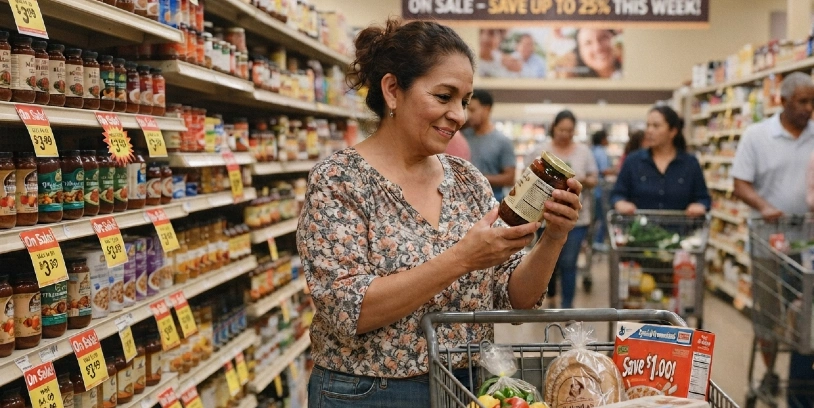
The grocery shopping value equation looks different in 2026. New research from Knit and McCormick shows price alone no longer wins the trip.
The study surveyed more than 500 qualified grocery decision-makers. Researchers also gathered 102 AI-moderated video interviews to capture shoppers’ own language around their choices.
Together, the data paints a picture of a consumer who weighs far more than sticker price before committing to a purchase.
Price Still Opens the Door
According to the report, titled “The Modern Value Equation,” everyday low prices remain the top single driver of a valuable grocery trip, cited by 74% of shoppers.
But price alone doesn’t close the deal. More than half of respondents said in-stock reliability and consistent quality matter just as much. Half pointed to one-trip convenience and getting the specific brands they trust.
“Price remains important, but it is only one variable in a much larger decision framework,” said Liam Hickey, head of research at Knit, in the release. “The modern shopper’s value equation is all about situational optimization.”
Hickey said consumers run near-constant calculations. They weigh product flexibility, real savings, time costs and family acceptance, often without realizing it.
The Grocery Shopping Value Equation Gets Personal
Knit’s researchers describe this layered decision-making as a hierarchy, not a single price point.
Price sits at the base. Trust, control, and emotional payoff stack on top, according to the findings.
That structure explains why two shoppers under identical budget pressure can land on opposite choices. One drives to a second store to save $25 to $30. Another pays a delivery fee to skip a 45-minute round trip.
The report found 72% of shoppers would make that extra drive for savings. Meanwhile, 43% said they’d rather pay for delivery than lose the time.
Neither choice is wrong. Each reflects a different read on the same grocery shopping value equation.
Related Article: 12 Strategies to Boost Q4 Sales Without Over-Discounting
Private Label Wins Some Aisles, Not All
Store brands are gaining ground, but selectively. Shoppers readily trade down on pantry staples and household essentials, the study found. Fresh meat and produce tell a different story.
Researchers call this the “private label paradox.” Consumers trust cheaper alternatives in low-risk categories. They resist them where a bad substitute means wasted money or a disappointed family.
“Even if a retailer offers the lowest prices, failing to meet shoppers’ broader expectations can still cost them the trip and future loyalty,” said Dorothy White, shopper insights lead at McCormick, according to the release.
White noted that some categories don’t allow compromise. Forcing the issue, she said, risks long-term trust.
Channel Choice Reflects Mission, Not Identity
In-person shopping remains dominant. The study found 85% of respondents still shop primarily in stores.
Yet 42% use online delivery, and a quarter rely on pickup. Notably, delivery isn’t just a premium habit; budget-conscious households use it too, prioritizing time alongside cost.
Shoppers increasingly toggle between channels depending on the task at hand, treating each as a tool rather than a loyalty statement.
What the Grocery Shopping Value Equation Means for the Industry
For brands and retailers, the takeaway is clear: value messaging built solely around discounts risks missing the point.
McCormick, founded in 1889 and based in Hunt Valley, Maryland, generates roughly $7 billion in annual sales across 150 countries, according to the company. Its portfolio spans herbs, spices, seasonings and flavor solutions sold to retailers, manufacturers and foodservice operators.
The company sees flavor itself as part of the value conversation, helping shoppers turn budget-friendly meals into something that still feels worth serving.
Knit, meanwhile, positions its AI-moderated research model as a faster path from raw data to actionable insight for consumer brands navigating shifting shopper psychology.
As grocery budgets stay tight through 2026, the companies argue the winners won’t simply chase the lowest price. They’ll build the confidence shoppers need to trust the grocery shopping value equation on every trip.