
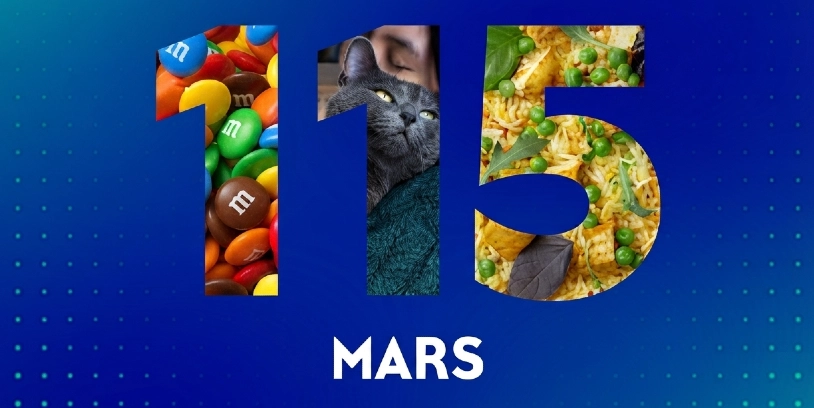
Mars, Incorporated is celebrating 115 years in business. The company traces its roots to 1911, when founder Frank C. Mars began selling buttercream candies from his home kitchen in Tacoma, Washington, according to a company statement.
Today, Mars operates as a global enterprise. Yet it remains family-owned, now led by a fifth generation of the Mars family.
From Home Kitchen to Global Portfolio
That modest candy-making start has grown substantially over the decades. Mars now employs approximately 170,000 people across more than 3,600 sites worldwide, the company said.
The business has diversified far beyond confectionery. Its portfolio spans more than 130 brands across pet food, veterinary care, science and diagnostics, snacking, and food and nutrition.
Familiar names anchor that lineup. M&M’S, BEN’S ORIGINAL, EXTRA, PEDIGREE and ROYAL CANIN all fall under the Mars umbrella, according to the company.
More recently, Mars expanded further into the food and nutrition industries. The company’s acquisition of Kellanova added to its growing footprint in the packaged food space.
Combined 2025 net sales for Mars and Kellanova put the company’s revenue above $65 billion, per the statement. That figure reflects the scale Mars has reached since its single-kitchen beginnings.
Leadership Reflects on a Family Legacy
Company leadership tied the milestone to the values that have guided Mars since its founding. Poul Weihrauch, CEO of Mars, Incorporated, credited the company’s staying power to its family ownership structure.
“Our 115-year history reflects the enduring power of our values and the long-term perspective that comes with being family-owned,” Weihrauch said, according to the company statement.
He pointed to consistency as a driver of growth. “For generations, Mars has grown by evolving with the needs of people and pets while staying true to the principles that define who we are,” Weihrauch said.
Looking forward, he framed the company’s mission in broader terms. Mars aims to “help create a better world for people, pets and the planet,” he added, per the statement.
Related Article: ‘Swicy’ Is In: Mars’ 2026 Flavor Innovations
Five Principles Guide Decades of Growth
Much of that continuity traces back to a single document. In the 1940s, Forrest Mars, Sr. wrote a letter outlining the company’s goal of creating what he called a “mutuality of benefits” for its various stakeholders.
That philosophy eventually took formal shape. In 1980, Mars codified the idea into five guiding principles: Quality, Responsibility, Mutuality, Efficiency and Freedom.
Those principles still steer company decisions today, Mars said. They inform everything from product development to community engagement and environmental strategy.
A Growing Footprint in Food and Pet Care
Beyond its confectionery roots, Mars has built out a significant presence in pet care. Veterinary services and diagnostics capabilities now sit alongside its legacy pet food brands, expanding the company’s reach into animal health.
That diversification mirrors broader trends in the food and retail industries. Legacy manufacturers increasingly move into adjacent categories, from health-focused nutrition to specialized veterinary services, to meet shifting consumer demand.
Mars’ expansion strategy reflects that pattern. Its acquisition of Kellanova adds cereal, snack and packaged food brands to a portfolio once centered almost entirely on candy.
A Sweet Partner for the Supermarket Industry
For grocery retailers, Mars’ anniversary underscores the staying power of a supplier whose products span multiple store sections. From candy aisles to pet care shelves, Mars brands touch a wide range of retail categories.
As the company marks 115 years, it continues positioning itself around long-term growth. Its family-ownership structure, executives say, allows Mars to make decisions with future generations in mind rather than short-term financial pressures.
That approach, Mars suggests, has helped it remain relevant across more than a century of changing consumer habits, and positions the company to keep evolving as those habits shift further.