
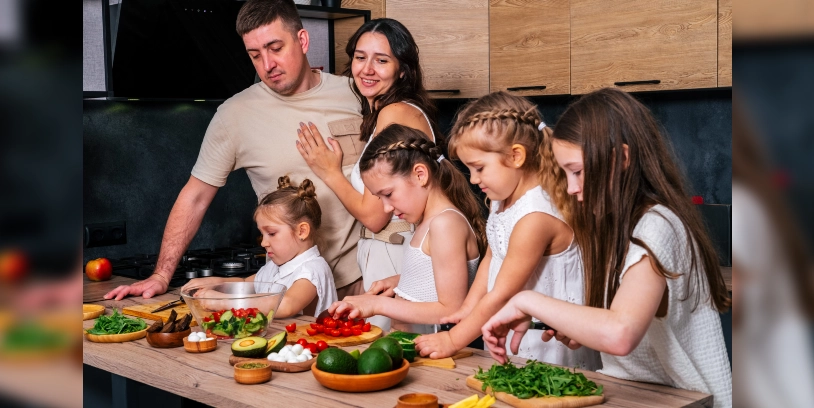
What do a family recipe, a farmer, an emerging Hispanic brand, and an international trade show have in common? Much more than we might imagine. They are all part of the same ecosystem, where tradition, learning, and innovation come together to build the future of our industry. During Hispanic Heritage Month, it’s worth asking ourselves how we can preserve our heritage while building the future. Today, more than ever, ecosystems of learning and collaboration are helping Hispanic businesses grow, open new markets, and share their flavors with the world.
Heritage is Built Too
Heritage doesn’t belong solely to the past. It’s cultivated every day. It is present in every producer who is committed to continuing to learn, in every family-owned business that decides to grow and innovate, in every partnership that opens new markets, and in every conversation that inspires a better idea.
Honoring our heritage means preserving our traditions, but also creating the conditions for them to continue evolving. In an increasingly dynamic market, preserving our identity also means learning and adapting without losing what makes us unique.
And that is exactly what happens at events like the Global Produce & Floral Show, taking place this coming October in Orlando, Florida, where thousands of producers, exporters, importers, buyers, supermarkets, researchers, and experts in logistics, technology, and marketing, among others, gather for three days in one place.
There, people learn, teach, share, connect, negotiate, and plan for the future. Afterward, everyone returns to their home countries with new ideas. And that transforms entire companies.
Learning Ecosystems that Accelerate Industry Growth
The industry’s future isn’t built in isolation. It’s built through learning ecosystems, at gatherings that bring together thousands of people representing different links in the food chain. More than just trade shows, these events become ecosystems where ideas circulate, trends are discovered, partnerships are formed, and innovation is accelerated, creating the perfect ground for growth.
A learning ecosystem is not a classroom. It is a space where people and organizations learn from one another, exchange experiences, discover trends, forge partnerships, and drive change for future generations. And it truly emerges when spaces are created not only to share knowledge but also to challenge the status quo and uncover new possibilities. In these environments, innovation no longer depends solely on individual talent; instead, collaboration builds shared solutions.
The Global Produce & Floral Show is one of these learning ecosystems, temporary universities for the industry where learning together allows us to keep growing, shape the future, and recognize the contribution that millions of Hispanics make to the U.S. economy and culture.
Thus, this event, like many others held around the world, is not just a trade show; it is not merely a place to sell; it is a space where collective learning is accelerated and an entire sector is strengthened.
The best ideas rarely emerge in isolation. They emerge when producers, farmers, distributors, retailers, researchers, and experts in logistics, technology, and marketing can meet, share challenges, and build solutions.
Related Article: Hispanic Heritage: A Driving Force Behind National Prosperity in the U.S.
When Hispanic Knowledge Crosses Borders
The Global Produce & Floral Show brings together more than 20,000 professionals, over 1,100 exhibiting companies, and representatives from more than 70 countries each year. But beyond the numbers, its true value lies in bringing together all stakeholders in the food chain under one roof.
The presence of Hispanic companies demonstrates that our region not only exports food; it also exports knowledge, innovation, biodiversity, sustainability, and a unique approach to agricultural production.
Colombia, for example, shares the excellence of its floral industry with the world; Peru demonstrates how companies like Camposol have turned innovation and sustainability into a global competitive advantage; while Mexican companies like Divine Flavor take advantage of these opportunities to strengthen business relationships, introduce new varieties, and continue expanding their international presence.
Crossing borders while honoring our heritage means that every product carries much more than a barcode. It carries the work of thousands of people, the accumulated knowledge of generations, and the identity of entire communities. When these products reach global stages like the Global Produce & Floral Show, they don’t just compete for a place in the market; they tell the story of a heritage that continues to evolve, learn, innovate, and inspire the world.
An Invitation to Look Ahead
Hispanic Heritage Month is more than just a celebration of our origins. It is also an opportunity to invest in our future, to continue learning, building partnerships, and innovating so that future generations inherit an industry that is even stronger, more competitive, and more connected to the world. Our heritage tells us who we are; learning helps us decide who we can become.
After all, every product carries the accumulated knowledge of producers, farmers, entrepreneurs, and families who have dedicated generations to perfecting their craft. When that knowledge finds opportunities to be shared, enriched, and projected to the world, heritage ceases to be merely a memory of the past and becomes a force that drives the future.
Perhaps that is the true invitation to celebrate Hispanic Heritage Month: to commit to continuing to learn, collaborate, and build a stronger industry for future generations.
Because our heritage tells us where we come from, learning and collaboration help us decide where we want to go.