
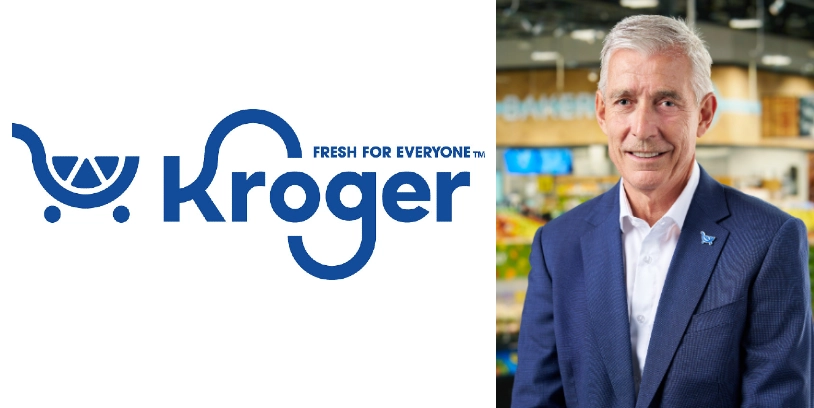
Kroger CEO Greg Foran opened his first major strategy presentation with a move few chief executives make before Wall Street: a public admission of failure. Speaking to analysts and investors Oct. 20 in New York, Foran said years of uneven store performance, rising costs and a lagging value proposition had cost the grocer customers. “The result is, we lost share,” he said. “We own that.”
That candid diagnosis set the stage for a multi-year plan to build what Kroger calls “America’s favorite grocer” and reignite growth. According to a company press release, Kroger outlined the strategy, along with new financial targets through 2029, at its 2026 Investor Update.
How Kroger Lost its Footing
Foran, who took the job in February, brings a turnaround résumé to the task. He previously led Walmart’s U.S. division from 2014 to 2019, where he focused on cleaning up stores, keeping items in stock, and improving fresh produce.
At Kroger, he identified four problems. First, execution became inconsistent, and the shopping experience varied too much from store to store. In the best locations, he said, the entrance invites shoppers in, produce looks fresh, shelves stay full, and checkout moves fast. Too many stores, however, fall short of that standard.
Second, operating costs grew faster than sales. That squeeze limited Kroger’s ability to invest in customers while protecting margins.
Third, the value proposition fell behind. Promotions grew so complicated that shoppers had to work too hard to save, and perceptions of Kroger’s prices weakened. Foran described one shelf tag listing $3.99, a regular price of $2.99, and a digital deal of $1.99 for six or more.
Finally, some capital projects missed their expected returns. Meanwhile, Kroger built too few new stores just as much of the industry expanded rapidly.
Kroger CEO Greg Foran’s Fix Starts with Price
To address the value gap, Kroger will invest $5 billion in customer value by 2029. The grocer plans to shift dollars from complex, low-return promotions into lower everyday shelf prices, both in stores and online.
Still, the company will not abandon deals altogether. Chief Merchant and Marketing Officer Mary Ellen Adcock said Kroger will keep promotions that work and phase out the rest. Foran added that the goal “is not about being the cheapest.” Instead, he wants a price equation, combined with cleaner stores and better fresh food, that persuades shoppers to choose Kroger over a nearby competitor.
Early tests support the approach. In stores running the new pricing for a full year, top-line sales outpaced the rest of the enterprise by roughly 230 basis points, Adcock said. About 250 stores will operate under the plan by year-end, with roughly 450 more joining in 2027.
Cutting Costs to Fund the Turnaround
Crucially, Kroger intends to pay for lower prices itself. The company targets approximately $4 billion in annualized cost savings by 2029, with cost of goods accounting for about half.
Direct sourcing offers one major lever. Today, less than 1% of Kroger’s purchasing bypasses intermediaries, and CFO David Kennerley wants that share above 10%. For example, Kroger secured about 40% of its imported grapes for the November season directly from Peruvian growers. Additionally, a new Kroger Capability Center in Bengaluru, India, will consolidate back-office work. Kennerley said that shift will affect roughly 3,000 associates above the store level.
Related Article: Kroger to Lay Off 3,000 Corporate Workers
Back to Building Stores
To reverse its real estate stall, Kroger plans approximately 110 new stores through 2029, after opening about 39 this year. Kennerley said the company will only approve projects that lift margins, targeting four-wall EBITDA margins of 6% to 7% at maturity. Consequently, capital spending should rise to approximately $5 billion by 2029.
Fresh, Meals and Digital as Growth Engines
Beyond fixing weaknesses, Foran wants to press Kroger’s advantages. Fresh already represents 37% of the basket, and ready-made meals now appear in over 600 stores. Adcock noted that Kroger holds just 4% of a $1.4 trillion food-away-from-home market.
Similarly, Our Brands, a $40 billion business, should grow from 35% to 40% of sales. Online, the $18 billion e-commerce operation has room to run. Only one in seven Kroger store shoppers currently buys online with the company, according to Chief eCommerce Officer Nate Faust.
Targets that Raise the Bar
Ultimately, Kroger set targets designed to hold leadership accountable. The grocer aims for approximately 3% comparable sales growth in 2029, excluding fuel and pharmacy. It also targets 3% to 6% annual adjusted EBITDA growth and 7% to 11% adjusted EPS growth from fiscal 2027 through 2029. The EPS goal replaces a prior 8% to 11% shareholder return target that included dividends. Kennerley cautioned, though, that EBITDA growth in 2027 will likely fall below the range before accelerating.
From Diagnosis to Delivery
Throughout the day, executives stressed that Kroger will control the pace, slowing down if savings lag. Separately, the company continues to pursue Giant Eagle, a deal valued at approximately $1.65 billion, covering 197 supermarkets and 11 standalone pharmacies across five states.
For now, Foran wants results to speak louder than presentations. “Less time talking about the plan and more time delivering it,” he said. “Now we execute.”