
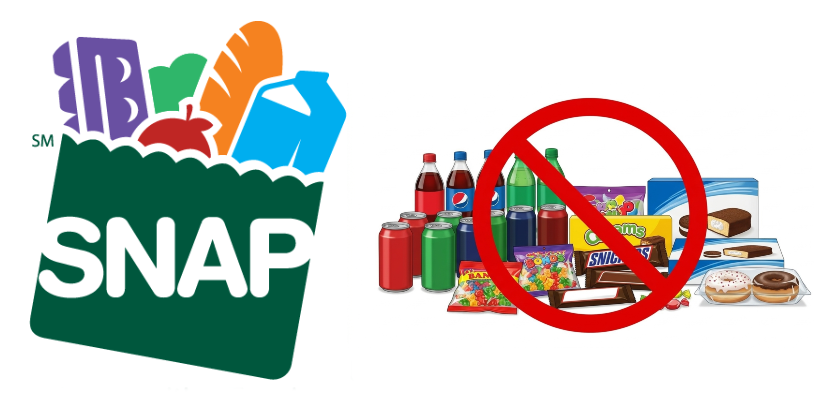
Soda, candy, and energy drinks have become an unlikely battleground in a legal fight. In June, a federal judge struck down SNAP food restrictions in all five states where shoppers had challenged them in court. Now the nation’s convenience store industry wants Washington to finish the job. Its leading trade groups are urging the U.S. Department of Agriculture to halt the restrictions nationwide until Congress says otherwise.
The stakes reach far beyond any single state. At least 23 states have won USDA approval to bar certain foods and drinks from SNAP, covering an estimated 13.5 million participants. For grocers and convenience operators in those markets, every new rule brings fresh costs, added risk and confusion at the register.
In an October 15 public comment, the National Association of Convenience Stores (NACS), NATSO and SIGMA laid out their case. NATSO represents travel centers and truck stops, while SIGMA speaks for fuel marketers. The groups addressed their letter to USDA’s Food and Nutrition Administration (FNA), formerly the Food and Nutrition Service.
Although the letter targets Florida’s waiver, its arguments apply nationwide: USDA lacks the legal authority to approve such projects, and the rules saddle small-format stores with costly, confusing compliance demands.
Why SNAP Matters to Food Retailers
For supermarkets and convenience stores alike, the Supplemental Nutrition Assistance Program remains a vital source of sales. SNAP served an average of about 42.4 million people a month in fiscal 2025, with benefits totaling roughly $95.8 billion.
Convenience stores, in particular, carry an outsized share of that business. The three associations represent more than 150,000 stores nationwide, and over 117,000 of them accept SNAP. Citing USDA fiscal 2025 data, the coalition said those locations account for 44% of all SNAP-authorized retailers, the largest share of any store format.
Moreover, these shops often serve as the only food outlet within walking distance. In many neighborhoods, they also offer the only option open after a late shift or before an early one, the groups noted.
Florida SNAP Food Restrictions Face a Legal Test
Florida’s waiver bars SNAP purchases of soda, energy drinks, candy, and prepared desserts. USDA approved the state’s request in August 2025, and Florida later moved its launch date to April 20, 2026. The project applies to the state’s entire SNAP caseload, and households cannot opt out.
At the heart of the industry’s argument sits a June 22 federal court ruling. In Aragon v. Rollins, the U.S. District Court for the District of Columbia vacated USDA approvals for similar waivers in Colorado, Iowa, Nebraska, Tennessee and West Virginia. The court found that Congress defined “food” in the statute and never gave the agency power to remove whole categories from the program.
However, that decision covered only the five states named in the lawsuit. Florida’s project therefore continues, and the FNA invited public comment on it this fall. The trade groups contend Florida’s plan carries the same “fatal flaws.” They also point out that, before 2025, Democratic and Republican administrations alike rejected every state request to restrict SNAP purchases.
USDA, for its part, frames the waivers as a way to steer taxpayer dollars toward nutritious options and improve health outcomes. Agriculture Secretary Brooke Rollins publicly criticized the June ruling, and observers anticipate a USDA appeal.
Related Article: Retailers: New SNAP Stocking Rules Begin Fall 2026
A Compliance Maze for Small-Format Stores
Beyond the legal questions, SNAP food restrictions create a daily operational puzzle, the coalition says. More than 650,000 food and beverage products crowd the market, and thousands of new items arrive each year. Yet most states have not given retailers a comprehensive list of restricted products.
Definitions also vary widely by state. In Idaho, for example, a KitKat bar qualifies for SNAP because it contains flour. A flourless granola bar, meanwhile, may count as candy. Similarly, Kansas restricts drinks containing natural or artificial sweeteners, Nebraska’s definition hinges on carbonation, and Missouri sets a 10-gram sugar threshold.
Consequently, multistate operators must juggle several rulebooks, even though most do not configure point-of-sale (POS) systems by state. Fountain drinks add another wrinkle. Because registers typically read only cup size, some stores now check what customers pour. Others have stopped accepting SNAP for fountain beverages entirely.
A Billion-Dollar Price Tag and a Two-Strike Rule
The financial stakes run high. The groups cite a 2025 study by Timothy J. Richards, released by SNAP retailer associations, that puts up-front compliance costs at approximately $1.6 billion across all retail channels. Convenience stores alone would shoulder about $1 billion of that total. Ongoing expenses could reach roughly $759.1 million a year, with convenience stores absorbing $378.6 million.
Enforcement adds pressure. Under a December 30, 2025, USDA memo, a first violation triggers a warning letter, and a second leads to involuntary SNAP withdrawal. According to the coalition, the policy fails to separate honest mistakes from intentional violations. In addition, the groups argue the 90-day grace period leaves too little time to update POS systems.
Front-line workers also bear the strain. Cashiers must catch items the system misses and then tell customers their purchases no longer qualify. That task, the associations warn, creates tense encounters at a time when employee safety concerns already run high.
Finally, the coalition argues USDA ignored the Regulatory Flexibility Act by skipping any analysis of the waiver’s impact on small businesses.
Industry and Advocates Confront Wider SNAP Cuts
The Florida debate unfolds against a broader squeeze on the program. The One Big Beautiful Bill Act cut SNAP by about $186 billion over 10 years, according to the National Grocers Association. Nationally, enrollment fell by nearly 4.3 million people between January 2025 and January 2026, WTTW reported, citing USDA data.
Grocers already feel the effects. Supermarket News reported that seven Save A Lot stores in Chicago closed in July, primarily because of SNAP reductions. Abasto Media has also covered new USDA stocking standards that SNAP retailers must meet starting this fall.
Meanwhile, the convenience channel has pressed its case for months. After the Aragon ruling, NACS government relations director Margaret Mannion said the waivers “do not make SNAP more efficient. They make it more confusing.”
Anti-hunger advocates echo many of those concerns. The Food Research & Action Center (FRAC) has warned that restriction waivers threaten to disrupt the retailer network SNAP households depend on. Likewise, Bread for the World noted that advocates fear the policy brings shame and a loss of dignity to struggling families.
The Road Ahead for Florida Retailers
Looking forward, the coalition wants USDA to demand stronger evidence before granting any waiver. Specifically, it asks states to track health outcomes such as blood glucose, body weight, and GLP-1 medication use, rather than purchase data alone. The groups also want states to measure retailer costs and store withdrawals from SNAP.
Ultimately, the associations urge USDA to stop implementing SNAP food restrictions until Congress grants clear authority. As waivers spread across the country, Florida’s outcome could shape how grocers and convenience operators nationwide plan their next moves.