
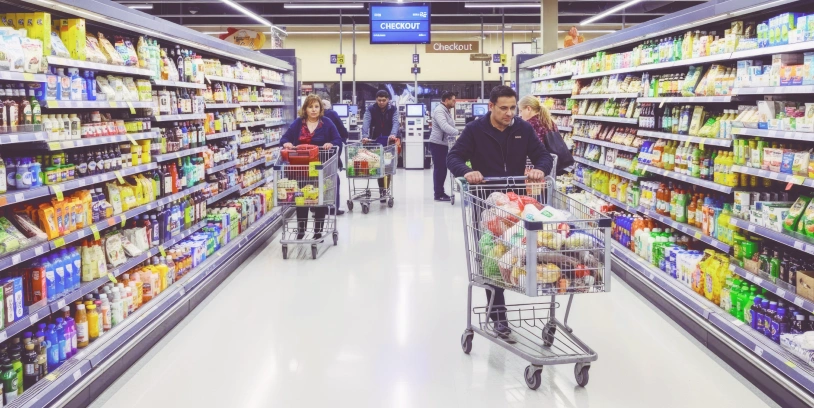
Non-Hispanic shoppers already show curiosity about Hispanic foods. Hispanic grocers that capture more of their weekly basket make that curiosity easy, safe, and fun to explore both in-store and online.
The goal is not to “Americanize” the experience. Instead, retailers should remove friction while protecting the store’s cultural identity. That approach matters as the U.S. ethnic foods category is projected to more than double from $33.7 billion in 2025 to $68.9 billion by 2035, according to Future Market Insights.
Start in the Store: Experience and Wayfinding
Non-Hispanic shoppers often enter ethnic retailers searching for one or two familiar products. At Hispanic stores, they typically look for tortillas, salsa, or a favorite hot sauce.
However, many shoppers leave after picking up these “safe” items. Retail data shows these same categories drive incremental basket growth across demographics.
To expand the share of spend, Hispanic grocers should encourage shoppers to explore more aisles.
Retailers can start by:
- Using bilingual yet simple signage that clearly explains departments and service counters. Messages such as “Fresh tortillas made daily” or “Quick weeknight meals” help shoppers navigate easily. NielsenIQ reports that nearly half of U.S. adults would shop more often at stores offering a wider multicultural assortment.
- Placing “bridge” items near entrances and power aisles. Chips and salsa, aguas frescas, plantain snacks, or frozen meals connect familiar occasions with Hispanic products. Mainstream retailers increasingly expand multicultural assortments to reflect this demand.
- Investing in front-of-house greeters who can answer “What do I make with this?” in English. Bright lighting and familiar shelf layouts also help new shoppers feel comfortable while still highlighting specialty counters.
For example, a “Tuesday Taco Night” endcap can combine shells, tortillas, seasoned meats, pico de gallo, shredded lettuce, and beverages near the entrance. Even first-time shoppers can quickly build a complete meal solution.
Merchandising that Demystifies
Multicultural consumers influence everything from chip flavors to fresh ingredients. At the same time, many non-Hispanic households now embrace global flavors for variety and authenticity.
Hispanic grocers can build on that curiosity through clearer merchandising strategies.
- Integrate Hispanic staples beyond a single ethnic aisle. Cross-merchandise tortillas, salsas, and cheeses with meat, dairy, and snacks to show how they fit everyday meals.
- Add shelf talkers and recipe cards such as “3-ingredient guacamole” or “Sheet-pan fajitas.” These tools translate unfamiliar ingredients into practical meal ideas. NielsenIQ reports multicultural shoppers spend 21% of their annual food budget on fresh foods.
- Highlight private label items that communicate authenticity and value. Several traditional grocery chains are now launching Hispanic-inspired private brands to close gaps in their multicultural assortments.
Retailers should also think of assortments as “on-ramps.” Familiar categories like chips, marinades, or frozen entrées can introduce authentic flavors while encouraging larger baskets.
Related Article: The Future of Hispanic Retail
Promotions and Pricing that Signal Everyday Value
Non-Hispanic shoppers rarely shift more of their grocery spending to Hispanic grocers unless pricing feels consistent and predictable.
While many consumers will pay premiums for global flavors, they still monitor overall grocery spending.
Retailers should consider:
- Positioning staples like tortillas and salsas as EDLP items or frequent promotions. These products already over-index with non-Hispanic shoppers and can anchor value perception.
- Using simple bilingual promotions such as “Family meal deal.” Tying promotions to common U.S. occasions—game day, school lunches, or grilling season—helps deals resonate across cultures.
Transparent and easy-to-understand pricing also encourages non-Hispanic households to treat the store as a primary shopping destination.
In-Store Events and “Retailtainment”
Experiential retail continues to drive growth for specialty and multicultural grocers. Many shoppers now view these stores as mainstream formats rather than niche destinations.
Events such as tastings, cooking demonstrations, and celebrations tied to cultural or sports moments attract new audiences. Loyalty apps that reward frequent purchases also help Hispanic grocers increase share of wallet.
Social Media as the Bridge
Social media platforms accelerate food trends, and multicultural cuisine often leads the conversation. Ethnic and specialty foods increasingly move from niche markets to mainstream demand.
Future Market Insights projects U.S. demand for ethnic foods will grow roughly 7.4% annually through 2035. That trend makes digital discovery critical.
Hispanic grocers can start by posting short videos on Instagram, TikTok, and Facebook that show shoppers how to use key products. Subtitled clips highlighting weekly meal bundles make recipes accessible.
Next, retailers can partner with Hispanic and non-Hispanic local creators. Finally, digital offers that shoppers easily redeem in-store help connect online inspiration with physical purchases.
As multicultural consumers continue to outspend non-Hispanic White households on fresh foods, other shoppers increasingly follow their lead into global cuisine.
That shift creates a major opportunity. Hispanic grocers can capture a larger share of the food wallet by combining cultural credibility with familiar, frictionless shopping experiences across the store and online.