
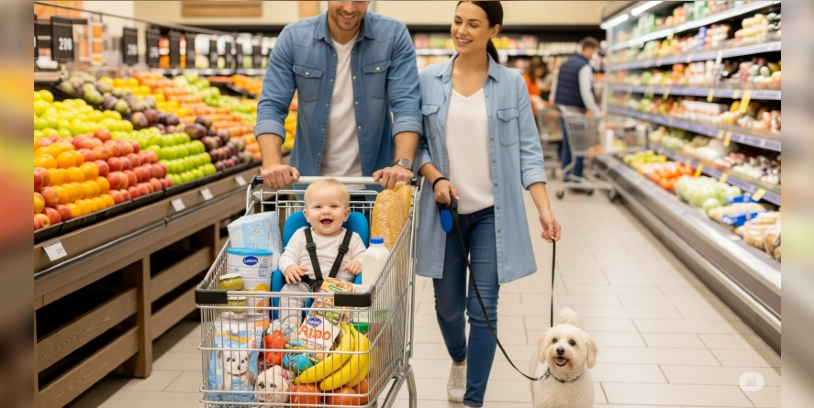
The arrival of a new baby or pet fundamentally reshapes a household’s grocery shopping habits, influencing everything from product discovery to the contents of a shopping cart, a new study reveals.
A recent Consumer Digest edition from Kroger Precision Marketing, powered by 84.51°, surveyed shoppers to understand better these significant life changes and how they are spending with their newest and furriest family members in mind. The study explores how these life events influence shopping trips, how households discover products, and what factors are most crucial in their purchasing decisions.
The Evolving Grocery Shopping Habits of New Parents
For today’s parents, the study found convenience and value now go hand in hand. New parents gravitate toward one-stop shops that provide everyday low prices on essential items, which directly influences their grocery shopping habits.
Furthermore, affordability ranks as the most important factor when shopping for both baby food and diapers. While price remains paramount, other attributes like guaranteed leak protection for diapers and age-appropriate formats for baby food also play a significant role in purchasing decisions.
Welcoming a baby changes more than just baby-related purchases; it transforms the entire shopping cart. Parents are increasingly buying more than just diapers and formula. The study highlights a substantial boost in purchases of fresh produce, yogurt, cleaning supplies, and everyday staples like eggs and paper towels.
Over half of the surveyed shoppers reported an increase in purchases of fresh fruit, fresh vegetables, yogurt, soap, hand sanitizer, and cheese after a baby’s arrival. Household items like cleaning products, laundry detergents, and paper towels also saw a boost in sales.
Shoppers find that promotions and coupons are a powerful motivator to combine baby and non-baby purchases. In fact, 81% of shoppers stated that sales, promotions, or coupons on baby items would encourage them to buy both baby and non-baby products from the same retailer.
Additionally, 58% of shoppers say cross-promotions for baby and non-baby items drive them to purchase both product types at the same store. These offers clearly shape their purchasing decisions and overall grocery shopping habits.
Related Article: Shoppers Choose Private Label Groceries as Food Costs Rise
Pets Influence Shifting Grocery Shopping Habits
The focus on family extends beyond human children to include pets as well. Pet owners are also adapting their shopping behaviors, balancing what matters most with where and how they shop.
Although many pet purchases still happen in-store, a significant portion of pet households now turn to online shopping. Nearly one-third of pet households report they shop online for dry food, treats, toys, and grooming items.
When shopping for pet food, pet owners prioritize everyday low prices above all else, with 64% of shoppers ranking it as the most important factor. Digestibility came in second at 57%, followed by brand reputation at 46%.
Online shoppers prioritize three main factors: convenience, price, and variety. Pet owners specifically mention the ease of having heavy items like food and litter delivered directly to their homes. This highlights a notable shift in grocery shopping habits toward digital convenience.
Word-of-Mouth and Social Media Shape New Habits
With so many products available, new parents and pet owners use a variety of sources to learn about new items. For parents, word-of-mouth suggestions from friends and family are the most influential source, with 71% of parents relying on them for information.
Social media posts and community groups follow at 52%, and reviews on grocery retailer websites come in at 36%.
Pet owners also rely on word-of-mouth, but dog owners, in particular, are more likely to discover new products via social media.
The study found that 31% of dog owners learn about new products on social media, whereas 35% of cat owners use advertisements as their primary discovery channel. These discovery patterns show that brands must utilize a multi-channel approach to reach new shoppers and influence their grocery shopping habits.
Economic Pressures on Grocery Shopping Habits
The current economic climate also impacts how households shop for their new family members. A majority of consumers expressed concern about inflation and consumer prices, with 52% reporting they are “extremely concerned” or “very concerned”. These concerns are causing pet owners to make changes to their spending habits.
For example, 64% of pet households are purchasing fewer toys and accessories. When it comes to pet treats, 55% of pet owners are opting for less expensive options.
The study also found that 44% of pet owners are willing to trade down to a less expensive food option. These economic considerations further shape the grocery shopping habits of pet owners as they navigate rising prices while caring for their pets.
The findings from this study provide a comprehensive look into the evolving world of family shopping. By understanding the unique drivers, priorities, and discovery channels of these specific customer groups, retailers can create more effective strategies to meet the needs of modern families, both with two legs and four.