
Grocery chains are chasing loyalty in a market flooded with delivery apps and online options. A new industry survey says the real battle still happens in the produce aisle. Logile Inc., a global provider of AI-powered workforce management technology for retailers, released its 2026 State of Fresh Grocery Shopping Report.
The company commissioned Pollfish, a third-party research platform, to survey 1,000 U.S. consumers in March 2026. The results point to one clear conclusion: fresh departments, not price tags, decide who earns a shopper’s trust.
91% of respondents said fresh departments strongly shape their trust in a grocery store. That makes produce, deli and bakery execution the single biggest signal of store quality, according to the report.
Fresh Quality Now Outweighs Price
The numbers back up a shift retailers can’t ignore. Seventy-eight percent of shoppers said they’ve switched grocery stores simply because a competitor’s fresh departments looked better. Eighty-four percent said a messy produce section drags down their impression of the entire store, not just that one aisle.
Price still matters, but it no longer wins by default. When two stores offer equal convenience, 46% of shoppers pick the one with stronger fresh departments. Only 40% choose the cheaper option. That gap challenges a long-held assumption in retail: that discounts alone keep customers loyal.
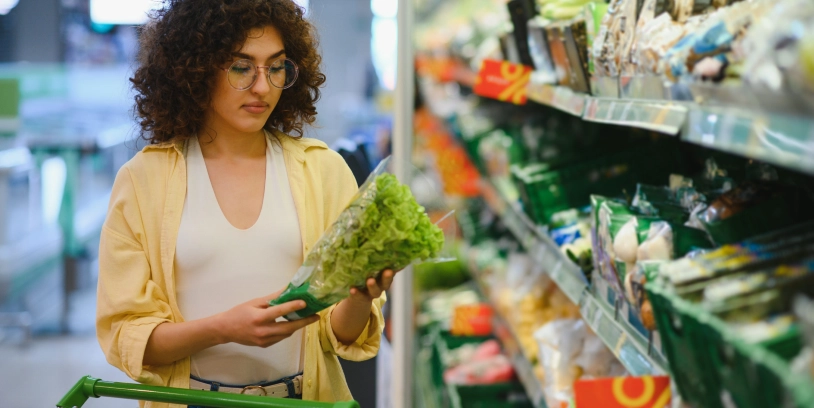
Fresh grocery shopping also helps explain why many consumers still walk into stores rather than order online. Seventy-four percent said fresh food remains a main reason they shop in person, and 85% said the appearance of produce directly shapes what lands in their cart.
Prepared foods offer another growth lever. Sixty-eight percent of shoppers said hot, ready-to-eat meals would pull them toward a store’s deli section, suggesting larger basket sizes for retailers who get execution right.
Small Signals, Big Consequences
Shoppers make these judgments fast, and they act on instinct. Clean displays, produce free of visible damage, and the right smell all register as freshness cues within seconds, the report found. Sold-out fresh items create the opposite effect, pushing frustrated customers toward competitors.
That combination puts real pressure on retailers. Fresh departments demand constant labor and carry a high risk of spoilage, yet they’ve become one of the sharpest tools for winning repeat trips.
“Freshness is still the reason people walk into stores,” said Purna Mishra, founder and CEO of Logile, in a statement accompanying the report. Mishra added that screens can’t replicate the look and smell of food prepared moments earlier, and that shopper expectations are rising faster than many retailers can keep pace with. Grocers who sync production, staffing, and inventory in real time, Mishra said, will continue to win customer loyalty.
Related Article: How to Manage the Produce Section
Generations Don’t Shop Fresh the Same Way
The survey also uncovered sharp generational splits, and Gen X emerges as the most fresh-obsessed group in the data. Fifty-four percent of Gen X shoppers, ages 46 to 61, would choose better fresh departments over lower prices, the highest share of any generation. They also lean hardest on sensory cues: 74% point to clean displays, 72% flag visible damage, and 61% call produce appearance “extremely significant.” Three-quarters have already switched stores over fresh dissatisfaction.
Boomers, ages 62 and up, follow a similar sensory-driven pattern. Eighty percent cite fresh smell as their top signal, and 77% point to clean displays, both the highest marks across generations. Meanwhile, 84% of boomers say fresh food is their main reason for shopping in person, the strongest in-store pull of any age group.
Gen Z tells a different story entirely. This generation, ages 18 to 29, ranks as the most price-sensitive: 47% pick the cheaper store when convenience is equal, compared with just 35% of Gen X. Still, fresh isn’t irrelevant to them. 75% have switched stores for better fresh options, and 64% say fresh food keeps drawing them to physical stores. Clear labeling matters most to this generation — 65% cite dates and labeling as their top freshness signal, the highest among any age group.
Millennials, ages 30 to 45, land in the middle of nearly every metric. Forty-six percent choose fresh over price, matching the overall average almost exactly.
For grocery chains, the message is clear: fresh departments now serve as a trust test that shoppers run every visit. Retailers who keep shelves stocked, displays clean, and prepared foods appealing stand to win not just a sale, but a shopper’s long-term loyalty.