
The AI in food and beverages market is on track to soar from $11.75 billion in 2024 to $320.94 billion by 2034, according to a report from Towards FnB, a sister firm of Precedence Research. That growth represents a staggering compound annual growth rate of 39.2% between 2025 and 2034.
Industry experts say the combination of advanced technology, changing consumer preferences, and a need for greater efficiency is fueling the surge.
Companies are adopting artificial intelligence to optimize supply chains, reduce waste, enhance food safety, and deliver personalized nutrition on a large scale.
AI in Food and Beverages Market Expands Rapidly
AI is transforming nearly every step of food production and delivery. From innovative packaging that tracks freshness to machine learning that predicts consumer behavior, the technology is helping brands improve quality while cutting costs.
North America led the market in 2024, with a 33% share, thanks to strong infrastructure, advanced IT systems, and growing demand for functional and plant-based foods. Meanwhile, the Asia Pacific region is forecast to post the fastest growth, propelled by urbanization, rising incomes, and increasing consumer demand for safer, higher-quality products.
Machine Learning Drives Innovation
Machine learning led the AI in food and beverages market in 2024, capturing a 30% share. Food companies use the technology to forecast demand, analyze consumer preferences, and design menus that keep customers coming back.
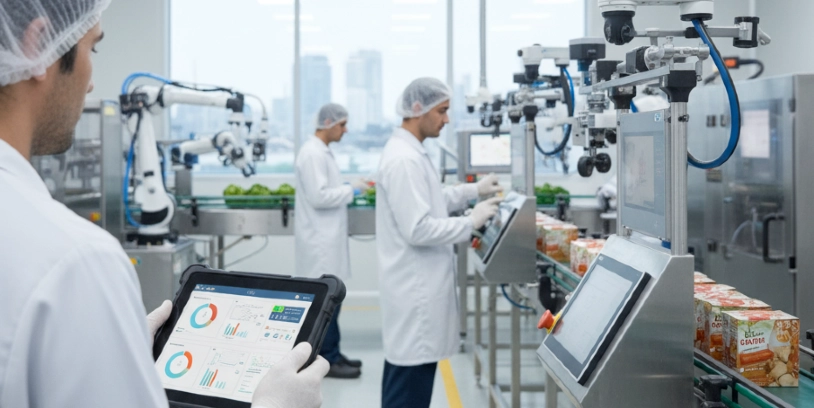
Robotics and automation are expected to experience significant growth over the next decade. From AI-powered culinary robots in Japan to automated quality control systems, companies are embracing robotics to meet growing demand while ensuring safety and consistency.
Cloud Adoption Enhances Efficiency
Cloud-based AI solutions dominated the market in 2024. Restaurants and manufacturers utilize these systems to streamline ordering, enhance customer support, and effectively manage their supply chains. The cloud also enables remote services, from AI chatbots to inventory tracking, that cut costs and increase operational efficiency.
On-premises solutions remain attractive in regions where internet access is unreliable. These systems offer tighter control over security, compliance, and decision-making, particularly for manufacturers with stringent requirements.
Related Article: How Babies and Pets Reshape Family Grocery Shopping Habits
Key Applications Fuel Growth
Quality control and safety compliance led all AI applications in 2024, enabling companies to monitor food safety, predict shelf life, and mitigate public health risks. Industry leaders see this segment as essential, with regulators and consumers demanding greater transparency in food production.
Production and packaging applications are set to accelerate as AI robots automate sorting, packaging, and assembly. Innovative packaging with embedded sensors is emerging as a significant trend, enabling real-time monitoring of freshness and logistics efficiency.
Industry Leaders Invest in AI
Recent developments highlight how major players are embracing AI. In June 2025, Yum China Holdings introduced Q-Smart, an AI-enabled assistant that helps restaurant managers handle daily operations. In August 2025, Vietnam’s Kido Group launched AIRO, a joint venture with Chinese firm Yuguangtongchen, focusing on AI-driven commercials and media content.
Such investments reflect a broader shift as global food companies integrate AI into core operations, from marketing to supply chain logistics.
Market Drivers and Challenges
Several factors drive the rapid expansion of AI in the food and beverage industry. Automation reduces labor costs, predictive analytics lowers downtime, and personalization helps brands meet evolving dietary needs. Together, these innovations strengthen consumer loyalty while improving efficiency.
However, challenges remain. Implementing AI requires costly hardware, software, and skilled data scientists—resources that small and midsize firms often lack. For many companies, traditional methods remain the norm, slowing adoption rates.
Emerging Markets Create Opportunities
Analysts expect emerging markets to play a crucial role in the industry’s future, as the middle class expands and disposable incomes rise. Demand for safe, high-quality, and personalized food products is expected to accelerate.
AI provides scalable solutions to meet these expectations. This ranges from predictive maintenance in factories to personalized nutrition plans tailored for health-conscious consumers.
Outlook for the AI in Food and Beverages Market
The market’s future looks promising as technology advances and consumer demand continues to grow. With machine learning, robotics, cloud solutions, and smart packaging gaining momentum, AI is transforming the way food is processed. It is also changing how food is packaged and delivered globally.
By 2034, industry analysts predict that AI will have a significant impact on the food and beverage sector. It will significantly shape global supply chains, enhance safety standards, and revolutionize consumer experiences across the board.