
Looking for ideas for your Christmas table? Christmas foods from Mexico, Cuba, Puerto Rico, and Venezuela offer flavors steeped in history that bring families together.
We’ve prepared this guide to tell you what people serve in each country, where each tradition comes from, and which ingredients are essential.
In addition, at Abasto, we’ll show you which products to look for in supermarkets across the United States. So, keep reading and get ready to prepare a recipe everyone will love.
Table of contents
- A Latin Christmas Table with Shared Roots
- Mexico: Romeritos, Salt Cod, and Ponche
- Cuba: Roast Pork Takes Center Stage
- Puerto Rico: The Caribbean’s Longest Christmas Season
- Venezuela: Hallacas, Pan de Jamón, and Ensalada de Gallina
- How to Prepare Christmas Foods in the United States
- Four Cuisines, One Christmas Eve
A Latin Christmas Table with Shared Roots
Although each country has its own menu, many Christmas recipes share the same origins. They combine Indigenous ingredients, Spanish cooking techniques, and African influences.
Why the Main Christmas Dinner Takes Place on December 24
Throughout much of Latin America, the main meal is served on Christmas Eve rather than December 25. Traditionally, many families would attend Midnight Mass afterward.
In Mexico, the Church encouraged people to avoid eating red meat on certain religious holidays. For this reason, México Desconocido explains that salt cod held an important place at this feast.
The following day comes recalentado, a distinctly Mexican tradition. The whole family gathers to eat the leftovers from the previous night, which many people say taste even better the next day.
Pork, Corn, and Banana Leaves
When comparing these Christmas tables, you’ll notice that certain ingredients appear in several countries. While pork dominates Caribbean celebrations, corn is the foundation of Venezuelan hallacas.
Similarly, banana leaves wrap Puerto Rican pasteles and Venezuelan hallacas. They protect the dough as it boils in water while adding a subtle, delicious aroma.
Another shared tradition is preparing these dishes as a group. Grandmothers, children, and grandchildren divide the tasks, turning cooking into part of the celebration and a special family moment.
Mexico: Romeritos, Salt Cod, and Ponche
Mexican Christmas Eve celebrations vary by region. In Yucatán, for example, families serve cochinita pibil, while grilled meat is popular in the north. However, central Mexico has a more recognizable holiday menu.
Traditional Christmas Eve Dishes
In Mexico City and the surrounding states, the feast usually includes several dishes served at the same time, allowing each guest to choose what they like. The most traditional options include:
- Romeritos: Cooked greens served in mole sauce with potatoes, nopales, and small patties made with dried shrimp.
- Bacalao a la vizcaína: Dried, salted cod stewed with tomatoes, capers, and güero peppers.
- Adobo-marinated pork leg or loin: Pork roasted with a marinade made from dried chiles.
- Stuffed turkey: Also known as guajolote, roasted to feed the entire family.
- Christmas Eve salad or apple salad: A fresh, sweet dish that balances the savory stews.
- Christmas ponche: A hot fruit drink made with ingredients such as guava or tejocote, piloncillo (unrefined cane sugar), and cinnamon.
Bacalao a la vizcaína originated in Biscay, in Spain’s Basque Country. According to information from México Desconocido, it arrived in Mexico 500 years ago and was adapted with parsley, tomatoes, and güero peppers.
As for ponche, National Geographic mentions that it is served hot during the posadas, traditional Christmas celebrations. Some adult versions also include a splash of tequila or rum.
Romeritos: A Traditional Edible Green with a Long History
Did you know that romeritos have nothing to do with rosemary? They are a type of edible wild green known as a quelite, a word of Nahuatl origin meaning edible herb. They have been eaten in Mexico since before the Spanish Conquest.
According to UNAM Global, their cultivation is concentrated around Xochimilco, Tláhuac, and Mixquic, in Mexico City. They are grown almost exclusively for Christmas and Holy Week.
Cuba: Roast Pork Takes Center Stage
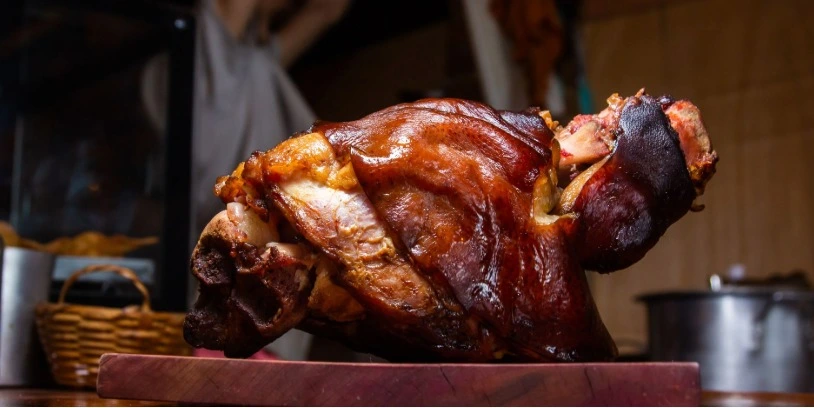
For many Cuban households, Christmas Eve without roast pork is simply unthinkable. This tradition crossed the Florida Straits and remains alive today in Miami and other cities.
Roast Pork, Black Beans, and Yuca with Mojo
In NBC News, Cuban chef George Suarez sums it up clearly: “If there’s no pork, there’s no December 24.” When he was growing up, roasting the pork took about eight hours.
Meanwhile, chef Steven Raichlen, a five-time James Beard Award winner, explains that in Miami, roast pork is marinated with mojo, a sauce made with fried garlic, cumin, and sour orange.
In addition, according to Raichlen, the meal is completed with moros y cristianos (black beans served with white rice), fried sweet plantains, and lemon-and-cinnamon flan for dessert.
The Caja China and Turrón
Many families roast their pork in a caja china, a box-shaped cooker with charcoal placed on top that works like an oven. NBC News reports that this method cuts the cooking time in half.
To end the evening on a sweet note, the television network highlights Spanish turrón, an almond-and-honey confection that appears in Hispanic grocery stores every December.
Puerto Rico: The Caribbean’s Longest Christmas Season
In Puerto Rico, the Christmas holidays are an entire season that begins in the last days of November and continues into January, ending with the Fiestas de la Calle de San Sebastián.
Pernil, Arroz con Gandules, and Pasteles
As confirmed by the island’s official tourism organization, Discover Puerto Rico, the main Christmas meal is served on Christmas Eve. Traditional dishes on a Puerto Rican holiday table include:
- Pernil: Pork leg or shoulder slow-roasted until the skin becomes crispy.
- Arroz con gandules: Rice cooked with sofrito and pigeon peas, a legume widely enjoyed throughout the Caribbean.
- Pasteles: Green plantain dough stuffed with meat, wrapped in banana leaves, and boiled.
- Morcilla: A highly seasoned blood sausage made with pork blood and rice.
Since making pasteles takes several hours, families prepare them in large batches. That’s why households organize an entire day to grate, fill, and tie each one.
National Geographic explains that the pork filling is seasoned with garlic, oregano, turmeric, and black pepper. Each pastel is then wrapped in banana leaves and boiled.
Coquito, Tembleque, and Arroz con Dulce
Coquito is the island’s quintessential Christmas drink. It is made with coconut milk, rum, and cinnamon. Interestingly, it is often compared to American eggnog.
Unlike eggnog, its coconut base gives it a unique tropical flavor rooted in the Caribbean. Some versions also include egg yolks, while others leave them out.
Classic Puerto Rican desserts include tembleque, a coconut pudding that jiggles when moved. Another favorite is arroz con dulce, a sweet rice pudding cooked with coconut milk, ginger, cinnamon, and raisins.
Venezuela: Hallacas, Pan de Jamón, and Ensalada de Gallina
A report by the Voice of America on Venezuelan Christmas traditions describes the traditional holiday plate as a combination of hallacas, pan de jamón, ensalada de gallina, and pork.
Hallacas: The Star of the Christmas Table
A hallaca is a corn-based dough filled with a stew of beef, pork, and chicken, along with olives, raisins, and capers. The hallacas are then carefully wrapped in banana leaves.
Anthropologist Ocarina Castilla, from the Central University of Venezuela, explains that this dish reflects Indigenous, European, and African roots, as well as later waves of migration.
Its cultural significance is so great that, in December 2024, according to Infobae, the Venezuelan government announced plans to nominate hallacas for UNESCO’s Intangible Cultural Heritage list.
Pan de Jamón and Ensalada de Gallina
Pan de jamón has a documented origin. Food writer Miro Popic, in Voice of America, says its first recorded appearance dates back to 1905, at the Ramella bakery in Caracas.
It consists of soft dough rolled around ham, green olives, and raisins, creating a combination of sweet and savory flavors. Today, variations include turkey, bacon, and cream cheese.
Meanwhile, ensalada de gallina is made with potatoes, carrots, shredded chicken, and mayonnaise. Its fresh flavor balances the other elements of the Christmas meal.
How to Prepare Christmas Foods in the United States
If you’re far from home, preparing these dishes is a wonderful way to keep your traditions alive. Best of all, you can find the ingredients at Hispanic grocery stores and supermarkets with Latin food aisles.
Ingredients to Look for in the Latin Food Aisle
Before making your shopping list, check the recipes from each country and group together the ingredients they have in common. Here are the products you’ll need for your Christmas foods:
- Banana leaves: Usually sold frozen and used for hallacas and pasteles.
- Achiote paste or seeds: Used to give the dough and cooking oil a yellow color.
- Sour orange: Fresh or bottled, it is the base of Cuban mojo.
- Pigeon peas: Canned or frozen, they are essential for Puerto Rican rice.
- Dried, salted cod: Must be soaked in cold water to remove excess salt before cooking.
- Mole paste: An essential ingredient for Mexican romeritos.
Additionally, to avoid last-minute shopping trips and empty shelves, buy nonperishable products ahead of time, such as dried cod, achiote, and canned pigeon peas.
If you own a store or supermarket, this list can also serve as a reference when stocking your shelves with Christmas foods. Displaying these products together makes shopping easier for customers.
Food Safety During the Holidays
With so many meat dishes on the menu, food safety is essential. According to FoodSafety.gov, fresh pork, including pernil, must reach an internal temperature of 145 °F and rest for three minutes.
Turkey and chicken used in the salad, however, must reach 165 °F. Remember to use a food thermometer because color alone does not always indicate whether meat is fully cooked.
After eating, refrigerate leftovers within two hours of being at room temperature. This way, the next day’s recalentado will be both safe and delicious.
Hallacas and pasteles freeze very well. Therefore, you can prepare a large batch in early December and enjoy them with your family throughout the holiday season.
Four Cuisines, One Christmas Eve
Romeritos, roast pork, pasteles, and hallacas show that Christmas foods are more than just holiday menus. Each dish preserves the memories of a community and the love shared by families.
This December, try adding a dish from another country to your table and discover new flavors with the people you love. For more seasonal ideas, visit the official Abasto website.