
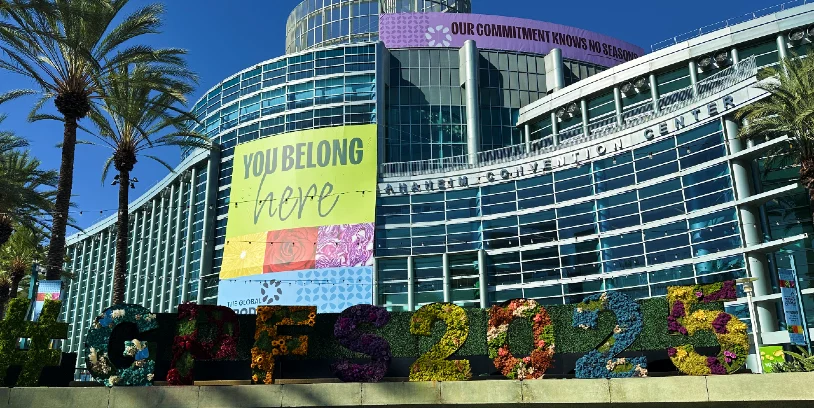
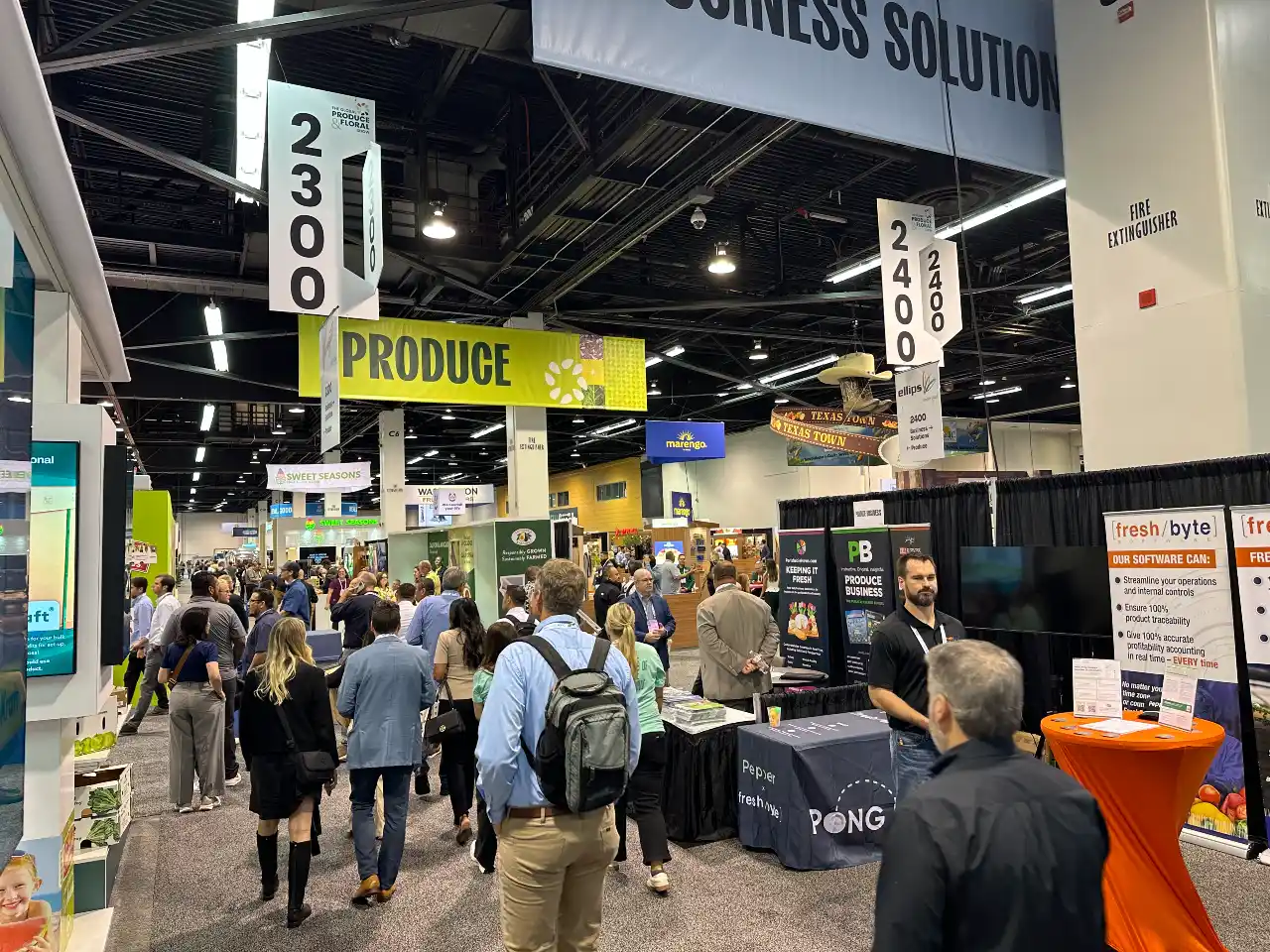
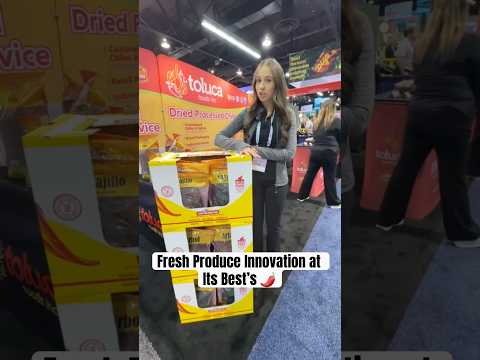
Anaheim, California, connected more than 20,000 attendees across the fresh produce and floral supply chain, with 1,100+ exhibitors and decision-makers from over 70 countries during the IFPA’s Global Produce & Floral Show 2025.
The International Fresh Produce Association (IFPA) hold from October 15-17 the world’s largest fresh produce and floral expo, the premier destination for business growth, innovation, and global connections in the industry.
Cathy Burns, CEO of IFPA, stood on the stage on the first day to present her “State of the Industry” addressing and painting a picture of a sector.
Trade and Tariffs
Noting that tariffs were the “biggest impact facing us this year has been tariffs and their impact on global trade,” Burns shared how IFPA advocates for science-based, transparent trade policies and has successfully engaged with high-level U.S. government officials to represent industry perspectives. In addition, the IFPA Board of Directors met with the U.S. Trade Representative and the National Economic Council in March to provide industry perspective and advocate for exemption of our products.
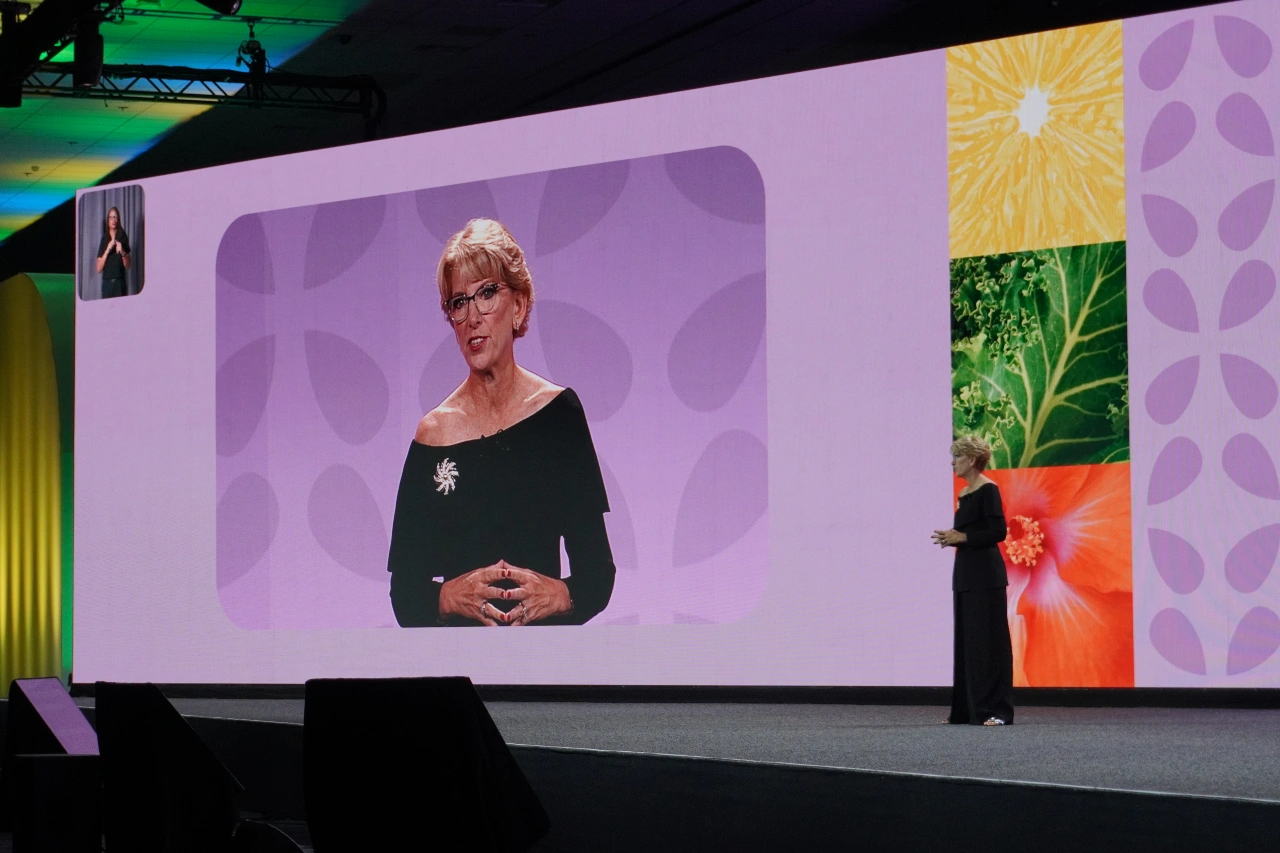
One innovation in the trade sector was the creation of Stanford’s AI-driven Geoeconomic Monitor, which is being utilized to analyze the tariff impacts. Consumer behavior is also adapting, with consumers focused on reducing their food waste and purchasing essential-only items. A bright spot: IFPA Global Insights research finds fresh produce remains least affected by changing purchasing behaviors.
The health benefits of food trade were highlighted by research linking fruit and vegetable imports to reduced mortality from non-communicable diseases globally. “The bottom line is our products matter and save lives,” Burns noted.
To help future proof the industry and build resiliency, IFPA launched the Supply Chain of the Future initiative to address rising costs and inefficiencies in the supply chain. This initiative involves collaborative workstreams focusing on shelf-life predictability, dynamic incentives, harmonized standards, and smart data escrow. Member engagement in this initiative has been consistently strong and continues to grow.


Labor Challenges and Workplace Dynamics
Citing worksite enforcement measures impacting farm labor, Burns highlighted the organization’s legal victories and collaborations with government agencies which have relieved some pressures on growers, including changes in wage rates and enforcement clarity. “We won our lawsuit against the Department of Labor, which alleviated pressure on growers, and advised the Department to develop a less burdensome Adverse Effect Wage Rate – and they did – resulting in the most significant financial shift ever for growers in H-2A,” she noted.
Related Article: IFPA Develops Global Sustainability Framework for Fresh Produce and Floral
As artificial intelligence continues to influence workplace dynamics, trust in the technology varies wildly. In early 2025, it was reported that 31% of U.S. employees admitted to “sabotaging” their company’s AI strategy by refusing to adopt AI tools. By mid-year, younger generations were hiding their AI use because they felt AI gave them a “secret advantage.”
By the end of summer, Deloitte reported two-thirds of Gen Zs and Millennials worldwide said they will seek roles they believe are safe from Generative AI-driven disruption. Yet, 60% also said GenAI skills are required for career advancement, with more than a third planning to pursue GenAI training.
To help its members access and act on the data contained in the IFPA industry and consumer research, the organization has launched an AI-powered Global Intelligence Engine to provide industry-specific insights from extensive data, aiming to enhance decision-making and financial outcomes.
The Nutrition Mandate: Fruits and Vegetables are the Solution
Turning to health, Burns highlighted the IFPA’s core nutrition priority: getting produce prescriptions embedded into the standard of clinical care. She reminded the audience that “Fresh fruits and vegetables don’t have to do a thing. We are the solution. Our products are real, whole, and wholesome.”
The need is urgent: diet-related diseases continue to escalate, with a Lancet report projecting that obesity will impact over half of all adults and almost one-third of youth by 2050. Ultra-processed foods currently comprise 73% of the U.S. food supply, making up 60% of the average adult’s diet.
Burns passionately questioned the imbalance: “Shouldn’t half of any daily calorie intake or diet be fresh fruits and vegetables?” She emphasized the necessity of a sustainable, profitable industry to achieve a healthier world, referencing the IFPA’s “Fresh Produce for a Healthier America” campaign and the ten policy recommendations provided to the MAHA Commission to make fruits and vegetables foundational in all public health interventions.



A Vital Future
Cathy Burns closed her presentation by sharing her personal conviction. “I believe with all my heart that our industry’s products, fresh fruits, vegetables, and flowers, create a vital future for all.” This future, however, must start by creating a vibrant future for the IFPA members themselves, where advocacy is judged by results, not merely actions.
Her final statement was a rallying cry to the audience, a pledge to continue the industry’s critical work: “Because of all of this, I believe—actually, I know—we are just getting started in our fight for fresh.”
Mark your calendar for next year! The International Floral and Produce Association (IFPA) announced that the Global Produce and Floral Show 2026 will be on October 15-17, 2026, in Orlando, FL.
Fuel your growth with next-gen tech, bold ideas and game-changing connections at the world’s largest fresh produce & floral expo.
Women’s Fresh Perspectives Breakfast
Amalia Zimmerman-Lommel, Director of Social Responsibility at Good Services, received the Frieda Rapoport Caplan Women’s Catalyst Award. Amalia started with the company as a receptionist more than 30 years ago and has now been invited to become a partner.