
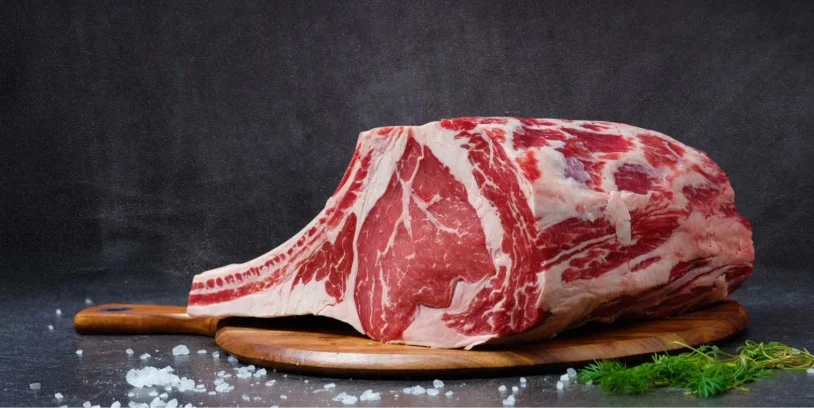
Going to the butcher shop these days feels almost unaffordable. This is due to rising US beef prices, which have consumers and supermarkets deeply concerned.
In response, the country’s Department of Agriculture (USDA) publishes monthly estimates to make it easier to calculate purchases, adjust prices, and plan promotions.
What can we expect in 2026 and 2027? The official report already explains why prices have risen so much, highlights some signs of relief, and offers insights into how to adapt your business. Take a look.
Table of contents
What the USDA Says About US Beef Prices
The US agency provides its forecasts in two monthly reports. One analyzes price trends at grocery stores, while the other examines cattle inventories and production levels.
The 2026 Forecast: A 9.4% Increase
The September report on ERS Food Price Outlook forecasts a price increase four times higher than that of other food products. The projected gap is significant:
- Beef and veal prices are expected to rise by 9.4%, with a range of 7.4% to 11.6%.
- Pork prices are projected to increase by a moderate 1.2%.
- Chicken and other poultry prices are expected to rise by 1.0%.
- Egg prices are projected to decrease by 29.4% compared with 2025.
- Overall food-at-home prices are expected to increase by 2.4%.
What to Expect in 2027
Looking ahead to next year, the forecast tables still do not indicate that US beef prices will decline. On the contrary, they could rise by another 4.7%.
The positive news is that this percentage is half the increase projected for 2026. In other words, this protein will remain expensive, but its price will rise at a slower pace.
The USDA’s Economic Research Service also estimates that overall food prices will increase by 2.0% and grocery store prices by 1.8%, leaving beef well above the average.
What It Looks Like at the Butcher Shop: Ground Beef Hits Record Highs
Overall, the increase is already visible at meat counters. According to the Bureau of Labor Statistics (BLS), the average price per pound reached $6.92 last August.
For any family, this has a significant impact on weekly grocery bills. For example, buying three pounds means spending almost $21 on that item alone.
This is the highest price recorded since 1984, even though the ERS reported a slight 0.6% decrease in beef and veal prices between July and August.
Why Beef Is Still So Expensive
The problem starts on the farm, where cattle production remains at historically low levels. With so few animals available on the market, US beef prices are not coming down.
Fewer Cattle Are Ready for Slaughter
According to the USDA’s livestock report, less beef will be produced this year than in 2025. Why? Production is expected to drop from 26.003 billion pounds to 24.675 billion pounds.
Projections for 2027 point to an even greater decline, reaching 24.675 billion pounds. This would mean two consecutive years of insufficient cattle supplies, putting further upward pressure on prices.
Additionally, cow slaughter from January through September was the lowest since 1950. In other words, there are too few animals to supply butcher shops.
Ranchers Are Keeping Heifers to Rebuild Their Herds
Another factor is that producers are holding back young female cattle for breeding instead of sending them to slaughter. This decision reduces the number of animals available at feedlots.
As the USDA explains, although this measure reduces the current supply of cattle, it will allow more calves to be born in the long term and help the industry recover.
Imports Are Increasing, but They Are Not Enough
Faced with a shortage of domestic products, the country is purchasing more beef from abroad. The government expects to import 6.347 billion pounds this year, an 18% increase to supply meat processors.
Looking at trade flows from January through August 2026, USDA data show that the supply relied almost entirely on a small group of countries:
- Australia became the largest supplier, with 985 million pounds.
- Brazil delivered 877 million pounds, accelerating shipments between August and September.
- Canada contributed 656 million pounds.
- Mexico added 539 million pounds through regular shipments.
- New Zealand rounded out the list with 478 million pounds.
Even so, all this imported beef is not enough to supply retailers. As a result, imports are expected to decline to 6.175 billion pounds in 2027.
Signs That Point to Some Price Relief
Although nothing guarantees an immediate drop in US beef prices, several indicators suggest that the market is finally beginning to stabilize.
Live Cattle Prices Have Stopped Rising
Meatpacking companies have been paying less for live cattle for four consecutive months. In September, slaughter-ready steers averaged around $221 per hundredweight.
This decline brought the price to $17.59 below the level recorded in the same month of 2025. The USDA expects the value to stabilize at $237.50 by 2027.
A similar trend is emerging with feeder cattle weighing between 750 and 800 pounds. The government agency estimates that these animals will cost $342.50 per hundredweight next year.
This decline is important for the industry, although supermarkets typically take several months to pass the savings on to consumers, according to the ERS.
Reopening Ports for Mexican Cattle
In late September, the Santa Teresa crossing in New Mexico resumed operations. Until then, all cattle imports had been concentrated at Douglas, Arizona.
Nearly 2,000 head of cattle entered through Santa Teresa, the busiest route, in just one week. This was in addition to the 7,500 animals received at the state’s port of entry.
This flow of cattle prompted the Department of Agriculture to increase its projected feedlot placements for 2027, anticipating greater product availability in the medium term.
Imported Lean Trimmings at Lower Prices
These 90% lean beef cuts, which are used to make ground beef, have also experienced a decline in wholesale market prices in recent months.
According to the USDA, this adjustment coincides with the arrival of cheaper imported products, providing another reason for stores to review US beef prices.
What Your Store Can Do While Beef Remains Expensive
Forecasts are only useful when businesses use them to take action. Official agency projections help retailers plan purchases, product displays, and price adjustments without losing customers.
Balance the Protein Selection on Your Shelves
US beef prices are changing purchasing decisions. The USDA expects per capita beef consumption to fall to 58.9 pounds this year and 58.3 pounds in 2027.
Chicken is the leading affordable substitute, with demand expected to increase by nearly 4% in 2026. Giving it more shelf space means offering customers what they are looking for.
The advantage is that poultry production is expected to grow by 3.6%. There will be enough supply to launch competitive promotions every week.
Highlight the Value of Each Cut
Families will continue including beef on their shopping lists if retailers help them make their money go further through small adjustments that ease their budgets, such as:
- More affordable cuts for stews and slow cooking, which provide more servings than a steak.
- Large packages of ground beef designed for family meals.
- Simple recipe ideas for combining protein with rice, beans, or vegetables.
- Cross-promotions that place sauces, tortillas, or spices next to the meat.
- Clearly displayed per-pound prices in large numbers so customers can compare options quickly.
None of these strategies will lower beef prices, but customers will feel that their money goes further. This is key to keeping them coming back to your stores.
Monitor the USDA’s Monthly Reports
Since this agency updates its figures every month, the price outlook changes constantly. In fact, the next livestock report is scheduled for release on November 17.
Reviewing these publications on time helps you negotiate better deals with suppliers. At Abasto, you can find more analysis of costs and trends to better understand the Hispanic retail market.
A 2027 Outlook With Slower Beef Price Increases
For now, the US Department of Agriculture does not expect US beef prices to fall in the short term.
What it does anticipate is a significant slowdown in price increases through 2027. With no sudden jumps, businesses will have more time to respond, plan, and offer affordable protein options.
If you are interested in learning more about forecasts and trends related to this topic, explore the industry analysis published in the Abasto supermarket newsletter.