
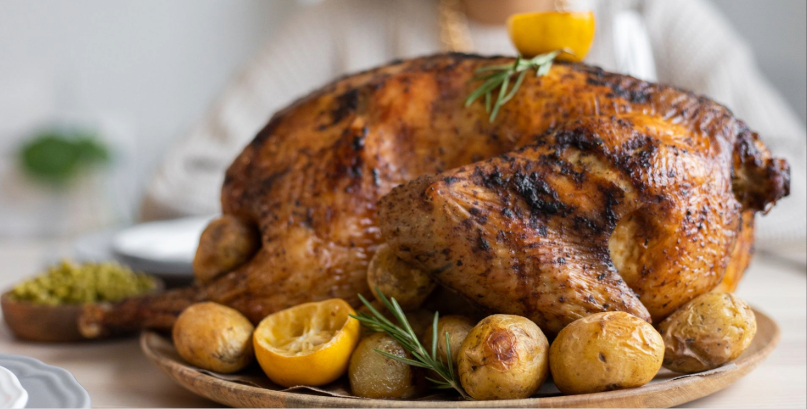
Tired of the same old turkey? Surprise your family this year with a turkey adobo packed with garlic, spices, and two Latin marinades that will transform your entire dinner.
In this guide, you’ll learn how to prepare three flavors: adobo, Cuban mojo, and Yucatecan achiote. You’ll also discover how to combine them to create juicy, flavorful meat.
That’s not all. You’ll find recommended marinating and roasting times from the United States Department of Agriculture (USDA). Ready to cook an unforgettable dish?
Table of contents
Three Latin Flavors That Transform Turkey
Every Latin American country has its own way of seasoning meat. However, for this guide, we’ve chosen three popular preparations that complement turkey’s mild flavor.
Adobo: Garlic, Oregano, and Plenty of Flavor
Adobo is a mixture of garlic, oregano, salt, pepper, and an acidic ingredient such as vinegar or lemon juice. In the Spanish-speaking Caribbean, it’s considered a basic seasoning for many types of meat.
There are two versions: dry and wet, the latter made with crushed garlic. For turkey, use the wet version because the paste sticks better and allows the flavor to reach the breast meat.
Mojo: Cuba’s Citrusy Touch
Cuban mojo criollo is made with sour orange, plenty of garlic, cumin, oregano, and oil. In Cuba and Miami, this is the traditional marinade for roast pork served on Christmas Eve.
It’s worth noting that sour orange is more acidic and less sweet than regular oranges. If you can’t find it, mix equal parts orange juice and lemon juice.
Achiote: Yucatan’s Red Color and Distinctive Aroma
Achiote is the seed of a shrub called Bixa orellana, native to tropical America. As Yucatán Today explains, when ground with spices and acidic juice, it forms a paste known as recado rojo.
This paste gives cochinita pibil its intense, distinctive color. It has a mild, earthy flavor, so although it stains everything it touches, it isn’t spicy.
How to Make Turkey Adobo Step by Step
Now that you know the three flavors, let’s start with the base. This adobo takes just a few minutes to prepare and works as the first layer of flavor before adding the mojo or achiote.
Ingredients for a 12- to 14-Pound Turkey
Since the process is quick, gather all your ingredients before getting started. The following amounts are enough for a medium-sized turkey. If yours is larger, increase the quantities:
- Fresh garlic: 15 peeled cloves, the heart of the flavor.
- Dried oregano: 2 tablespoons, preferably Mexican or Dominican oregano.
- Coarse salt: 2 tablespoons, which help the meat retain moisture.
- Ground black pepper: 1 tablespoon.
- White vinegar or lemon juice: 1/4 cup, for acidity.
- Olive oil: 1/3 cup, to create a spreadable paste.
First, crush the garlic and salt together in a mortar and pestle until they form a paste. Next, add the oregano, pepper, vinegar, and oil. Mix everything thoroughly.
If you don’t have a mortar and pestle, use a food processor and pulse briefly. The ideal result is a thick, moist, aromatic paste. Check that it’s easy to spread with your fingers.
One additional tip: prepare the adobo the day before and store it in a sealed jar in the refrigerator. This allows the garlic to release its full aroma while saving you time.
How to Apply the Adobo Without Making Mistakes
First, remove the neck and all the giblets from the turkey cavity. The USDA does not recommend washing raw meat because splashing water can spread bacteria throughout your kitchen. Instead, pat the turkey dry with paper towels.
Next, carefully separate the skin from the breast and thighs using your fingers. Spread half of the seasoning directly onto the meat, underneath the skin, without tearing it.
Finally, rub the remaining turkey adobo over the outside of the bird and inside the cavity. When you’re finished, wash your hands with soap for 20 seconds, as the USDA recommends.
Mojo and Achiote: Two Marinades for the Finishing Touch
With the adobo as your base, it’s time to choose a second layer of flavor. If you love citrusy flavors, use mojo. But if you’re looking for color and an earthy aroma, choose achiote.
Cuban Mojo for Injecting the Turkey
For a medium-sized turkey, blend the ingredients below until you get a smooth liquid. Then strain it to remove large pieces of garlic that could clog the injector:
- Sour orange juice: 1 cup, fresh or bottled.
- Garlic: 10 peeled cloves.
- Ground cumin: 1 teaspoon.
- Dried oregano: 1 teaspoon.
- Olive oil: 1/2 cup, warmed.
- Salt: Just 1 teaspoon, since the adobo already adds plenty.
Before using it, set aside half a cup of mojo in a clean jar and refrigerate it. The reason is simple: this portion won’t come into contact with raw turkey, so you can use it as a sauce when serving dinner.
With the remaining mojo, inject small amounts into the breast, thighs, and drumsticks, changing injection points every few inches. Finally, pour any leftover marinade over the bird.
If you don’t have an injector, make small cuts in the turkey using the tip of a knife. Let the mojo seep into them while the turkey marinates in the refrigerator.
Achiote Paste for a Red, Aromatic Turkey
Dissolve 3 to 4 ounces of achiote paste in one cup of sour orange juice. Blend these ingredients for one minute until you get a thick, lump-free sauce.
Since the paste already contains salt and spices, taste it before adding anything else. Then coat the turkey with the sauce, both inside and out, over the layer of adobo you applied earlier.
For a traditional touch, wrap the turkey in banana leaves before roasting. Just as with pibil, the leaves help retain moisture. Remove them during the final hour to allow the skin to brown.
Marinating and Roasting Safely
A flavorful turkey should also be a safe one. Since raw poultry often carries bacteria, follow official recommendations to protect your family.
How Long to Marinate a Turkey
According to the federal food safety website FoodSafety.gov, raw poultry must be marinated in the refrigerator, never on the countertop. It should also be cooked within two days.
This means the ideal time to season your turkey is the night before or in the morning on the day before cooking. This gives the flavors time to penetrate the meat while keeping you within the two-day safety limit.
Place the bird in a large food-safe bag or a covered glass container. If you have leftover marinade that touched raw turkey, discard it or boil it before reusing it.
If your turkey is frozen, thaw it in the refrigerator first. The USDA estimates 24 hours of thawing time for every 4 to 5 pounds. Apply the adobo once the turkey is completely thawed.
Oven Temperature and Cooking Time
According to the USDA, turkey should be roasted at 325°F or higher. An unstuffed 12- to 14-pound turkey takes approximately 3 to 3¾ hours. An 18- to 20-pound bird takes approximately 4¼ to 4½ hours.
Even so, the clock is only a guide. A food thermometer is what actually confirms that the turkey is done. Therefore, to ensure it is both safe and juicy, check the following before removing it from the oven:
- Breast: The thickest part should reach 165°F.
- Thigh and wing: Measure the internal temperature. These areas must also reach 165°F.
- Proper thermometer placement: Avoid touching the bone because it can produce inaccurate readings.
- Resting time: Let the turkey rest outside the oven for 20 minutes before carving.
If you used banana leaves or aluminum foil, remember to remove them toward the end so the skin can brown. Keep in mind that achiote and adobo darken quickly, so watch the color carefully.
How to Serve Your Latin-Style Turkey
A good turkey adobo deserves an equally impressive presentation. Fortunately, with just a few details, your Thanksgiving table will have a Latin flair from the very first bite.
A Sauce Made With the Reserved Mojo
Remember the half cup of mojo you set aside? Heat it in a small saucepan with a little of the juice released by the fully cooked turkey. Let it boil for about two minutes.
Finally, add chopped cilantro and a few thin onion slices. This light, tangy sauce perfectly balances the saltiness of the adobo and pairs beautifully with shredded turkey.
If you chose achiote, serve the turkey with red onions pickled in sour orange juice and warm corn tortillas, just as cochinita pibil is traditionally served in Yucatan.
Side Dishes That Complete the Meal
To avoid repeating the same old menu, combine side dishes from different countries. That way, every guest will find a familiar flavor while discovering something new.
For example, turkey prepared with mojo pairs well with yuca, black beans, and tostones. On the other hand, if you used achiote, it looks and tastes even better with white rice and refried beans.
For drinks, try a refreshing glass of chilled hibiscus or tamarind agua fresca. Its sweet and tangy flavor balances the adobo spices without overpowering the turkey.
A Turkey With Latin Roots to Share
Without a doubt, turkey adobo provides the foundation, while mojo and achiote give the dish a distinctive personality. Choose one or alternate between them each year to surprise your guests.
You’ll find sour orange, achiote, and banana leaves in the Latin foods aisle at your local supermarket. If you’d like to discover more Latin recipes and keep up with industry news, visit Abasto.