
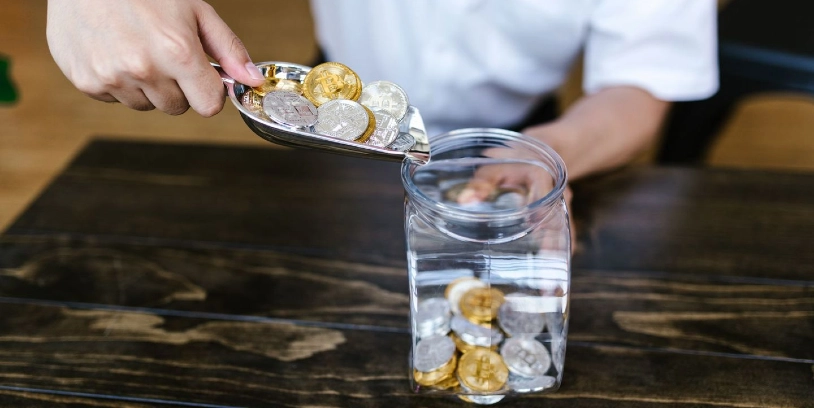
Stablecoins are starting to venture away from crypto exchanges and into one of the most mundane aspects of consumer life: shopping for food and household goods. More recently, stablecoin payments via existing point-of-sale systems have been tested in Japan and the UAE, and digital dollars and local-currency stablecoins are increasingly used as payment tools.
Moreover, stablecoins are a very different proposition for consumers accustomed to watching cryptocurrency prices. They are supposed to be less volatile than assets like Bitcoin or Ethereum and more stable against fiat currencies, making them more convenient for daily use. That gap is growing more significant as retailers test blockchain payments in brick-and-mortar stores.
The supermarket could thus be one of the most telling trials of whether stablecoins can serve as money outside of the crypto markets.
Why Are Retailers Testing Stablecoins Now?
The use of stablecoins has grown beyond just exchange trading. The overall stablecoin market is now valued at over $300 billion, and payment firms, banks, and fintech companies are increasingly building settlement infrastructure around them. Stablecoin supply reached approximately $311 billion by the end of the first half of 2026, with on-chain transfers surpassing $1 trillion per month and totaling around $8.8 trillion over the period, according to Binance Insights.
Payments are increasingly a key component of that activity. Binance Research also noted that spending on crypto cards increased by 35% to $629 million in June alone, indicating that digital assets are becoming an increasingly common medium of exchange. Retail pilots are next in line.
Japan Is Testing Stablecoins at the Convenience Store
Payment tech firm NETSTARS recently conducted a stablecoin payment trial at a Lawson convenience store in Tokyo in August.
During the trial, shoppers were able to make actual point-of-sale payments using stablecoins denominated in Japanese yen, as well as USDC and USDT, which are dollar-backed stablecoins. Notably, the system did not require a dedicated checkout setup, but integrated with the store’s retail point-of-sale (POS) system.
The pilot put more than the possibility of a transaction to the test. NETSTARS explored the speed of payments, ease of use, impact on store performance and transaction performance across multiple blockchain networks. There were also tests conducted under error conditions to determine whether stablecoin payments would be compatible in a standard retail setting.
The fact that it is an operational detail is significant because supermarkets cannot afford to have payment methods that cause long lines or extra work for their employees.
The UAE Is Taking a Similar Approach
In September, a separate experiment was started in the UAE. Network International has introduced its first in-store pilot in the country using an AED-backed stablecoin. Customers with compatible wallets could use DDSC to pay for their purchases at Marks & Spencer stores in Dubai and Lulu Hypermarket in Abu Dhabi, using existing payment terminals.
Again, integration with existing checkout hardware was the key feature. Retailers did not have to upgrade their payment terminals to dedicated crypto devices. Rather, stablecoin transactions could flow through existing merchant infrastructure.
For example, this may be important for adoption. Supermarkets operate on razor-thin margins and staggering transaction volumes, so any new payment system must integrate with existing processes without requiring retailers to recreate them.
Why Are Stablecoins Better Suited to Groceries Than Bitcoin?
Volatility is the obvious difference. When a shopper purchases £50 worth of groceries, he or she would expect £50 to be approximately £50 by the time they get to the checkout. A retailer also needs to know that the amount received will not fluctuate drastically before it’s converted to local currency or used elsewhere.
Stablecoins are created with that requirement in mind. A dollar- or dirham-backed token may deliver many of the features typically associated with blockchain settlement without the volatility seen in other cryptocurrencies.
This will not eliminate all risks. Stablecoins remain reliant on reserves, issuers, regulation, and payment infrastructure.
However, the relative price stability makes them easier to think about at the supermarket checkout than an asset that might change several percentage points in a day.
Grocery Stores Are a Tough Real-World Test
Supermarkets might prove to be a more reliable gauge of crypto payments than luxury retail. People make many purchases of food. The transactions tend to be fairly small and customers expect them to be completed in seconds. When a queue builds up behind someone, payment failures or fiddly wallet procedures soon become unacceptable.
That translates to a pretty strict grocery retail. To function there, stablecoins must be virtually indistinguishable. Customers must be able to pay fast and merchants must have easy settlement, refunds and accounting.
It’s important that the Lawson and UAE pilots are testing those mundane operational issues, not just the feasibility of a blockchain transaction.
The Bigger Opportunity May Be Behind the Checkout
It may not matter to consumers whether blockchain is part of it. Stablecoins may also gain significance in the future as back-end settlement infrastructure, enabling payment businesses and retailers to transfer worth round the clock without relying solely on traditional banking hours.
Also, stablecoins could be used under the hood, with a familiar wallet, QR code, or card-like interface.
For example, that could significantly change the adoption landscape from the early days of crypto payments, when merchants had a big sign that said: “Bitcoin accepted here.” The less seen the technology, the more useful it can be.
Stablecoins Are Becoming Everyday Payment Infrastructure
Stablecoins have been used by traders for years to switch between crypto assets without returning to the traditional banking system.
That position is expanding rapidly. Now they are used for international transfers, corporate settlement, saving and more and more retail payments. The next step may be something less dramatic than trading or speculation, as supermarket and convenience-store pilots demonstrate.
It may be as simple as paying for food. Stablecoins have the potential to prove much more than just another source of volume gains if they can function in high-volume retail settings.
They will have demonstrated that blockchain money can be integrated into the daily life of commerce without consumers needing to become crypto experts.