
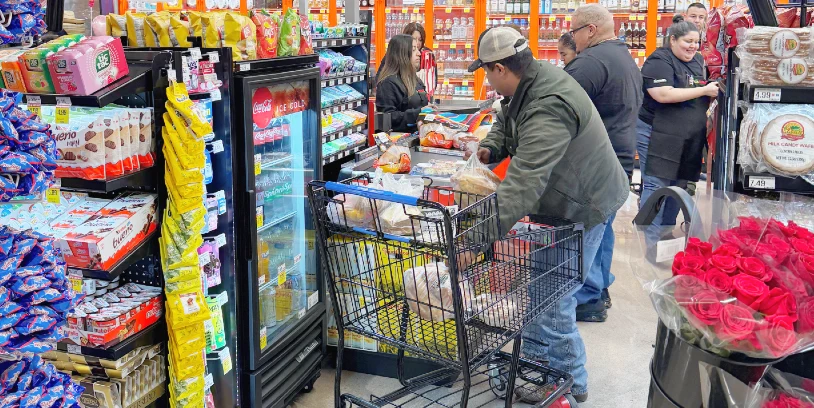
For years, the retail industry has organized its stores around product categories. Groceries on one side, Hispanic products on another, international items in a corner, private label products in a separate section, and produce, meat, and deli, all operating almost like independent businesses within the supermarket. But now, stores are facing a new reality, with consumers choosing the products they put in their shopping carts in a very different way.
Customers no longer shop by category, and this is one of the biggest mistakes I keep seeing in many independent supermarkets. We continue to organize our stores for a consumer who has already changed.
You don’t need a major study to understand this. Just spend a few minutes watching shopping carts at the checkout. Today, in a single shopping trip, tortillas sit alongside artisanal bread, Greek yogurt alongside Central American cream, ready-to-eat products, fresh fruit, snacks, private-label items, and international brands.
The New Reality
Customers no longer shop in “separate worlds”; they shop based on their weekly plans, their family, their budget, and their time. With that mindset, they fill their shopping carts.
Although many still talk about the multicultural consumer as if it were an additional segment, the reality is different. It has already become part of general consumption in American supermarkets.
Today’s shoppers blend habits, cultures, formats, and consumption occasions with absolute ease, and we see it every day: non-Hispanic shoppers buying traditionally Latino products. Multicultural families are blending products from different countries into the same shopping basket.
We have new generations growing up without those shopping barriers that retailers tried to segment for years.
The fact is that customers have already integrated their shopping. The question is whether the store has done the same, because this raises a problem that’s rarely stated clearly: many supermarkets are still managing categories as if it were 2015.
Related Article: Multicultural Retail as the New Business Foundation
The Art of Managing Spaces
Many retailers believe they have a sales problem when, in reality, they have a space allocation problem, and this isn’t a matter of store size. It’s a matter of understanding our customers’ needs.
The way people are filling their shopping carts these days is giving us very clear signals about where repeat business and relevance lie today. The fresh produce sections remain one of the biggest drivers of traffic.
Convenience and Assortment Set the Tone
Convenience also matters more than ever. Ready-to-eat solutions, family-size formats, easy-to-prepare products, and clear value propositions are beginning to shape many purchasing decisions.
Meanwhile, private label is no longer just a margin-boosting tool. It is increasingly becoming a tool for building loyalty and perceived value.
But perhaps the biggest change is taking place in the multicultural product assortment. It’s no longer about creating a “Hispanic section”, that model is starting to fall short. Today, we’re talking about true integration, understanding which categories should coexist within the customer’s natural shopping experience.
Therefore, the mistake isn’t failing to have a multicultural product assortment. The mistake is continuing to view it as something separate from the rest of the store. Here, independent retailers still have a huge advantage. They can adapt more quickly, better understand their community, adjust their product assortments without the bureaucracy of large corporations, and respond more quickly.
But that advantage only exists if an uncomfortable decision is made: to question how the store is organized, because consumers have already decided. They’ve changed the way they shop, while competitors are already adjusting their formats. What people are now choosing to put in their shopping carts is already telling us where the business is headed.
The only question that remains is: As retailers, are we willing to listen to them?