

Private label brands have become a driver of revenue and profitability growth for retailers in the US over the last few decades, and Latino consumers are a critical part of that equation. According to the latest PDG Insights US Diverse Consumer Pulse Study, 95% of U.S. Latino shoppers purchased private label products in at least one category in the past three months, slightly higher than the general population (93%). We saw similar penetration one year ago, reinforcing that this is a long-term strategic opportunity for retailers and brands serving Latino communities. Not only are almost all Latino households buying private label products, but they are buying private label across categories. On average, Latino consumers say they have bought private label in at over six categories in the past three months.
Latinos Are Embracing Private Label
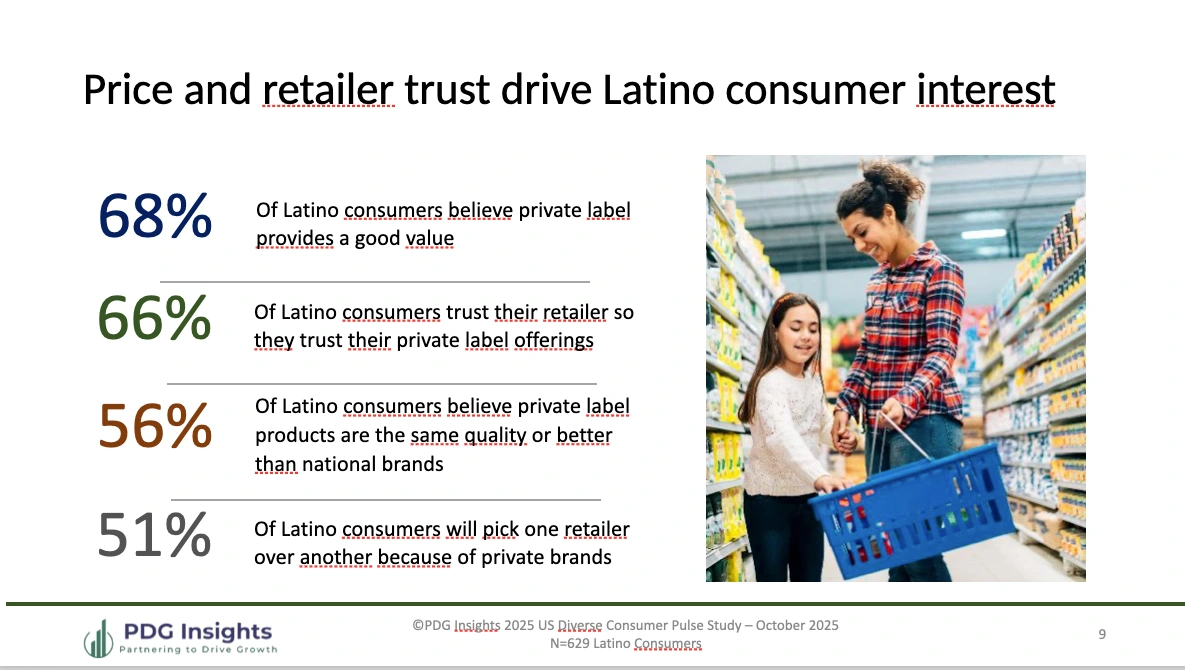
Price is a major factor in private label purchasing, but it’s not the whole story. In fact, 44% of Latino consumers say that they view private label and national brands as interchangeable. Focusing on specific motivations, Among English-dominant Latinos, half say saving money compared to national brands is the top motivator to buy. Spanish-dominant Latino consumers say promotions or discounts is a major reason (54%.) Retailer trust, product category, and even recommendations and reviews also influence private label preference.
The shift toward private label is also accelerating. Nearly 40% of U.S. Latinos say they buy more private label products now than a year ago, and 24% plan to replace more national brands with private label next year. This growth is driven by:
- Rising prices of national brands.
- Promotions and discounts on private label.
- Positive experiences with existing store brands and products.
Retailers that invest in quality and communicate value will win with this audience.
Top Categories for Latinos
Private label is strong across all store departments, but U.S. Latinos over-index in baby care and international/ethnic foods, alongside staples like bakery, dairy, canned goods, and frozen foods. This reflects the importance of cultural relevance—offering flavors, ingredients, and formats that resonate with Latino households. In part, because private label has become so strongly embedded in the average Latinos weekly shopping cart, retailers are beginning to move beyond foundational private label and invest in focused offerings targeting Latino consumers and everyday shoppers that enjoy Latino cuisine. A best-in-class example, H-E-B is redefining innovation in this space with its “Mi Tienda” line, featuring authentic Mexican products such as tortillas, pan dulce, and chicharrones. These strategies build loyalty and differentiate the retailer.
Beyond Price: What Latinos Expect
Latino shoppers expect far more than just low prices when it comes to private label products. While affordability is important, quality and values matter just as much. High product quality tops the list, with 94% of Latino consumers saying it’s critical to their decision-making. Close behind is ingredient transparency, cited by 91% of shoppers who want to know exactly what’s in the products they buy. Flavor innovation is another priority—86% of Latinos look for unique and exciting tastes that reflect their culinary preferences and cultural heritage. Sustainability also plays a role, with strong interest in locally sourced and environmentally responsible ingredients, and a similar percentage seeking natural and organic options. These expectations show that innovation and social responsibility are no longer “nice-to-have” features—they’ve become baseline requirements for private label success among Latino consumers.
Related Article: Shoppers Choose Private Label Groceries as Food Costs Rise
Innovation Drives Loyalty
Nine in ten Latino consumers say innovation in private label is important, especially among younger families and higher-income households. Retailers introducing new flavors, convenient formats, and socially responsible messaging can turn private label into a loyalty engine. Kroger’s recent launch of 900 new private label items featuring bold flavors and unique ingredients is a prime example of how innovation can keep shoppers engaged.
For U.S. Latinos, private label assortment impacts where they shop, with 81% say unique private label offerings influence their choice of retailer, making store brands a critical differentiator in a competitive market. That store visit serves as a critical mechanism for driving awareness of a retailer’s private label offering with in-store signage and product packaging as the top ways that Latino consumers learn about new private label. However, they are significantly more likely then Gen Pop consumers to rely on social media, circulars, and word of mouth as well, which provides alternative channels to drive awareness.
The Bottom Line
U.S. Latino consumers are driving private label growth. Retailers that combine value, quality, innovation, and cultural relevance will capture market share and build lasting loyalty. In an economy where price pressure is high, private label serves as a clear path for differentiation and a strategy for growth and long-term success.