
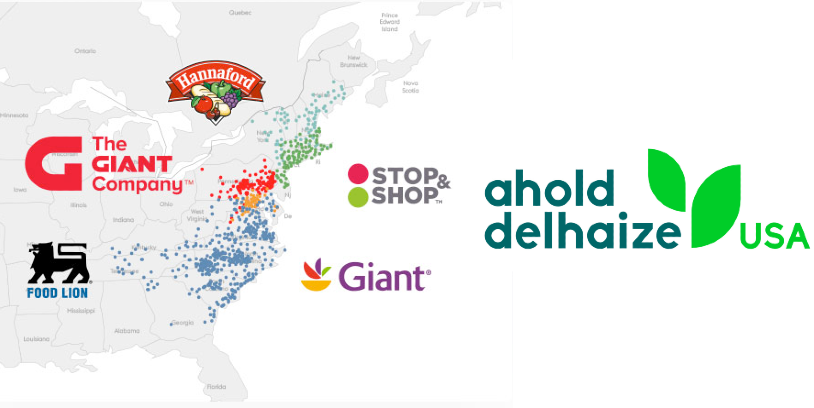
Ahold Delhaize USA will close several centralized fulfillment centers as it restructures its grocery e-commerce operations to prioritize faster delivery and local store execution.
The decision impacts Giant Food and The GIANT Company and reflects a broader shift toward a store-first fulfillment model. Company leaders said the move aligns with changing customer expectations for speed, assortment, and convenience.
Strategic Shift in Grocery E-Commerce
Under the plan, Giant Food will shut down its centralized e-commerce operation in Manassas, Virginia. Meanwhile, The GIANT Company will close five centralized fulfillment centers across Pennsylvania, including facilities in Philadelphia, Willow Grove, Coopersburg, North Coventry, and Lancaster.
Operations will continue into early 2026, with most closures scheduled before the end of the first quarter. Leadership teams said the timeline allows for an orderly transition while maintaining service continuity.
The company made the decision after analyzing delivery trends and online shopping behavior. Customers increasingly demand shorter delivery windows, wider product availability, and flexible fulfillment options.
From Centralized to Store-Based Fulfillment
Over the past several years, the organization has invested heavily in shifting online order preparation to local stores. That transition reduced reliance on centralized fulfillment centers while improving speed and inventory accuracy.
Advances in technology, order management systems, and workforce training made the change possible. Store teams now fulfill more online orders directly, enabling customers to access the same in-store assortment.
As a result, centralized facilities no longer deliver the same operational value. Local fulfillment enables faster picking, shorter delivery routes, and better alignment with customer demand.
Despite the closures, grocery delivery remains a core part of the company’s omnichannel strategy. Shoppers can continue ordering online or in-store, with pickup and delivery options available across markets.
Related Article: Food Lion Invests $484M in 153 Charlotte Stores
Third-Party Partnerships Support Speed
To strengthen its last-mile delivery, the company will continue to work with partners such as Instacart and DoorDash. These relationships extend reach without relying on centralized fulfillment centers.
In many locations, customers can receive orders in as little as 30 minutes. Executives said the blended approach improves flexibility while controlling costs.
By combining store-based picking with third-party delivery, brands can respond quickly to local demand and seasonal fluctuations.
Financial Impact of the Closures
The closures will trigger non-cash impairment charges tied to facility shutdowns. The GIANT Company’s five Pennsylvania sites will incur an estimated $35 million in charges.
Separately, the Manassas location will generate an estimated $15 million non-cash impairment. Company officials emphasized that these charges reflect accounting adjustments, not cash expenses.
Support for Affected Employees
Leadership acknowledged the impact on associates working at the affected sites. Each brand and support function developed transition plans to assist employees.
Affected associates will receive opportunities to apply for open positions within their respective companies or pursue other available roles.
Redefining the Omnichannel Network
The move away from centralized fulfillment centers marks a recalibration of the grocery e-commerce network.
By prioritizing local execution, the company aims to deliver faster service, a broader assortment, and a more consistent customer experience. The strategy reflects a clear conclusion: proximity now matters more than scale.
As online grocery continues to mature, store-first fulfillment positions the business for long-term growth in an increasingly competitive market.