

Walk into any convenience store or supermarket in the United States today and look beyond the usual snacks lined up like soldiers.
Among them, and increasingly less hidden, you’ll find tortilla chips rolled up in a neon bag, a spicy mango popsicle, and peanut candy wrapped in crumpled cellophane.
This isn’t a niche story about ethnic food. It’s a market takeover, and it started south of the border.
A Very Sweet Gold Mine
The Mexican snack and confectionery sector is experiencing what industry experts call a “golden age.”
According to data from Euromonitor International, ASCHOCO (National Association of Chocolate, Candy, and Similar Products Manufacturers), and NielsenIQ, the Mexican savory snacks market is valued at over $4.5 billion and is projected to grow at a 4.2% compound annual growth rate through 2028.
The confectionery sector, meanwhile, closed out 2025 with a value of approximately $62 billion in Mexican pesos. And for U.S. retailers, these figures have direct implications: Mexico supplies approximately 30% of all confectionery imports into the United States, positioning itself as the top single supplier, an advantage solidified by the USMCA.
The question for retailers on both sides of the border is no longer whether Mexican snacks have mass appeal. The question is how quickly they can stock the shelves.
Chile Changed Everything
To understand the Mexican snack boom, you have to understand one ingredient: chile. Seven out of ten Mexican confectionery products exported to the U.S. contain some element of chile or tamarind.
This category is growing three times faster than traditional chocolate in the U.S. market, according to the latest export projections.
Data from NielsenIQ show that consumption of Mexican snacks in non-Hispanic U.S. households grew by 15% in 2025, driven by young consumers seeking intense, complex flavor profiles.
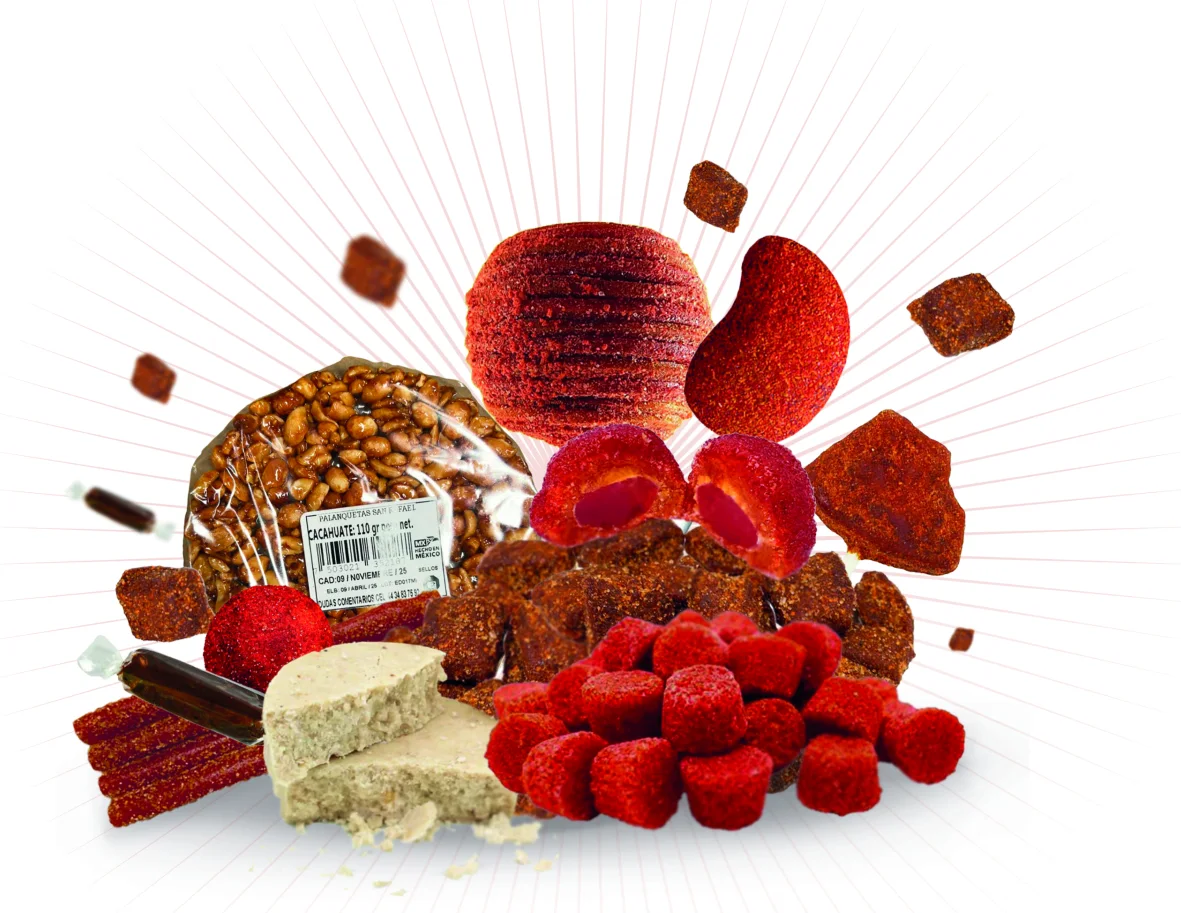
The industry already has a name for this: “swicy,” the combination of sweet and spicy.
Some Mexican brands have reported 9% annual growth in their chili-flavored popsicle lines in the U.S. market, surpassing the traditional fruit popsicles that dominated the category just five years ago.
They’re also using new strategies to grow, signing co-branding deals with American giants like General Mills and Kraft Heinz to launch Mexican-flavored cereals, gelatins, and popcorn.
The move is less about novelty and more about legitimization: placing the “Mexican flavor” stamp on products that occupy the main shelf rather than the specialty section.
The Production Machinery Behind the Success
Meeting U.S. demand did not happen by chance. Major producers have made aggressive infrastructure investments.
Grupo Bimbo’s Barcel division has expanded capacity at its Toluca and Mexicali plants specifically for Takis, allocating 60% of its production exclusively to the export market.
Meanwhile, Mondelēz’s plant in Puebla, the world’s largest gum factory, is recording record shipment volumes of Trident and Clorets to the U.S. and Canada.
Convenience store chains have taken notice. Wawa, Casey’s, and 7-Eleven have collectively increased their inventory of Mexican sweets and snacks by 25% this year. The grab-and-go format, small, accessible, and full of flavor, fits almost perfectly with the convenience store model.
Related Article: U.S. Hispanics & Confectionery: Facts, Stats & More
Headwinds: Real, but Manageable
The golden age has its friction points. Within Mexico, NOM-051 front-of-package labeling forced major brands to reformulate more than 500 products to reduce sodium and saturated fats, a significant undertaking, though consumption has not fallen dramatically, according to research by UNAM and the National Institute of Public Health.
In terms of raw materials, cocoa prices reached historic highs in 2024–2025, triggering a wave of shrinkflation, smaller packages at the same price, and ingredient substitution in mid-range chocolate products. However, the premium segment continues to grow, driven by consumers who now demand certification for deforestation-free cocoa.
For exporters, regulatory hurdles in the U.S. present their own challenges. The FDA has tightened controls on certain synthetic red dyes, with Red 40, commonly used in spicy candies, among the most closely monitored.
Mexican manufacturers are reformulating with natural colorants such as carmine and beet extract to avoid customs delays, an investment that is transforming production lines across the sector.
The Flavor that Drives It All
It’s no surprise today that a display of spicy Mexican snacks is front and center in the store, not hidden in a corner or labeled as “international foods.” These spicy sweets and snacks appear on the same shelves that once belonged exclusively to classic American brands.
The Mexican snack industry didn’t get there by accident. It got there because it understood something the U.S. snack culture didn’t yet know it needed: that intense flavor isn’t a regional oddity. It’s the whole point.
With confectionery and snack exports to the U.S. projected to reach $3.2 billion by the end of 2026, up 8% from the previous year, the industry shows no signs of slowing down.
Chile powder has already taken its place on the main shelf. And it’s not going anywhere.