
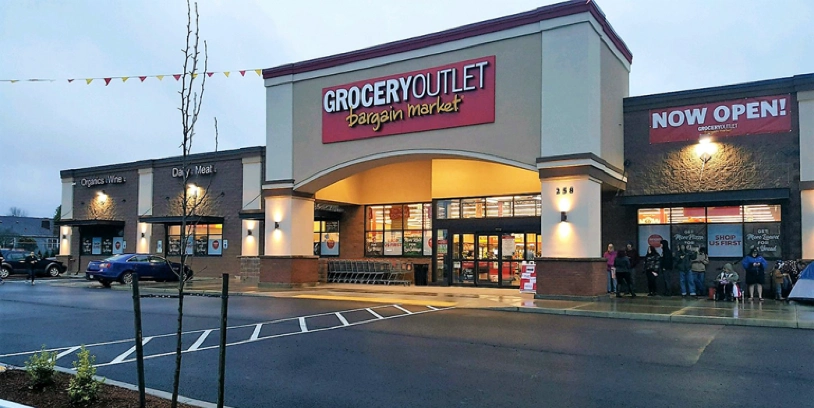
When Grocery Outlet Holding Corp. aggressive expansion strategy hit a wall in early 2026, it didn’t just result in a missed earnings report—it sparked a federal securities class action lawsuit that serves as a stark warning for the retail industry. Between August 2025 and March 2026, the company purportedly masked operational instabilities with a rapid-fire store opening schedule, a move that critics now allege was a facade for unsustainable growth. Everything collapsed on March 4, 2026, when a disastrous earnings call revealed that the company had “expanded too quickly,” forcing an immediate pivot to a 36-store closure plan and a 27.9% plunge in stock value. For B2B stakeholders, the fallout from Jones v. Grocery Outlet highlights the thin line between ambitious scaling and the legal mandates of financial transparency.
Kessler Topaz Meltzer & Check, LLP, a nationally recognized securities litigation law firm, is informing investors of a securities fraud class action lawsuit against Grocery Outlet Holding Corp. (Grocery Outlet). The firm filed the suit in the United States District Court for the Northern District of California on behalf of those who purchased or acquired Grocery Outlet securities between August 5, 2025, and March 4, 2026. The case, captioned Jones v. Grocery Outlet Holding Corp., No. 3:26-cv-02291, requires investors to file for lead plaintiff status by May 15, 2026.
Related Article: Grocery Outlet to Close Dozens of Stores Citing Poor Performance
COMPLAINT ALLEGATION SUMMARY:
The complaint alleges that, throughout the Class Period, Defendants made materially false and/or misleading statements, as well as failed to disclose material facts about the company’s business, operations, and prospects. Specifically, Defendants misrepresented and/or failed to disclose that: (1) Grocery Outlet had “expanded too quickly” into new stores; (2) Grocery Outlet’s purportedly strong financial and operational growth was being artificially supported by excessive rapid store expansion; (3) as a result, Grocery Outlet was unable to achieve the sustainable growth required to meet its previously set guidance; (4) Grocery Outlet’s restructuring plan would require further optimization to achieve its operational goals, including significant store closures and asset write-downs; and (5) as a result of the foregoing, Defendants’ positive statements about the company’s business, operations, and prospects were materially misleading and/or lacked a reasonable basis.
Why did Grocery Outlet’s Stock Drop?
On March 4, 2026, after the market closed, Grocery Outlet announced its financial results for the fourth quarter and full fiscal year 2025 and revealed that the company’s full year results missed guidance on nearly every major financial metric. On the corresponding earnings call held that same day addressing the poor results, Grocery Outlet’s CEO further disclosed that the company had “made the difficult decision to close 36 locations” in part because “it’s clear now that we expanded too quickly, and these closures are a direct correction.”
Grocery Outlet’s stock price fell $2.45 per share, or 27.9%, to close at $6.34 per share on March 5, 2026.
WHAT GO INVESTORS CAN DO NOW:
File to be lead plaintiff by May 15, 2026.
Contact KTMC for a free case evaluation. All representation is on a contingency fee basis, there is no cost to you.
Retain counsel of choice or take no action.