
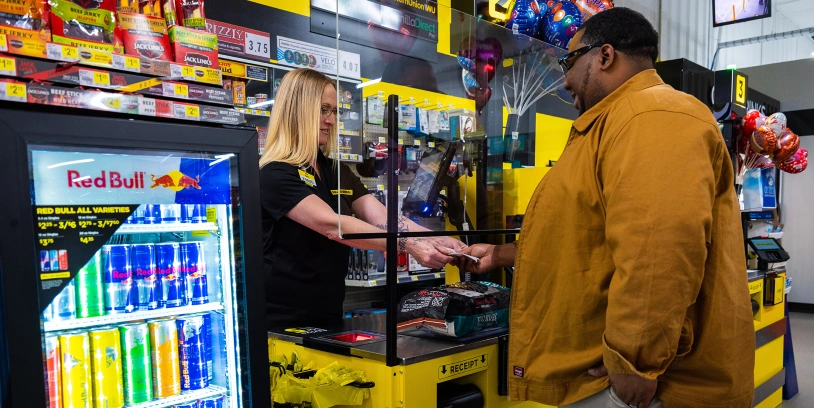
Dollar General is not backing down. The discount chain told investors it will “vigorously defend” itself in the Dollar General lawsuit that the Federal Trade Commission and 20 states filed on October 26. In the same breath, the retailer called the government’s demands for consumer redress unreasonable.
That response came in a Form 8-K that Dollar General filed with the Securities and Exchange Commission on the day regulators went to court. The filing also offers a rare look at how the case took shape behind closed doors.
According to the filing, the FTC issued a civil investigative demand to the company on January 30. Dollar General says it began cooperating with agency staff in early February. Then, on September 23, FTC staff sent the retailer a draft federal complaint, a draft settlement order and a demand for significant monetary relief.
Until then, the company says, regulators had shared no findings or settlement demands. Dollar General argues the agency’s math relies on unsupported assumptions that materially overstate consumer harm. Even so, the retailer warned shareholders that an unsuccessful defense could materially affect its financial statements.
Inside the Dollar General Lawsuit
The FTC and its state partners filed the 95-page complaint in the U.S. District Court for the Middle District of Tennessee. The plaintiffs include attorneys general and consumer protection agencies from Alabama to Wisconsin, including North Carolina, Ohio, Florida, and Michigan. The Commission voted 2-0 to authorize the case.
At its core, the complaint alleges that Dollar General routinely charges more at the register than its shelf tags, circulars, app, and website advertise. Moreover, the plaintiffs contend the company knew about the problem for years and failed to fix it.
“Dollar General has betrayed the trust of millions of American consumers and imposed significant financial harm on communities and consumers who are already struggling to make their paychecks last,” said Christopher Mufarrige, director of the FTC’s Bureau of Consumer Protection, in a news release.
The complaint backs that claim with hard numbers:
- Customer complaints: From January 1, 2023, through March 31, 2026, Dollar General logged at least 29,265 complaints coded “Did Not Honor Marked Price,” from all 48 states where it operates.
- Undercover buys: FTC investigators shopped stores in Ohio, Pennsylvania, Missouri, and Maryland between January and April 2026. Every trip produced overcharges. In Cleveland, 13 of 58 items rang up at a price different from the shelf or label.
- State inspections: Dollar General failed more than 39% of pricing inspections in Kansas and more than 45% in Utah over roughly three years. One store in Nephi, Utah, failed 15 of 19 inspections.
- Prior penalties: Since 2019, the company has paid more than $6 million under seven settlements with six states.
Notably, the plaintiffs redacted large sections describing Dollar General’s internal audits and executive emails. Those passages may become a key battleground as the case moves forward.
Why the Register Outruns the Shelf
The complaint traces the problem to a weekly operational rhythm. According to the filing, Dollar General typically changes prices every week. Stores receive peel-and-stick labels and should post them during a five-hour “Compliance Tuesday” shift.
However, the register system applies new prices regardless of whether employees have updated the shelves. Because core price changes are generally increases, a missed label usually means an overcharge, the plaintiffs say.
Staffing compounds the gap. The complaint argues stores often lack the people to print and hang new tags. It cites a former assistant manager in Illinois who said she worked most shifts alone.
Related Article: FTC Steps Up Pressure on Supermarkets Over Surveillance Pricing
A Legal Theory Retailers Should Watch
Beyond the familiar deceptive-advertising claim, the FTC added a count under the Gramm-Leach-Bliley Act. The agency argues that false price representations lead shoppers to hand over card and bank account information at checkout.
That theory matters for remedies. In 2021, the U.S. Supreme Court ruled in AMG Capital Management v. FTC that Section 13(b) of the FTC Act does not authorize monetary relief. By contrast, the complaint points to Section 19 of the FTC Act, which it says allows the court to order refunds for Gramm-Leach-Bliley violations.
State penalties could also stack up quickly. For instance, Ohio’s statute allows civil penalties of up to $25,000 per violation. Florida permits $10,000 for each willful violation, while California allows up to $2,500 per violation.
Settlements Have Not Closed the Gap
The federal action arrives after a string of private and state settlements. Earlier this year, Dollar General agreed to a $15 million class-action settlement without admitting wrongdoing, The Independent reported. That deal earmarked $6.5 million for operational changes and $8.5 million for consumer claims and court costs.
Yet problems persisted, according to the plaintiffs. Between January 19 and February 26, 2026, Wisconsin inspectors surveyed 279 Dollar General stores. They found 290 products scanning above the advertised price. Additionally, 35 stores lacked required refund signage during the initial inspection.
Shelf-Tag Accuracy Moves Up the Compliance Agenda
For supermarket and food retail executives, the case reads like an audit checklist. It touches weekly label workflows, store labor budgets, expired promotional signs, and policies for honoring the lowest price.
Most states, 33 in all, follow a price-verification procedure from the National Institute of Standards and Technology, the complaint notes. Under that procedure, a store fails when more than 2% of sampled items carry inaccurate prices.
Ultimately, the court will decide the case. The FTC files a complaint when it has “reason to believe” a company is violating the law, and the allegations remain unproven. Still, with federal regulators and 20 states now aligned, pricing accuracy has become an enforcement priority that every retailer selling groceries should track closely.