

Kellanova expects CPG technology trends 2026 to reshape how global brands innovate, operate, and connect with consumers.
The company views digital reinvention as the driving force behind the sector’s next chapter, pushing manufacturers to act faster, think smarter, and deliver stronger performance.
AI Becomes a Daily Business Engine
Kellanova leaders say agentic AI now moves beyond experimentation. Instead, it takes on a central role in daily operations. These AI-driven systems read real-time data, propose next steps, and execute actions instantly.
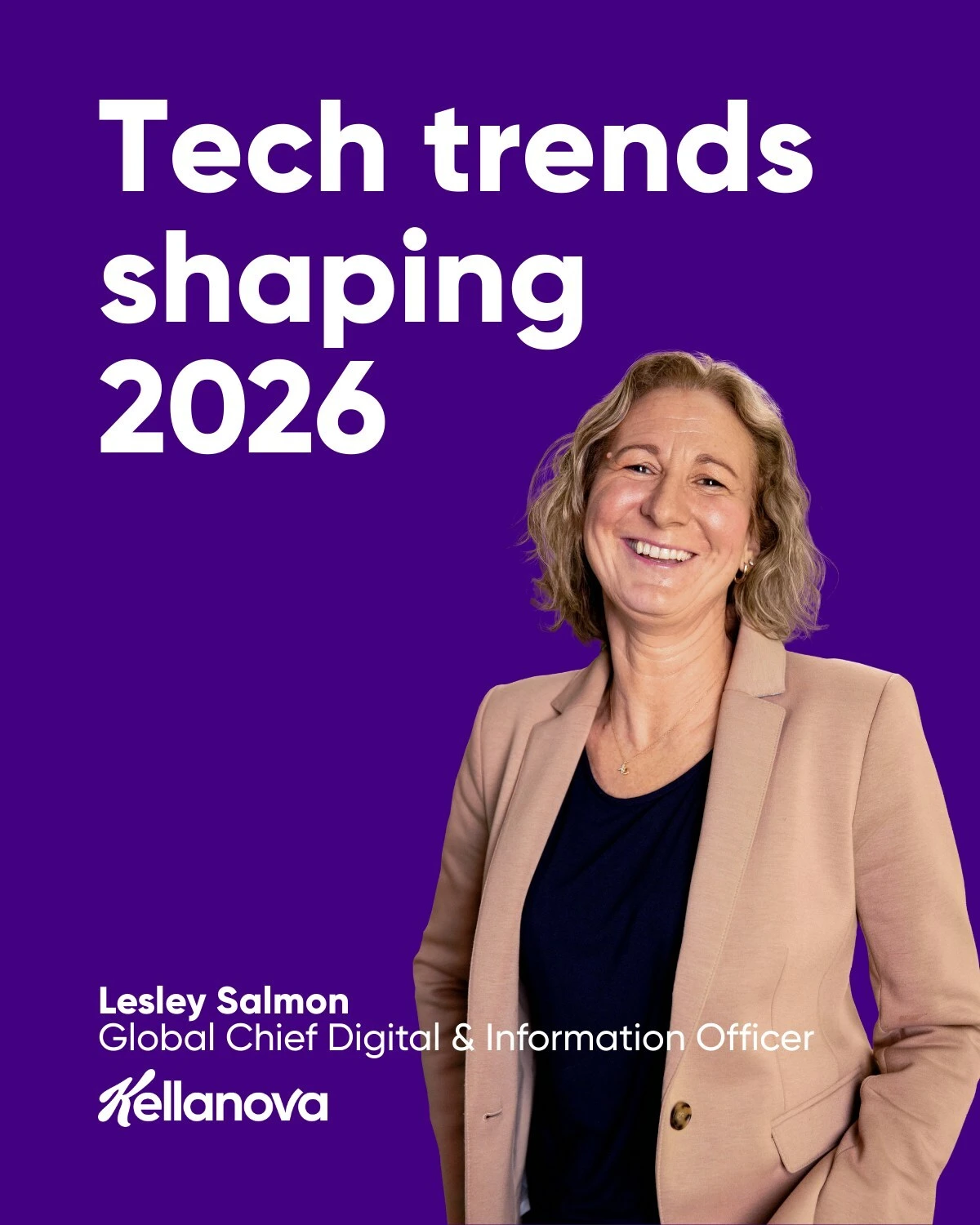
Lesley Salmon, Global Chief Digital & Information Officer, says technology no longer supports business strategy. It is the strategy. She argues that digital tools must link insight and execution, allowing teams to convert ideas into measurable results.
Building on that message, Chief Technology Officer Ramesh Kollepara highlights rapid gains across supply chain and demand planning. He says advanced algorithms will sharpen forecasting, refine inventory control, and help teams identify emerging patterns sooner. These improvements strengthen precision and speed across every function.
Kollepara stresses responsible development. He believes trustworthy AI unlocks efficiency, strengthens agility, and positions companies to outperform peers in an unpredictable market.
Data Turns Consumer Insight Into Competitive Power
Kellanova leaders emphasize that data has become a decisive competitive asset. As digital interactions multiply, brands gain deeper visibility into consumer behavior. That clarity helps teams tailor campaigns, strengthen promotions, and direct investments where they matter most.
Loretta Franks, Chief Data & Advanced Analytics Officer, says the company’s RGM Navigator system combines AI and machine learning to spot pricing and promotion opportunities. Her team works across departments to guide decision-making and improve return on marketing investments.
The results underscore that strategy. Kellanova reports that salty snack promotions grew 91% more effective between 2024 and 2025 because teams used sharper segmentation tools and stronger measurement systems.
Franks says the next version of RGM Navigator includes a virtual analyst powered by agentic AI. That analyst automatically explores datasets, identifies performance drivers, and answers complex questions, such as promotional lifts and distribution impacts on Pringles’ U.S. share. She argues that these capabilities support faster, more precise, and more confident decisions as CPG technology trends 2026 reshape the competitive environment.
Connected Commerce Blends Physical and Digital Shopping
Consumers now expect a seamless journey across online and in-store channels. Because expectations have shifted, Kellanova continues investing in connected commerce to merge convenience, continuity, and personalization.
Chief Growth Officer Charisse Hughes says the future of retail requires synchronized touchpoints. She highlights interactive packaging, digital content, and in-store engagement as essential tools for brands seeking relevance. Every moment—from shelf browsing to mobile navigation—must feel coordinated.
Kellanova views connected ecosystems as a strategic priority, not an optional upgrade.
Related Article: CPG Industry Drives $2.5 Trillion U.S. Economy
Smart Supply Chains Strengthen Trust and Resilience
Supply chain disruptions remain one of the most significant pressures on global manufacturing. To address that challenge, Kellanova relies on predictive analytics, blockchain systems, and IoT sensors that map product movement from sourcing to shelf.
Rodrigo Lance, SVP of Global Supply Chain, says resilience now rivals efficiency in importance. He argues that a transparent supply chain builds trust with consumers and retailers. Real-time visibility helps teams avoid delays, manage inventory more effectively, and respond faster to disruptions.
He believes these tools also support more explicit sustainability claims, stronger traceability, and more informed purchasing decisions. Together, they reinforce brand credibility in a competitive market.
Sustainable Tech Drives Next-Generation Innovation
Kellanova pairs sustainability with digital investment, weaving both into every stage of product development. The company uses AI to evaluate ingredients, test packaging solutions, and optimize energy use inside manufacturing facilities.
Chief R&D Officer David Lestage says responsible innovation requires measurable progress, not just broad commitments. He highlights digital product passports, carbon-tracking tools, and circular design as central to the company’s long-term strategy.
He argues that modern consumers want transparency and proof. As CPG technology trends 2026 evolve, he expects sustainability to become a core driver of loyalty and brand strength.
Human Insight Anchors Digital Progress
Although Kellanova invests heavily in new systems, its leaders emphasize that people remain central to innovation. They argue that data and technology gain value only when paired with curiosity, skill, and bold thinking.
The company plans to deepen that balance into 2026 and beyond. Leaders say their goal is to merge human insight with digital capability to create more innovative products, better engagement, and more resilient operations.
Founded more than a century ago, Kellanova reported net sales of $13 billion in 2024. Its brand portfolio includes Pringles, Cheez-It, Pop-Tarts, Kellogg’s Rice Krispies Treats, RXBAR, Eggo, MorningStar Farms, Special K, and Coco Pops.