
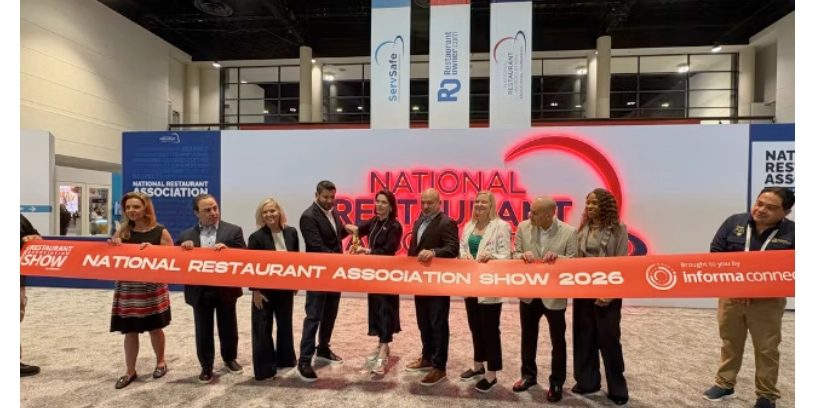
Attendees at this month’s 2026 National Restaurant Association Show in Chicago were focused on globally inspired flavors, value-driven innovation, and practical automation that stretches labor while keeping hospitality intact.
While the event was designed and programmed to attract foodservice operators, there was a lot for retailers to learn.
Latin Flavors Go Fully Mainstream
First and foremost, the show spotlighted cuisines from around the world as a headline theme, signaling that Latin American profiles are now core to menu and product development rather than a niche play.
For Hispanic grocers, this validates continued investment in regional Mexican, Central, and South American cuisines, from Oaxacan moles to Peruvian aji-forward sauces and Caribbean spice blends.
Manufacturers exhibiting in Chicago leaned into “authentic plus approachable” flavor platforms, pairing familiar foods like wings, burgers, and pizzas with Latin marinades, salsas, and toppings that travel well into retail grab-and-go and frozen.
For instance, Campbell’s was promoting Hispanic soups like Baja Chicken Enchilada, and several Hispanic food companies, including Tacombi and La Preferida, introduced traditional items designed to appeal to a much wider audience.
These kinds of items enable Hispanic retailers to extend their center store and deli set with co-branded or private-label items that appeal to both core Latino shoppers and crossover consumers who now regularly seek Hispanic foods at mainstream outlets.
Related Article: NGA Report: Independent Grocers Drive $557.5B Yearly
Convenience, Value, and Hybrid Formats
The NRA’s 2026 State of the Industry study frames a consumer who still wants to dine out but is feeling pressure from inflation and a cooler labor market. That tension played out at the show in concepts that stretch value through combo meals, shareable family formats, and bundled experiences that can migrate into Hispanic supermarkets’ prepared food programs.
For Hispanic banners that already serve as community hubs, there is a clear runway to build hybrid formats that combine quick-service counters, panaderías, and café seating with market-style merchandising along the perimeter.
The event’s emphasis on family and quick-service occasions aligns closely with Hispanic diners, who are more likely to visit QSRs monthly and respond to youthful, experience-forward environments.
Automation that Supports Human Hospitality
In the technology pavilion, at the 2026 National Restaurant Association Show, the highlights were AI and automation, not as sci-fi replacements for staff, but as tools to ease back-of-house pressure and improve consistency. Kitchen robotics, smart fryers, and automated beverage systems are ways to keep menus tight, maintain quality, and free up team members for face time with guests, a critical issue for Hispanic operators whose value proposition is rooted in personal relationships.
Also, tech vendors like Restaurant365 understand the importance of having multi-lingual capabilities and are using AI to help companies engage both workers and customers.
For Hispanic grocers with foodservice operations, the most relevant play is targeted automation in high-volume, low-differentiation tasks such as tortilla warming, rice and bean production, and beverage dispensing, while keeping prep, seasoning, and final assembly in human hands.
Paired with data-rich displays and inventory systems, these tools help small chains protect margins on the popular but low-priced comfort dishes that anchor traffic.
Data, Loyalty, and Bilingual Digital Journeys
The 2026 National Restaurant Association Show put data, digital ordering, and analytics in the same conversation as menu and labor strategy. For Hispanic retailers, the lesson is that a basic app or website is no longer enough, especially when Latino diners over-index on mobile usage, social media engagement, and appetite for mobile deals.
The next wave of restaurant tech on display focused on unified guest profiles, integrated loyalty, and targeted offers that flow seamlessly across in-store, curbside, and delivery.
Hispanic operators should consider adapting that approach by offering culturally relevant rewards and family-friendly offers, such as kids’ eat-free deals, multi-person bundles, and holiday-focused campaigns tied to key cultural occasions.
Exhibitors in Chicago also showcased packaging, waste-reduction, and traceability tools that can help Hispanic suppliers prove their story and win shelf space in both ethnic and general markets.
Retailers who connect those dots for shoppers through clear in-store messaging and digital storytelling will be better positioned as U.S. consumers increasingly weigh affordability alongside flavor when they choose where to shop and eat.