
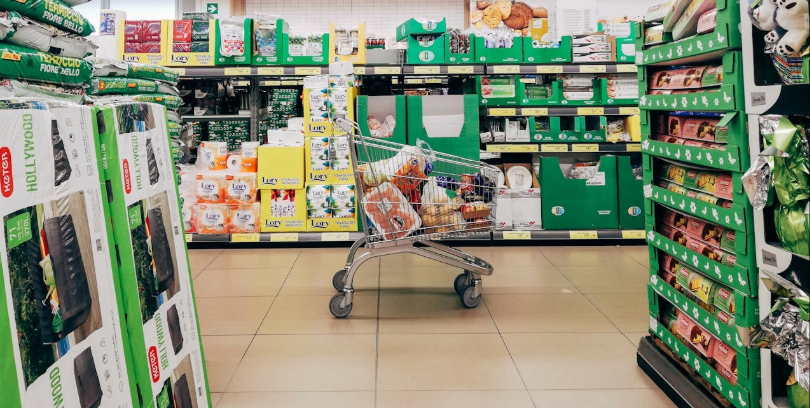
The new food pyramid in the USA is redefining nutrition recommendations and triggering a reorganization of offerings in supermarkets.
It is even transforming the portfolios of consumer packaged goods brands. Kantar, a research firm, describes it as one of the most disruptive shifts in dietary guidance.
This signals that the government has turned against ultra-processed foods—a crucial pivot, since federal guidelines influence public health narratives.
Keep reading to discover what the guidance means for supermarkets, brands, and distributors. Here you’ll understand why the food pyramid is important.
Table of contents
What the New Food Pyramid Says
Kantar summarizes what the food pyramid is; the main points of the guidance are:
- Encourages protein intake at every meal.
- Endorses red meat and full-fat dairy.
- Promotes consumption of fruits, vegetables, and whole foods.
- Reinforces its stance against sugar intake, refined carbohydrates, artificial sweeteners, and industrial processing.
- Makes an explicit call to cook more at home and eat real food.
- Aligns with a trend of distrust toward wellness claims; the pyramid focuses on simple ingredients and less processing.
- The guidance stops presenting ultra-processed foods as neutral convenience and exposes them as something to be avoided.
Kantar also provides the scale of the problem: approximately 58% to 60% of calories consumed in the USA come from ultra-processed foods.
In other words, the pyramid, beyond listing food groups, also names the problem—elevating the debate from personal preferences to a cultural standard.
What This Change Means for Supermarkets
This change forces supermarkets to add health-driven messaging. They must also review how the store is built and what is promoted through signage and promotions.
Many “center store” categories have ultra-processed formulas, so they are misaligned with the official guidance. Of course, this doesn’t mean they must disappear.
That’s why the retailer’s task is to reduce friction—that is, to help consumers who want to eat better so they don’t have to decode the entire supermarket.
Stores are expected to become accessible destinations for individuals seeking to align with recommendations and with support from dietitians.
Beyond moralizing, the focus is to offer credible information and personalized solutions. With these regulations, the goal is to win through trust, not through price.
This combination of regulatory pressure along with in-store support turns the aisle into a decision point for public health.
Store Architecture
This is responsible for defining which products appear to be the default option—after all, what’s visible is usually what’s chosen. Architecture plays a strategic role.
According to Kantar, if the center of the store is misaligned due to its dependence on ultra-processed foods, shelf storytelling must change to guide the shopper.
For store architecture to align with the food pyramid, it must offer:
- Clear paths to fresh, frozen, and prepared foods with protein profiles and less processing.
- Sections that facilitate basic ingredients and real cooking solutions to promote the value of cooking at home.
- Signage, financing support, and groupings by shopping mission.
FMI reinforces this idea by noting that the guidance’s goal is to provide clear and actionable direction and that the supermarket converts that direction into real choices.
With the right architecture, the store stops being considered simply a supply point and becomes a behavioral interface for food choices.
Assortment Strategy
The pyramid penalizes ultra-processed foods and reorders fruit categories and those considered risky. So assortment sometimes becomes the battlefield.
Kantar suggests that retailers need to allocate space for credible protein options through fresh, frozen, and prepared products.
It’s worth noting that this reassignment also involves determining what will be promoted, what will be placed on endcaps, and what will be integrated with meal solutions.
Similarly, the new standard raises the bar for suppliers: fewer questionable ingredients and more alignment with nutrient-dense patterns.
This pushes for improved shopper navigation. And in a world where apps audit products in the aisle, a defensible assortment is a competitive advantage.
Private Label
This is a key lever for retailers when it comes to reformulating, simplifying, and positioning, while directly controlling product quality and ingredients.
Kantar suggests rethinking private label beyond a simple value proposition, but rather as a channel to increase credibility in the health space.
In an environment full of distrust and claims, a private brand competes through transparency: less processed products and short ingredient lists.
FMI suggests that with credible information and practical solutions, it’s possible to support the consumer. And a private brand can contribute if it adheres to the guidance.
While this doesn’t eliminate the term “price,” it does redefine it to become more accessible—meaning it helps make real food affordable for everyone.
At the same time, a private brand forces supermarkets to maintain their standards so they don’t fall into the problem of disguised ultra-processed foods. The challenge is building a reputation.
Consumer Education
Consumer education is a support system inside and outside the store. With the support of registered dietitians, it’s possible to offer:
- Actionable guidance.
- Advice and meal planning tools.
- Technical support to help consumers achieve their health goals.
In this logic, the food pyramid promotes small habits and simple substitutions instead of dietary perfection. Kantar proposes supporting with navigation and clarity.
When guilt, moralizing tone, and marketing shortcuts are avoided and replaced with concrete and verifiable information, consumer trust and repeat purchases increase.
And consumers distrust labels and marketing shortcuts. They may perceive education as propaganda, thus intensifying skepticism.
How It Affects Consumer Packaged Goods Brands
For FMCG brands, the regulatory shift alters the evaluation framework. It’s not enough to sell convenience; they have to justify the level of processing.
Kantar states that brands anchored to intensive processing, artificial constructs, and sugars are structurally exposed, as they don’t respect the spirit of the guidance.
This gives way to brands based on proteins, simple lists, dairy, fermented foods, meats, and legumes gaining favor, thus promoting healthy eating.
FMI, for its part, notes that suppliers are investing in reformulation and innovation to align with consumer preferences. To do this they need:
Innovating with Credibility
This involves making structural changes, not cosmetic ones. For example, simplifying formulas and maintaining consistency with the message of less processing.
Kantar states that incremental tweaks are not enough for legacy brands; simplification, real ingredients, transparency, and good platforms are needed.
Credibility depends on the ingredient panel and nutritional performance, not on advertising campaigns. The winner is whoever can explain the product without fine print.
To quickly identify discrepancies between claim and composition, it’s advisable to leverage scanning tools and instant evaluation.
Today, to innovate, it’s necessary to anticipate the aisle’s judgment and the focus group’s. Only this way is it possible to achieve results that align with the food pyramid.
Structural Exposure
This exposure appears when the heart of the business depends on additives, sugars, and highly engineered formulations, which are considered a problem for the official narrative.
And the risk is not only reputational, but also commercial, since supermarkets could stock and give greater visibility to products that align with the new standard.
Now more consumers are going to supermarkets in search of health solutions, which accelerates the reorganization. Brands only have two routes:
- Reformulate with depth.
- Lose space to new proposals with simpler ingredients.
Even without restrictions, the combination of the guidance along with shopper pressure and evaluation tools makes defending the status quo more expensive.
And exposure intensifies in center store categories, which have historically been dominated by ultra-processed convenience.
Don’t Overdo It with Superficial Proteins
Adding protein to ultra-processed products, though it sounds healthy, actually clashes with the food pyramid’s goal of reducing processing.
Kantar warns about the indiscriminate use of proteins in sweets, beverages, or cereals. The challenge is to prevent the functional claim from covering up the rest of the product’s profile.
Consumers are skeptical due to marketing shortcuts, so offering products high in protein is counterproductive, especially if it’s perceived as ultra-heavy.
In the new scenario, protein works better as part of a real food or within simple ingredients, not as makeup. Credibility demands consistency.
The Food Industry Association: Consumers Are Seeking Healthy Solutions
Research from FMI shows that consumers prioritize healthy eating choices, although most believe they can improve.
That’s why the application suggests that the industry continue supporting personalized health goals, offering nutritious options and credible information about food.
Its central message is that more people are seeking solutions in the supermarket and that retailers respond with personalized strategies to support individual goals.
It has also been reported that consumers see their main store as an ally. 80% of shoppers say their supermarket does a good job supporting health.
Additionally, the association emphasizes the importance of including registered dietitians to provide guidance in-store. The guidance changes the what, but retail decides the how.
Brands Focused on Healthy Consumption
Understanding why the food pyramid is important has motivated numerous brands and large companies to offer real food with fewer additives.
Examples include PepsiCo, Kraft Heinz, and Kellogg—companies that demonstrate that it is indeed possible to adjust formulas and portfolios regarding health, ingredients, and perception.
This movement suggests that the new dietary regime will not only impact campaigns, but will produce verifiable changes. Come and learn more about these companies.
PepsiCo Seeks to Launch Enriched Products
In a report by The New York Times, it was revealed that PepsiCo planned cleaner and healthier versions of its popular snack and beverage products.
The idea is to add protein or fiber to reduce additives. This report noted that the company seeks to renovate Lay’s and Tostitos by eliminating artificial colors and flavors.
The goal is to launch healthy versions of Cheetos and Doritos. Ramon Laguarta, the CEO, mentions that the protein segment continues to grow and that he wants to offer solutions.
This example illustrates how snack giants are trying to reposition themselves with consumers who scrutinize ingredients and ultra-processing.
Of course, it also highlights the tension Kantar talks about: fortifying is not the same as aligning with the spirit of less processing. In other words, the market rewards protein but punishes inconsistency.
Kraft Heinz Eliminates Artificial Dyes from the Brand
CNN reported that by the end of 2027, Kraft Heinz will remove all artificial dyes from its products in the USA. It will also not launch new merchandise with those dyes.
The article frames the decision at a time of greater scrutiny of synthetic dyes by consumers and by the Department of Health and Human Services.
From the logic of the new pyramid, the goal is simpler and less addictive. This will function as a preventive response to reduce red flags in ingredients.
Likewise, it’s a clear example that an ultra-processed company can reframe its portfolio, but instead of changing categories, it replaces visible additives.
However, a challenge still remains, since the guidance, in addition to dyes, questions two other aspects:
- Processing.
- Added sugar.
That’s why this kind of announcement is the first step toward a longer reformulation race. Reinforcing that what matters is trust and composition.
Kellogg Focuses on Plant-Based Foods
CNN explained that, after corporate reorganization, the unit bringing together snacks and plant-based foods Kellogg would be renamed Kellanova.
In fact, the plant-based business, including MorningStar Farms, was integrated into that same unit. This suggests that plant-based is the growth engine alongside snacking.
In the context of the new food pyramid, betting on plant-based lines fits as an alternative for consumers seeking variety in protein sources.
Even so, the deciding factor is the level of processing, since a plant product can be considered ultra-processed, so the “plant-based” label doesn’t guarantee alignment.
The journalistic reading shows that companies are rearranging structures and portfolios to capture health trends, offering demonstrable formulas.
It also reflects that the healthy eating market is defined by credibility and not just by aspirational labels. In that terrain, brands simplify and make ingredients transparent.