
Mexican food is one of the most family-centered gastronomies. Is there anything better than freshly warmed tortillas and the taste of salsa made on the spot?
The contrasts between spicy and tangy, smoky and fresh, crispy and soft are irresistible. No matter where you try it, every bite tells a story.
Stay and read to dive into the origins of this cuisine. Here, you’ll discover its ingredients, the most popular dishes, and tips to keep their authentic flavor.
History of Mexican Food and Its Influence on Gastronomy
Mexican gastronomy is the result of centuries of encounters, exchanges, and the creativity of Indigenous people with their ingredients and techniques.
Corn, beans, and chili, used since pre-Hispanic times, are the foundation of cooking methods found in markets and homes across the country.
Later, ingredients like rice, wheat, spices, and domesticated animals were incorporated. This transformed the cuisine without changing its identity.
Today, Mexican cuisine inspires chefs, international menus, and street food trends. Even the way it’s eaten is considered a social experience by other cultures.
What Defines Traditional Mexican Food Today?
Diversity distinguishes traditional Mexican food. Mexico is a mosaic of regions, each with different techniques and ingredients, so there isn’t a single style.
Still, recurring characteristics include:
- Respect for corn.
- Love for salsas.
- Intelligent use of chili for flavor and heat.
- Preference for freshly made dishes.
- Balance of fat, acidity, salt, and spice.
5 Key Ingredients of Mexican Cuisine You Should Know
Before visiting Mexican restaurants, preparing recipes at home, or ordering from a Mexican food app, you should understand its pillars.
Don’t worry—it’s not about memorizing lists but knowing the ingredients that build the flavor. This way, you can use them properly in homemade Mexican food.
1. Proteins
Besides filling, proteins give dishes character, texture, and juiciness, especially when combined with browning, marinades, and slow cooking.
Pork, chicken, and beef are used in antojitos, tacos, soups, and stews. Seafood, eggs, and vegetables like nopales and mushrooms also play important roles.
For Mexican recipes, choose proteins that handle reheating, as many stews taste better the next day. Don’t forget to season carefully.
2. Tortillas
The tortilla is the heart of Mexican gastronomy. It serves as a plate, side, spoon, and wrap, and can be made from corn or flour.
Corn tortillas have a deep flavor and ideal texture for tacos, tostadas, and enchiladas. Flour tortillas are soft and elastic, perfect for northern-style quesadillas and burritos.
At home, heat tortillas well on a hot griddle or pan. Store them in a closed bag and reheat only what you’ll eat so they don’t dry out.
3. Chiles, Spices, and Herbs
Chiles are the charm of Mexico and its cuisine. There’s a wide universe: mild, fresh, intense, dried, sweet, and smoky. Not all are spicy.
Chili, especially chipotle, ancho, and guajillo, adds complexity, color, and aroma. These spices and herbs balance the flavors of homemade Mexican food:
- Cinnamon
- Cumin
- Oregano
- Pepper
- Epazote
- Cilantro
4. Beans and Corn
These aren’t just sides—they are the cultural and nutritional foundation of Mexican cuisine. Beans appear as fillings, refried, in soups, or whole.
Having cooked or canned beans at home helps quickly assemble complete meals, like tacos with beans and cheese. They’re perfect for frozen Mexican food at home.
Corn is also used in many regional dishes, tortillas, atoles, and tamales. Whenever possible, use authentic products to enjoy the nixtamalized flavor.
5. Cheeses and Accompaniments
Cheese adds saltiness and creaminess; some melt, others crumble. Accompaniments add texture and freshness, such as:
- Cream
- Onion
- Cilantro
- Radishes
- Lettuce
- Cabbage
- Lime
- Avocado
These extras balance fat and enhance aroma in every bite. At home, add them for taqueria-style dishes.
If ordering Mexican food online, don’t forget to get salsas and toppings separately so you can assemble them when eating to preserve all textures.
Most Popular Mexican Food You Must Try
Now comes the most appetizing part: the dishes! This list includes the tastiest and most versatile Mexican classics, perfect for fans of spice, crunch, and bold flavors.
You can enjoy these dishes at Mexican restaurants or make them at home. Ask yourself: do I want something spicy or more comforting?
Tacos
Without a doubt, tacos are Mexico’s most famous way of eating. Their greatness depends on the region, filling, and accompanying salsa.
A taco is more than a stuffed tortilla; it’s a dish with proper proportions, balance, and temperature. A warm tortilla with juicy filling and spectacular salsa.
There are tacos with carne asada, mushrooms, al pastor, fish, carnitas, chicken, and barbacoa. They don’t need many toppings; just onion, cilantro, and lime are enough.
Enchiladas
Enchiladas are tortillas filled with meat or beans, covered in sauce, and topped with cheese, cream, and onion. The most popular versions are:
- Green (Verdes)
- Red (Rojas)
- Mole
- Swiss-style (Suizas)
- Potosinas
Each version teaches you about Mexican sauces. This dish is quick and easy to prepare; the trick is to fry the tortillas lightly before covering them with sauce so they don’t break.
Tamale
Who hasn’t seen a Mexican table with the tamale as the star? This is a wrapped tradition: corn dough, delicious filling, leaf wrapping, and steaming.
There are chicken tamales with sauce, Oaxacan tamales in banana leaves, rajas with cheese, and even sweet ones. The most beautiful part is that every family has its own recipe and way of preparing them.
Tamales are a great option if you’re looking for frozen Mexican food, as they keep very well and don’t lose their essence. You just need to heat them in a steamer or microwave.
Pozole
When cold or fatigue hits, pozole is the dish you need for comfort. This is a rich broth that includes cacahuazintle corn, meat, and toppings. It’s served with:
- Lettuce or cabbage
- Radish
- Onion
- Lime
- Oregano
- Chili
Each person builds their ideal spoonful. Is there anything better than a customizable dish? If you order it from a Mexican food app, ask about the toppings and spice level.
Mole
This is one of the dishes that demonstrate the complexity of Mexican cuisine. It’s a thick, deep sauce with spices, dried chiles, seeds, and sometimes chocolate.
It’s usually served with chicken or turkey. An interesting fact is that each region has its own mole, and every family adjusts the recipe.
Why is it such a complex dish? Because in its preparation, the magic of toasting, grinding, and balancing bitterness, sweetness, spice, and heat comes together to achieve unique flavors.
Chiles
When we talk about chiles as dishes, there are several possibilities, including:
- Chiles stuffed with cheese or picadillo
- Chiles in sauce
- Pickled chiles
These are preparations where the chile is the star, not just a condiment.
For example, chile relleno is known for its soft exterior and creamy or meaty interior. There are also dishes where chile is integrated into the broth or sauce.
4 Types of Mexican Salsas That Will Blow Your Mind
Mexican salsas have their own world: some are fresh or cooked, others mild or fiery. They can completely change the character of a dish.
More than just a topping, in Mexico, salsa is as essential as salt or lime. With four basic styles, you can enhance or complete almost any dish.
1. Red Salsa vs. Green Salsa
Red salsa is usually made with tomatoes and chiles such as serrano, árbol, jalapeño, or guajillo. Depending on the recipe, it can be cooked or fresh.
Green salsa uses tomatillos and chiles, giving it a bright, tangy flavor. Which is better? It depends on the use, as both are amazing.
Green salsa is ideal for lifting fatty flavors, like chicken or carnitas, while red pairs perfectly with grilled meats and rich stews.
2. Roasted (Tatemada) and Molcajete Salsas
“Tatemar” refers to roasting ingredients directly to achieve smoky notes and concentrated flavor.
“Molcajetear” means grinding in a mortar to create a rustic, artisanal texture. Both types are intense and full of character, perfect with tacos, quesadillas, and beans.
Have you noticed how a tatemada salsa instantly smells like a real kitchen? At home, you can roast on a hot pan or griddle:
- Tomatoes
- Tomatillos
- Chiles
- Garlic
3. Guacamole
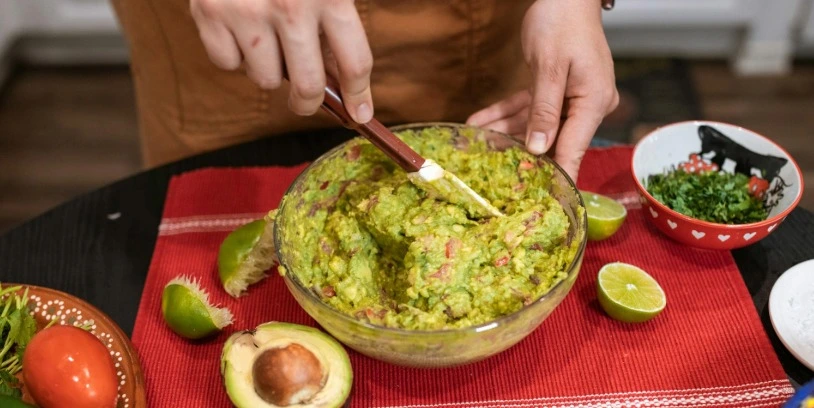
Looking for creamy, fresh, and approachable Mexican food? Guacamole is the perfect side, especially for tacos and tortilla chips.
It’s made with avocado, lime, salt, onion, and cilantro; chile is optional. Why is it so popular? Because it balances salt, heat, and adds healthy fat.
4. Pico de Gallo
Used as a salsa or salad, pico de gallo adds freshness, acidity, and crunch, making it great with tostadas, tacos, beans, and meats. Main ingredients:
- Tomato
- Onion
- Cilantro
- Lime
- Salt
- Chili to taste
Freshness instantly balances heavy dishes; that’s the main function of pico de gallo. At home, it can be ready in 10 minutes—just cut evenly sized small cubes for easy mixing and eating.
How to Preserve Mexican Food Without Losing Its Flavor
Want your homemade Mexican food to keep its crisp texture and bold flavors? Preserving these dishes is simple if you know how.
The main key is to separate components and reheat them using the right method. Also, use airtight containers and keep these tips in mind:
Dishes That Freeze Well
Freezing doesn’t work for all preparations; the best candidates for frozen Mexican food are:
- Stews with sauce
- Broths like pozole (without toppings)
- Cooked beans
The broth or sauce prevents proteins from drying out. Crispy or fresh ingredients should be eaten immediately. If freezing tortillas, reheat directly on a griddle.
Reheating
Depending on the method, reheating can be your enemy or ally. For stews, use medium heat in a pot or pan, adding a splash of broth or water for juiciness.
Microwave works sometimes but can dry or heat unevenly. Want your tortillas to come back to life? Use a hot griddle.
For tamales, steam them to retain their fluffy texture. For seared meats, reheat in a pan to preserve the sear.
Enhancing Food with Mexican Salsas and Toppings
Adding the right finishing touches can make your saved Mexican food exciting again. Pico de gallo, lime, roasted salsa, cilantro, and onion bring new flavor.
Isn’t it amazing how a topping can completely change your perception of taste? If your food is frozen, finish it after reheating properly.
For freshness, use onion, radishes, or cilantro; cheese and cream add creaminess, and lime gives acidity. Assemble everything intentionally!
How to Create a Complete Mexican Experience at Home
You don’t need to be a chef or hunt for rare ingredients to enjoy Mexican food at home. Organization and smart choices are enough.
With a simple structure, you can offer friends or family a fun, unique evening. Here’s what you need to immerse yourself in Mexico.
Menu by Course: Starter, Main, and Dessert (Without Complications)
A course-based menu consists of:
- A light starter
- A main dish as the star
- Dessert
For starters, tortilla chips with guacamole or pico de gallo, or beans with cheese, are perfect light options. Order them from a Mexican food app!
For the main dish, choose tacos or pozole with warm tortillas and various Mexican salsas. For dessert, try rice pudding, popsicles, or fruit with lime and chili.
Taco Bar: Proteins, Tortillas, Salsas, and Toppings
This option turns your meal into an event. Choose two proteins, like chicken or carne asada; offer corn or flour tortillas and place salsas in the center.
Don’t forget toppings like onion, cream, cilantro, guacamole, lime, cheese, and radishes. Everyone wins, as each person builds their own plate.
Drinks and Sides That Pair with Spicy Dishes
With spicy ingredients, drinks are essential to balance and refresh the palate.
Good options include aguas frescas (hibiscus, tamarind, horchata), sodas, and mineral water. Sides also soften the chili; examples:
- Rice
- Beans
- Salads