
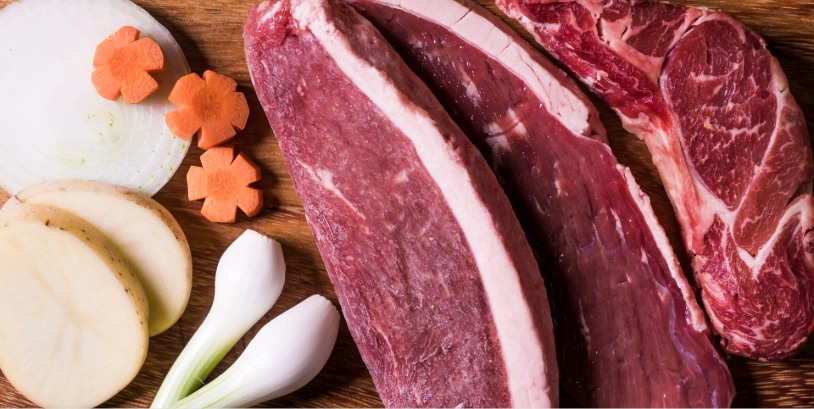
Currently, meat prices in the United States are driven by a combination of supply, production costs, weather, demand, and trade conditions.
In 2026, the USDA projected an annual increase of 9.8% in beef and veal costs, compared with much more moderate increases for pork and chicken.
For supermarkets, distributors, and retailers, understanding these causes is vital for making better decisions about product selection, promotions, and sourcing. So, keep reading.
Table of contents
- Why Is the Price of Meat Rising in the United States?
- Which Types of Meat Have Increased the Most?
- Beef Prices
- Chicken Prices
- Pork Prices
- How Meat Prices Affect Supermarkets and Retailers
- What Can Supermarkets Do to Protect Their Margins?
- When Could Meat Prices Fall?
- FAQ
- How Is the Price of Meat Determined?
- What Factors Affect Wholesale Prices?
Why Is the Price of Meat Rising in the United States?
The main reason behind higher costs is the lower availability of cattle for beef production. The national inventory reached 86.2 million head as of January 1, 2026.
This figure was 0.3% lower than a year earlier and was one of the lowest levels recorded in decades, according to the USDA National Agricultural Statistics Service. Other factors that influence prices include:
- Lower cattle inventories and a shortage of animals available for slaughter.
- Droughts that reduce pasture availability and increase the cost of feeding cattle.
- Limited processing capacity in some regions.
- Changes in imports, exports, tariffs, and international demand.
- Concentration among buyers and processors within the meat supply chain.
These factors are compounded by transportation, processing, labor, energy, and packaging costs that are essential to meat production in the country.
Which Types of Meat Have Increased the Most?
Beef has experienced the strongest increase among the main proteins sold in supermarkets. The general comparison made by the USDA shows:
- Beef and veal: projected increase of 9.8%.
- Pork: projected increase of 0.8%.
- Chicken: projected increase of 0.5%.
- Processed meats: variations depending on ingredients, energy, packaging, and demand.
This difference is mainly explained by the lower number of cattle available. Chicken, by contrast, has shorter production cycles.
Pork also presents a different situation, with a more flexible supply than cattle. For stores, these changes encourage a review of promotional strategies.
Beef Prices
Meat prices in the United States remain high because cattle supplies are still tight. The USDA NASS reported approximately 86.2 million head.
However, the availability of calves to place in feedlots also declined. Other factors affecting beef prices include:
- Limited cattle available for the market.
- Lower expected beef production.
- The long period required to rebuild the national herd.
- Feed, land, transportation, and processing costs.
- Steady demand for hamburgers, fresh cuts, and prepared meals.
Chicken Prices
Chicken is one of the more affordable alternatives when beef costs rise. Its production requires less time than raising cattle.
This makes it easier to adjust supply more quickly when demand for breasts, thighs, wings, or ground chicken increases. Supermarkets generally drive sales through:
- Weekly promotions on breasts, thighs, wings, and whole chickens.
- Family packs with a more competitive price per pound.
- Marinated or ready-to-cook products.
- Cross-promotions with rice, tortillas, salads, and sauces.
- Private-label brands with basic and higher-value-added options.
Of course, the range projected by the USDA ERS does not guarantee the same price at every supermarket, since each area faces different distribution and competitive costs.
Pork Prices
Pork has shown a more moderate trend, although its prices also respond to feed, transportation, demand, and international trade costs.
According to the USDA ERS, the projection for retail pork costs is an increase of 0.8%. Categories that often have greater promotional potential include:
- Chops for quick weekday meals.
- Shoulder and leg cuts for larger family recipes.
- Ground pork for tacos, meatballs, and sauces.
- Loin as a premium-looking option at a lower cost than some beef cuts.
- Bacon and prepared products for convenience-focused purchases.
Pork availability generally depends on domestic production, restaurant demand, exports, and the cost of grains such as corn and soybeans.
How Meat Prices Affect Supermarkets and Retailers
Meat prices in the United States force supermarkets and retailers to balance profit margins with the need to keep customers satisfied.
A margin is the difference between what a store pays for a product and what it receives from selling it. If the purchase cost increases, raising the selling price provides protection.
Although this can reduce sales. On the other hand, absorbing the entire increase can affect business stability. The most visible effects at the point of sale include:
- Lower margins on popular beef cuts.
- More selective and shorter promotions.
- Smaller package sizes or more visible prices per pound.
- Higher turnover of chicken, pork, frozen products, and plant-based proteins.
- More space for private-label brands and competitively priced products.
- Frequent reviews of inventory, orders, and supplier relationships.
What Can Supermarkets Do to Protect Their Margins?
Supermarkets do not control the weather, the size of the cattle herd, or all wholesale prices. However, they can manage purchasing, product selection, promotions, and waste.
The first action involves frequently reviewing the performance of each cut: sales, margin, shrink, and turnover rate. Shrink refers to products that become damaged or expire.
It is advisable to negotiate volume programs, cut-specific arrangements, and deliveries aligned with the actual pace of sales. Cross-promotions also increase the total value of each purchase.
When Could Meat Prices Fall?
Meat prices in the United States do not fall immediately because increasing the cattle herd takes several years, as ranchers need breeding females to produce calves.
They must also wait for those animals to grow before bringing them to market. The USDA ERS clearly indicated that cattle inventories remain tight.
Of course, this does not mean that the price of every cut will increase every month, especially because promotions, seasonal changes, and regional variations exist.
According to the Bureau of Labor Statistics, the index for meats, poultry, fish, and eggs increased 0.1% in August 2026, a sign of more moderate short-term movements.
FAQ
Why Is Beef So Expensive?
Mainly because fewer cattle are available to produce it. When there are fewer animals and demand remains active, beef prices tend to stay high.
In addition, prices depend on the cut, city, supermarket, and weekly promotions. That is why it is advisable to compare prices per pound and look for different cuts.
What Is the Cheapest Meat in the United States?
Chicken and pork generally offer more affordable options compared with many beef cuts. However, the final price depends on the city, store, and week.
Thighs, whole chickens, leg quarters, and pork suitable for slow cooking offer a much lower price per pound. Weekly promotions also play a role.
Finally, lesser-known beef cuts are a great option when prepared using the right methods, such as slow cooking or stewing.
When Will Meat Prices Fall?
There is no exact date for a widespread decline in meat prices in the United States, since each protein responds to very different conditions.
For example, with beef, the adjustment depends on ranchers rebuilding their herds and increasing the amount of cattle available. This requires time and important decisions.
Chicken and pork, by contrast, respond more quickly to changes in production and demand. Therefore, it is necessary to review USDA reports and BLS data.
How Is the Price of Meat Determined?
The price of meat is formed throughout a supply chain that begins on the farm and ends at the retail counter. First, costs such as animal feed, land, and water come into play.
Processing plants then become involved, where products are slaughtered, cut, packaged, and distributed. After that, wholesalers and stores add their operating costs.
The USDA Economic Research Service normally publishes data on costs and price differences between the farm, wholesale, and retail stages.
What Factors Affect Wholesale Prices?
The wholesale price is the amount paid by distributors, supermarkets, or other buyers before selling meat to the public. This cost changes according to several factors.
These include animal availability, production levels, restaurant and store demand, processing costs, and transportation expenses.
Meat prices in the United States are also influenced by the cuts requested during each season. For example, demand for ground beef increases during grilling seasons.