
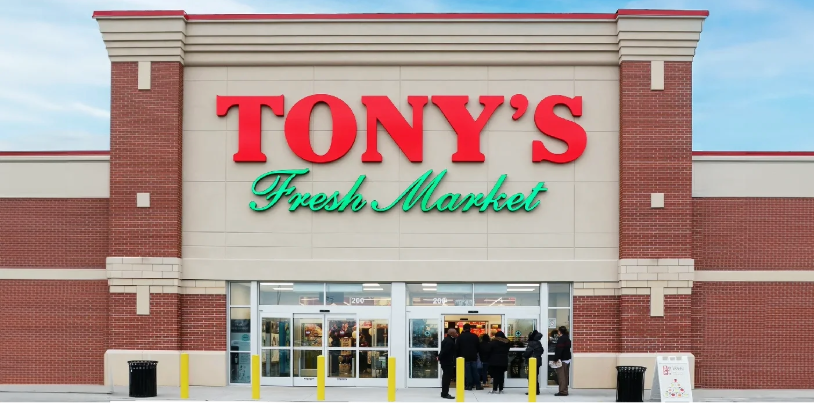
Heritage Grocers is proof that Latino businesses can grow without abandoning their identity. The company improves its internal management while preserving the local culture of each brand.
If you work in retail, this case explains how to earn people’s trust. Its success stems from highly efficient logistics combined with absolute respect for each brand.
Here you will see how the retailers Cardenas Markets, El Rancho, and Tony’s Fresh Market manage to scale with a shared strategy—and the steps they follow to grow while preserving their familiar style.
TablE OF CONTENTS
- History and Evolution of Heritage Grocers
- How Cardenas Markets, El Rancho, and Tony’s Fresh Market Integrate
- 5 Synergy Strategies to Expand Presence in the USA
- Impact on Hispanic and Latino Communities
- Unified Logistics and Distribution Across Chains
- 3 Challenges and Opportunities in Merging Corporate Cultures
- Shared Loyalty Programs and Retail Marketing
History and Evolution of Heritage Grocers
This group operates as a hub for several Latino supermarket chains. The project gained strength in 2022 when they integrated Tony’s Fresh Market and Cardenas.
That union helped the business grow regionally with strong positioning in the sector. Shortly afterward, they added El Rancho to strengthen their presence in the traditional foods industry.
The best part is that each store maintains its own identity and defining personality. They rely on the same structure, but without altering their connection to the market.
How Cardenas Markets, El Rancho, and Tony’s Fresh Market Integrate
Heritage manages to bring together several brands with distinct styles under unified leadership. They keep each store’s name so customers continue trusting them.
El Rancho continues operating in Texas and Kansas with its family essence. At the same time, it shares resources and structure with strong chains such as Cardenas Markets and Tony’s.
Each location focuses on a different audience, offering everything from Hispanic cuisine to Italian recipes. This variety allows them to reach more households without appearing like a cold corporation.
Want to see how a company can become a giant while maintaining its originality? Here are the key elements that allow expansion while protecting what makes each place special.
5 Synergy Strategies to Expand Presence in the USA
Heritage Grocers’ plan to compete strongly in the U.S. market is not just about acquiring brands. It is about ensuring that the union of different chains creates far greater value.
By joining forces, the group reduces internal costs and each business becomes more efficient. At the same time, it offers better products while customers continue enjoying their neighborhood stores.
The goal is to lead the specialized supermarket sector, such as Latino food and fresh products, while delivering greater benefits to loyal consumers.
These strategies work equally well for any food retailer or franchise. The following five approaches explain how Heritage organizes itself for successful growth.
1. Integration of Regional Brands
One tactic of the group is acquiring chains that are well known by local communities without changing their names, so customers are not driven away. What truly matters is the emotional attachment people have to their store.
El Rancho, for example, continues to carry its authentic brand even though it now belongs to the company. This prevents confusion and preserves customer familiarity.
Because the transition does not feel forced, loyal shoppers continue visiting. Like this supermarket, each location preserves its authenticity.
The same applies to Cardenas Markets, whose Latino style has not changed. The same is true for Tony’s Fresh Markets, known for years for its Italian and Hispanic ethnic products.
2. Authentic Cultural Experience
Growth is meaningless if the welcoming atmosphere customers value is neglected. Each store protects its environment so consumers continue feeling at home.
Cardenas specializes in fresh meats and sauces that make Latino dishes perfect. Walking inside feels like returning to traditional markets where everything is freshly prepared.
El Rancho focuses on a joyful, family-style experience from the moment you walk in. Meanwhile, Tony’s stands out for the quality and craftsmanship of its artisanal products.
This proves that price is not the only driver of retail success. Culture also attracts customers and significantly boosts sales in these supermarkets.
3. Optimization of Shared Operations
Real strength appears when the group joins forces in areas customers hardly notice. When acquiring chains, Heritage Grocers aimed to use the combined scale to provide better service.
Having multiple brands within one group allows successful strategies to be replicated and purchasing power to increase. Authenticity does not prevent profitability.
It is possible to operate efficiently without turning stores into identical copies. The key is leveraging the backing of a larger group without altering the customer experience.
4. Unified Retail Marketing and Communication
Another strategy is promoting the entire group while respecting each store’s personality. This simplifies coordinating promotions and negotiating supplier prices.
This marketing approach builds brand recognition and structure without risking trial-and-error in every new market. The idea is to share what works and avoid unnecessary spending.
Each store grows with the support of a stronger network, attracting different audiences while benefiting from the shared experience of the group’s retailers.
5. Strategic Expansion of Physical Stores
A smart way to grow is acquiring businesses that are already operating successfully, rather than building new locations from scratch. This allows brands to cover different regions without overlapping excessively.
This plan strengthens presence in areas such as Texas, the West Coast, or Chicago without oversaturating one single region. Existing teams already operate with their established customer base.
Expansion achieved this way saves time and reduces the risks associated with opening stores in unfamiliar markets. It demonstrates how to grow large while maintaining proximity.
Impact on Hispanic and Latino Communities
What Heritage Grocers does goes beyond selling food. Its presence supports local business growth and helps Hispanic families preserve their traditions.
By offering specific ingredients from these communities, customers feel comfortable and understood. The company respects culture and turns grocery shopping into a familiar experience.
Employees understand what each customer is looking for, which makes a significant difference in the shopping process. Paying attention to these details ensures that essential items are always available.
Real success is visible in every aisle, not just in corporate plans. This approach strengthens the business because it is grounded in everyday interactions.
Unified Logistics and Distribution Across Chains
Logistics is essential for a multi-brand group to operate efficiently without empty shelves. Heritage Grocers centralized operations into one system.
This system organizes thousands of products using technology so that its 115 stores function better. It not only predicts sales volumes but also helps manage pricing strategies.
Additionally, the system monitors how promotions impact inventory before problems arise. This ensures stores consistently stock what customers need.
This coordination improves precision, reduces inventory loss, and enables structured, efficient growth.
3 Challenges and Opportunities in Merging Corporate Cultures
Bringing together different ways of working can initially cause friction. The challenge is ensuring teams understand one another without losing each store’s essence.
When employees share improvement strategies, the business advances much faster and can introduce new options to keep customers satisfied.
Many projects fail due to interpersonal conflicts rather than lack of capital. These three challenges explain how to turn potential problems into opportunities.
1. Aligning Values and Work Practices
The main challenge is agreeing on work methods and customer service standards. The key is creating a shared operational framework while preserving each store’s style.
When employees feel confident making decisions, customers experience consistent quality in any city. Service excellence determines post-merger success.
For group managers, achieving this alignment often defines whether the project succeeds or fails.
2. Effective Internal Communication
Keeping everyone informed ensures teams work cohesively. Without clarity, rumors and disengagement quickly appear.
Commercial and operational departments must collaborate smoothly. Decisions should be explained clearly instead of improvised.
If leadership fails to communicate effectively with frontline staff, technology alone cannot solve problems. The message must reach every corner of the business.
3. Talent Retention and Adaptation to Change
For ownership transitions to succeed, retaining experienced store employees is essential. They understand operations and customer preferences.
If that experience is lost, the store loses its identity and customers feel less comfortable. Keeping strong employees maintains trust.
Another challenge is motivating teams so they take pride in growth and recognize career opportunities. When that happens, change becomes less intimidating and the project progresses successfully.
Shared Loyalty Programs and Retail Marketing
Heritage Grocers takes successful promotions from one store and adapts them across others so more customers benefit. Adjustments preserve each location’s identity.
For example, a Lotería game launched successfully at Cardenas Markets was later expanded group-wide. Although the concept is shared, each location adds its own distinctive touch.
The group allows branches flexibility to tailor details so promotions resonate with local communities. As a result, offers feel personalized rather than imposed.