
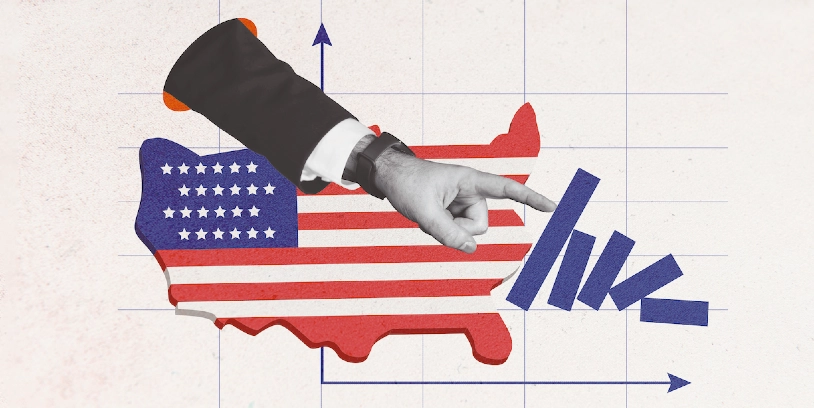
How can anyone forget 2025? The year left a deep mark on the global economy. Global trade tariffs imposed during President Donald Trump’s second term reshaped international commerce.
Those measures disrupted the normal flow of imports and exports. As a result, they also challenged the rules-based economic system that supported global stability for decades.
Consequently, governments and institutions now search for strategies to preserve balance and competitiveness in world markets.
Origins of Global Economic Cooperation
The international order that followed World War II relied on the Bretton Woods system. Leaders designed the framework to ensure financial stability and expand trade.
Under this system, the U.S. dollar became the main international reference currency. As a result, countries could complete transactions more efficiently and strengthen financial integration.
Meanwhile, the General Agreement on Tariffs and Trade (GATT) emerged in 1947. The agreement encouraged negotiations to reduce trade barriers and lower tariffs.
Major financial institutions supported the effort. The International Monetary Fund helped stabilize exchange rates, while the World Bank supported reconstruction.
Together, those institutions promoted cooperation and discouraged protectionism. During the mid-20th century, this structure helped fuel strong economic expansion across much of the Western Hemisphere.
Related Article: Decoding Tariffs: IFPA’s Essential Resources
Global Trade Tariffs and Trump’s Protectionism
However, the “Make America Great Again” agenda shifted U.S. trade priorities. President Trump promoted policies that focused on protecting domestic industries and restoring national economic strength.
His administration introduced sweeping global trade tariffs and other unilateral actions. These policies aimed to rebalance trade relationships and reduce reliance on foreign supply chains.
Yet the strategy also raised doubts among international partners. Many analysts questioned whether aggressive tariff policies weakened U.S. leadership in the global system.
At the same time, critics argued that protectionist measures strained long-standing economic alliances and disrupted the Bretton Woods framework.
Davos Revives the Spirit of Dialogue
Nevertheless, the beginning of 2026 brought renewed optimism. The World Economic Forum gathered leaders in Davos, Switzerland, from Jan. 19 to 23.
Organizers centered the meeting on the theme “A Spirit of Dialogue.” Participants focused on rebuilding trust and strengthening international cooperation.
Importantly, many discussions addressed the consequences of global trade tariffs and unilateral economic policies.
As tensions grew across markets, policymakers emphasized the need for collaboration. Dialogue, they argued, remains essential to managing shared economic risks.
Seeking Global Balance
Ultimately, the Davos meeting underscored the urgency of restoring confidence in global markets. Leaders discussed practical alternatives to stabilize trade relationships and reduce geopolitical tension.
In addition, participants highlighted the value of coordinated economic policies. Cooperation, they said, offers the best path to maintaining competitiveness in an uncertain environment.
Today, the legacy of 2025 still shapes international debates. Governments must now decide whether collaboration or confrontation will guide the future of global commerce.