
Retailers worldwide face a silent enemy eroding their margins: inventory distortion. Smart shelf technology in retail is emerging as a direct response to a problem that now costs the industry $1.73 trillion a year, according to IHL Group’s report The Revenue Imperative for Modern Retail.
The report warns that traditional systems cannot keep pace with the demands of omnichannel commerce, where poor accuracy undermines profitability and weakens the customer experience.
The message across the industry is unmistakable. Smart shelf technology in retail has moved beyond pilot programs and is now a core operational tool for competitive retailers.
“The data should force every retail executive
to rethink their technology roadmap immediately.”
– IHL Group.
Shelf Technology Evolution
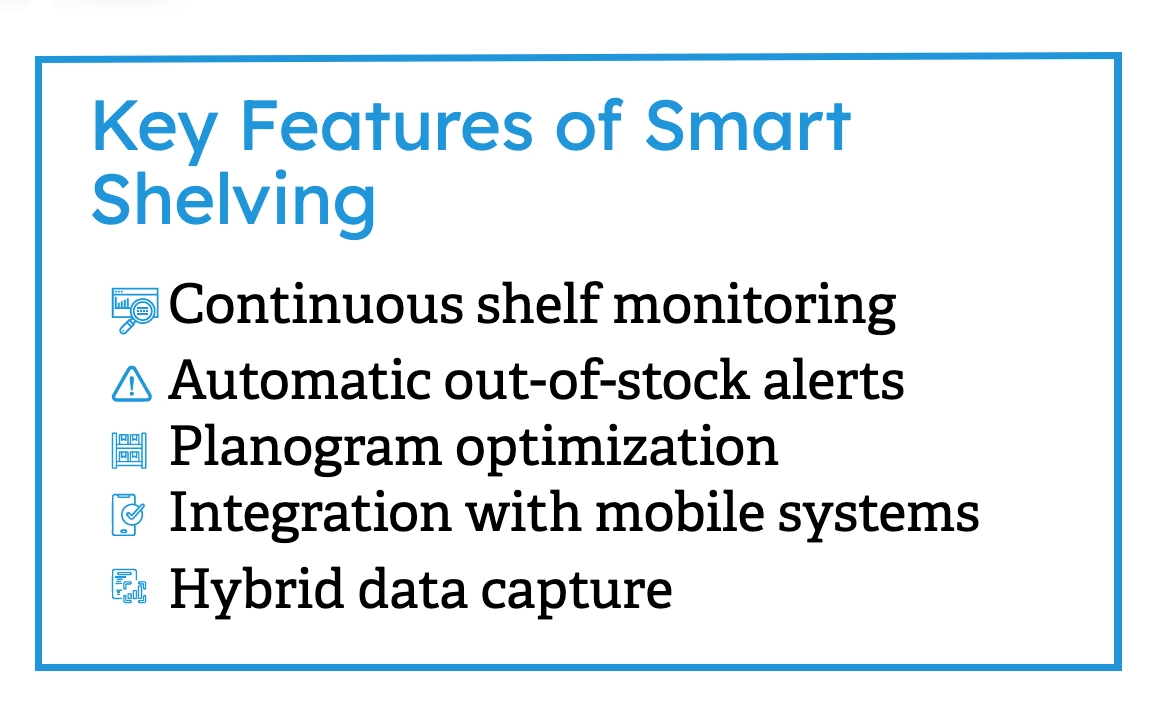
Smart shelf systems combine sensors, computer vision, artificial intelligence, and hybrid data capture to monitor shelves in real time.
What once seemed experimental has become a proven, scalable solution.
The study shows that high-performing retailers prioritize inventory visibility 208% more than laggards and are 136% more likely to deploy hybrid data-capture systems.
Omnichannel Pressure Keeps Rising
Out-of-stocks remain the top pain point. When shoppers cannot find a product, they switch stores without hesitation.
IHL Group reports that the average consumer abandons a retailer after 2.5 to 3 out-of-stock experiences. Among Prime users, the impact is sharper: 73% immediately purchase from another retailer via mobile.
Related Article: Food Retail Strategies for 2026: Value, Assortment and AI
Technology Maturity Accelerates Adoption
After years of failed trials, the industry has reached a turning point. IHL notes that, over the past 18 to 24 months, smart shelf technology in retail has achieved over 95% accuracy, even in complex store environments.
Nearly two-thirds of retailers have already deployed or plan to adopt these solutions. Profit leaders are 94% more likely to invest early in emerging technologies.
Those adding autonomous robots or upgraded smart shelves double their chances of leading in sales and profits.
“Choose leadership. Act now. Execute with discipline.”
A Widening Competitive Gap
The report highlights a growing divide between leaders and laggards. Top-performing retailers are increasing technology investment 740% faster and project 460% higher IT budgets per store.
Fixed cameras, mobile solutions, and hybrid models now dominate modernization strategies centered on smart shelf technology.
Real-World Results: Higher Sales, Greater Efficiency
Numbers tell the story. A major European grocery chain increased availability from 90% to 95%, generating more than $4 million in annual profit. A North American pharmacy chain improved availability by just 4.5% yet produced $55 million in incremental revenue.
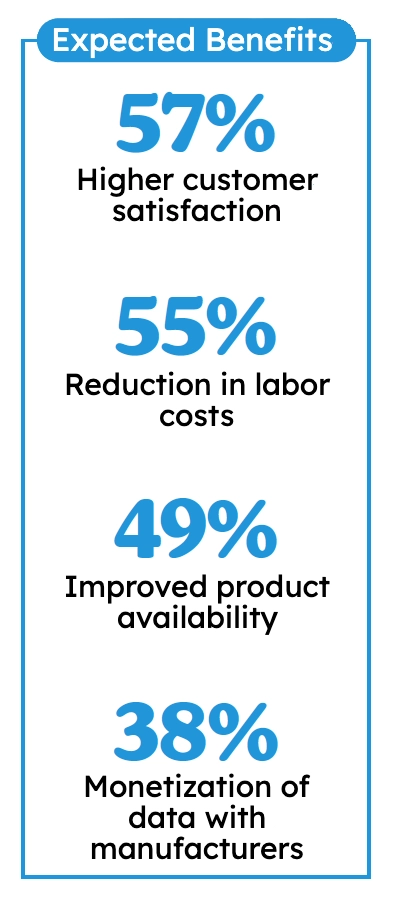
Retailers using smart shelf technology in retail report 40% to 60% reductions in labor hours spent on manual inventory audits. Store actions now rely on precise AI alerts, not endless aisle walks.
Immediate Impact on Efficiency
- 40%–60% fewer labor hours
- Faster restocking
- Availability corrected in minutes, not days
Time to Act
IHL concludes with a clear warning: the gap between retailers adopting smart shelf technology and those delaying has reached critical levels.
Industry leaders are moving forward with disciplined rollouts, starting with high-turnover items and expanding into planograms, price integrity, and data monetization.
The competitive advantage compounds quarter after quarter. Falling behind is no longer an option.