
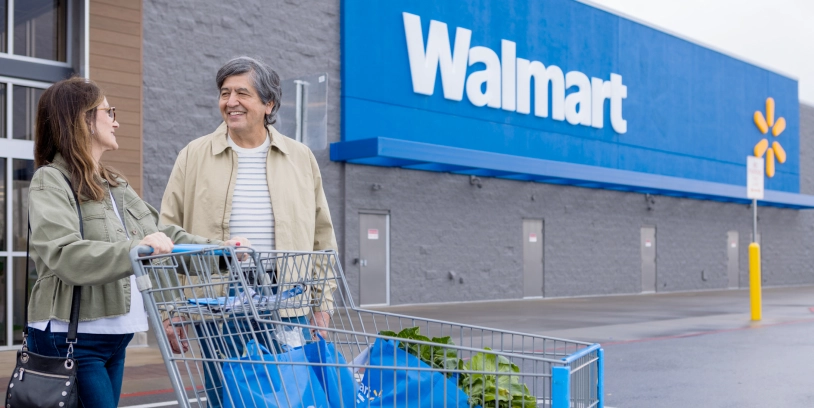
Walmart is making a bold commitment to the future of brick-and-mortar retail. Its sweeping Walmart store investment strategy is designed to redefine speed, convenience, and customer experience. The company is modernizing locations and expanding fulfillment capabilities across the United States.
The retail giant confirmed it will remodel more than 650 stores this year while preparing to open roughly 20 new locations through 2026 and early 2027. The effort builds on a 2024 commitment to expand and modernize more than 150 sites nationwide.
At its core, the Walmart store investment reflects a clear priority: use stores as both shopping destinations and fulfillment hubs to meet rising consumer expectations for speed and flexibility.
Walmart Store Investment Targets Nationwide Expansion
The company has already opened several locations this year, including Supercenters in California and Florida and a Neighborhood Market in Ocala, Florida. Meanwhile, additional projects are underway, including a Supercenter expansion in Tucson, Arizona, and a new store planned for Celina, Texas.
This follows nine new store openings completed in 2025 across multiple states, signaling steady unit growth after a slower expansion period in prior years.
Importantly, Walmart ties each store project to job creation and local economic impact. Construction activity generates short-term employment, while completed stores support long-term roles in retail operations, pharmacy services, and management.
As a result, the Walmart store investment is not just about square footage—it also reinforces the company’s presence in local communities where competition for grocery dollars continues to intensify.
Store Remodels Reshape the Shopping Experience
At the same time, Walmart is reworking the in-store experience to align with changing shopper behavior.
Customers visiting remodeled locations will notice wider aisles, improved layouts, and expanded assortments. The company is also upgrading visual merchandising with more prominent displays designed to drive impulse purchases and highlight value.
In addition, Walmart is investing in service areas that directly impact convenience. Updated Vision Centers and pharmacies now include private consultation rooms, while many Neighborhood Markets feature expanded deli and hot food offerings.
The Walmart store investment also extends to operational efficiency. Stores are adding dedicated space for online grocery fulfillment, along with improved lighting, signage, and parking to streamline traffic flow.
Notably, some Neighborhood Markets are undergoing rapid remodels, a format designed to minimize disruption while accelerating upgrades—a move that reflects Walmart’s urgency to modernize without sacrificing sales.
Related Article: Walmart’s Great Value Brand Gets a Redesign
Digital Integration Drives Speed and Convenience
However, the physical upgrades represent only part of the strategy. Walmart is tightly linking stores with its digital ecosystem to create a seamless omnichannel experience.
Through its mobile app, the retailer enables customers to navigate stores using aisle maps and locations, scan products to check prices, and access promotions in real time. The app also supports faster checkout through Walmart Pay and Scan & Go for members.
More importantly, the Walmart store investment strengthens the company’s delivery capabilities. Customers can choose pickup or home delivery, often within hours, depending on location.
Walmart said it can now reach 95% of U.S. households with delivery in three hours or less—a benchmark that underscores how stores function as last-mile fulfillment centers.
Consequently, this integration of stores and technology positions Walmart to compete more aggressively with both traditional grocers and e-commerce players.
Walmart Reinforces Competitive Edge
The broader strategy signals a return to fundamentals: physical stores still matter, but they must operate as hybrid assets in a digital-first retail environment.
By upgrading layouts, expanding services, and embedding technology, Walmart aims to make shopping faster and more intuitive while maintaining its core promise of everyday low prices.
At the same time, the company continues to invest in community engagement through local hiring, supplier partnerships, and grant programs tied to store markets.
Ultimately, the Walmart store investment highlights a disciplined approach to growth. Rather than relying solely on new store expansion, the retailer is extracting more value from its existing fleet while selectively adding locations in high-growth areas.
That balance—between modernization and expansion—could define the next phase of competition in the U.S. grocery sector, where speed, convenience, and proximity increasingly determine where consumers spend.